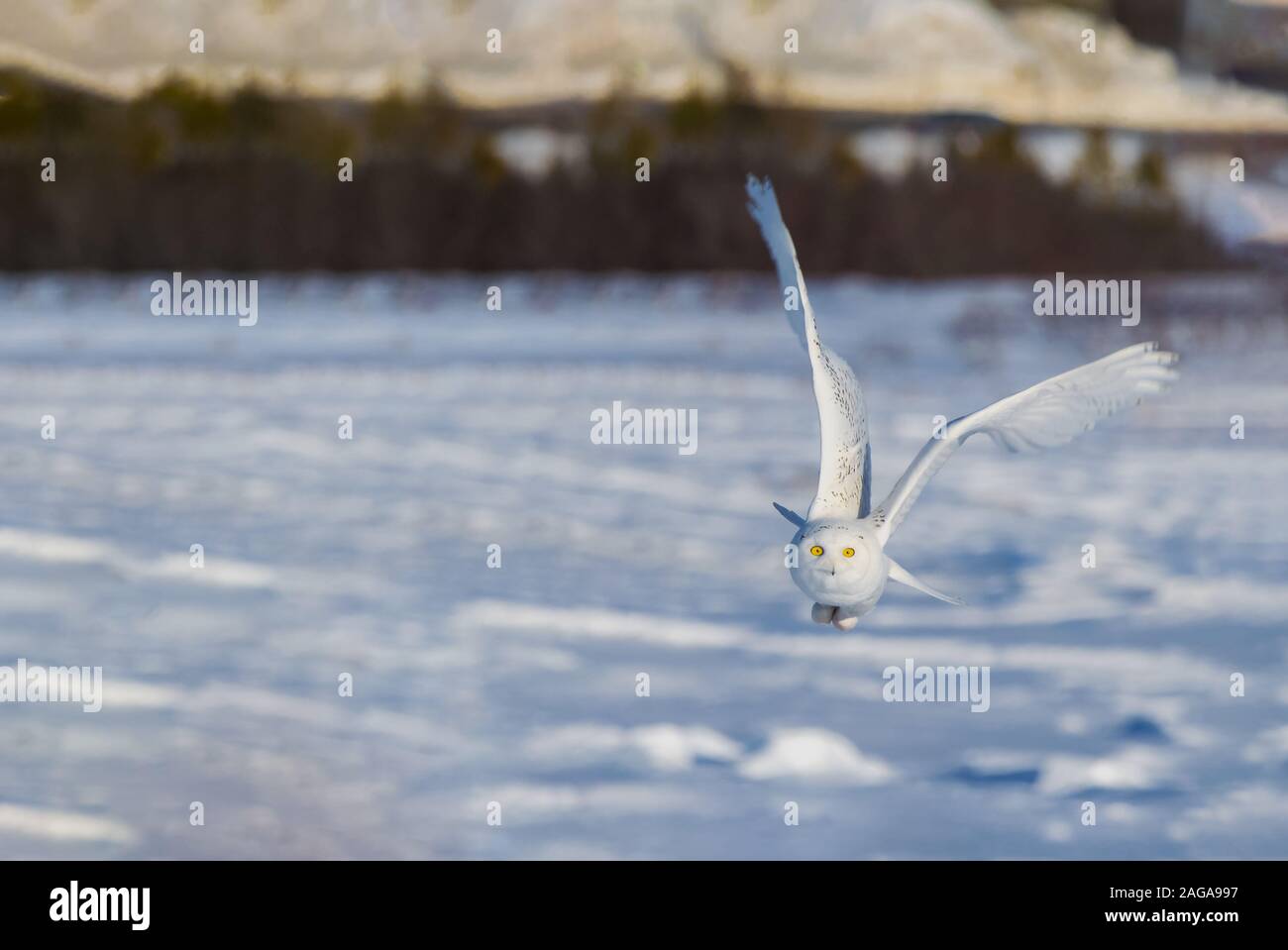
In the vast, frozen expanses of the Arctic tundra, the snowy owl reigns as a majestic sentinel of a fragile ecosystem. Cloaked in pristine white feathers, these enigmatic birds embody the wild spirit of the northern wilderness. Yet, beneath their silent, unwavering gaze lies a story shadowed by human interference—one of hunting and poaching that threatens to unravel their numbers and unsettle an intricate balance. Delving into the impact of these illicit activities promises more than mere statistics; it invites a profound shift in our perception of conservation and an urgent call to reclaim stewardship over our natural heritage.
The Ecological Significance of Snowy Owls
Snowy owls are not mere spectacle; they occupy a crucial niche within the Arctic’s delicate food web. Predominantly preying on lemmings and other small mammals, they regulate populations that, if left unchecked, could decimate the tundra’s vegetation. This, in turn, affects a cascade of life forms dependent on these habitats. The owl’s migratory patterns and breeding behaviors are intricately linked to prey abundance, making their survival a barometer of Arctic ecosystem health. Thus, any threat to snowy owls reverberates far beyond their immediate population, highlighting the interconnectedness of life at the poles.
Historical and Contemporary Hunting Practices
Historically, indigenous communities revered snowy owls and occasionally hunted them, not out of malice but necessity and respect for the natural order. However, the advent of commercial hunting in the 19th and 20th centuries ushered in an era marked by overexploitation. Snowy owls, prized for their ethereal plumage and perceived mystical allure, became targets in a thriving wildlife trade. Today, while regulated hunting exists in some regions, illegal poaching persists, driven by demand in black markets for feathers, talons, and even live birds. These practices inflict direct mortality and disrupt breeding pairs, undermining reproductive success.
Poaching’s Silent Toll on Populations
Unlike overt hunting, poaching operates in the shadows, making its impact more insidious and difficult to quantify. The clandestine nature of poaching means that snowy owl mortality rates are likely underestimated. This obscurity complicates conservation efforts, masking population declines until they reach critical thresholds. Moreover, poaching often targets prime individuals—strong adults with prime genes—thereby eroding the population’s genetic robustness. The cumulative effect is a demographic time bomb, poised to detonate if intervention remains insufficient.
Consequences for Breeding and Migration
The disruption caused by hunting and poaching extends beyond individual deaths. Snowy owls exhibit strong site fidelity, returning to breeding grounds year after year. When breeding adults are removed, fledglings face reduced parental care, heightened vulnerability, and diminished survival rates. Additionally, migratory cohorts—often young dispersers—encounter intensified risks during long-range journeys. The loss of key participants in migration undermines the species’ ability to colonize new habitats or repopulate areas following environmental changes, trapping them in ecological cul-de-sacs.
Human Perception and Its Role in Vulnerability
Misconceptions about snowy owls contribute to their endangered plight. Their ethereal beauty and imposing presence inspire folklore and myth, yet this fascination sometimes morphs into exploitation. Some collectors and hunters prize these birds as trophies, symbolizing conquest over a wild frontier. This anthropocentric view reduces the snowy owl to a mere object, obscuring its intrinsic value and ecological role. Altering this perception is pivotal—shifting from domination to admiration creates fertile ground for stronger protective measures and public support.
Conservation Initiatives: Progress and Challenges
A constellation of conservation efforts seeks to shield snowy owls from the twin threats of hunting and poaching. International treaties, such as the Migratory Bird Treaty Act, offer legal frameworks that curtail collection and trade. Protected areas safeguard vital breeding and wintering habitats, creating refuges where these owls can thrive unmolested. However, enforcement remains uneven, especially in remote regions where monitoring is logistically challenging. Furthermore, local communities must be engaged as custodians rather than adversaries, integrating traditional knowledge with scientific strategies to fortify conservation outcomes.
The Path Forward: Cultivating Coexistence
Addressing the impact of hunting and poaching on snowy owls demands more than legislation; it calls for transformative empathy and education. Raising awareness about the species’ vulnerability and ecological significance can nurture a culture of reverence instead of exploitation. Empowering indigenous and local populations to partake in conservation fosters stewardship rooted in respect and reciprocity. Technological advances, from satellite tracking to community-based monitoring, herald new horizons in protecting these elusive hunters. In embracing coexistence, humanity recognizes that safeguarding snowy owls equates to preserving a living emblem of the Arctic’s enduring wilderness.
Unraveling the Enigma: The Snowy Owl’s Future
As the Arctic faces unprecedented environmental changes, compounded by anthropogenic pressures, the fate of snowy owls hangs precariously in the balance. Hunting and poaching, once seen as isolated acts, now emerge as threads in a complex tapestry of threats challenging survival. Yet, within this narrative lies hope—a testament to the power of informed action and collective will. By reimagining our relationship with nature and confronting exploitation head-on, the snowy owl’s haunting silhouette may continue to grace the winter skies for generations to come.