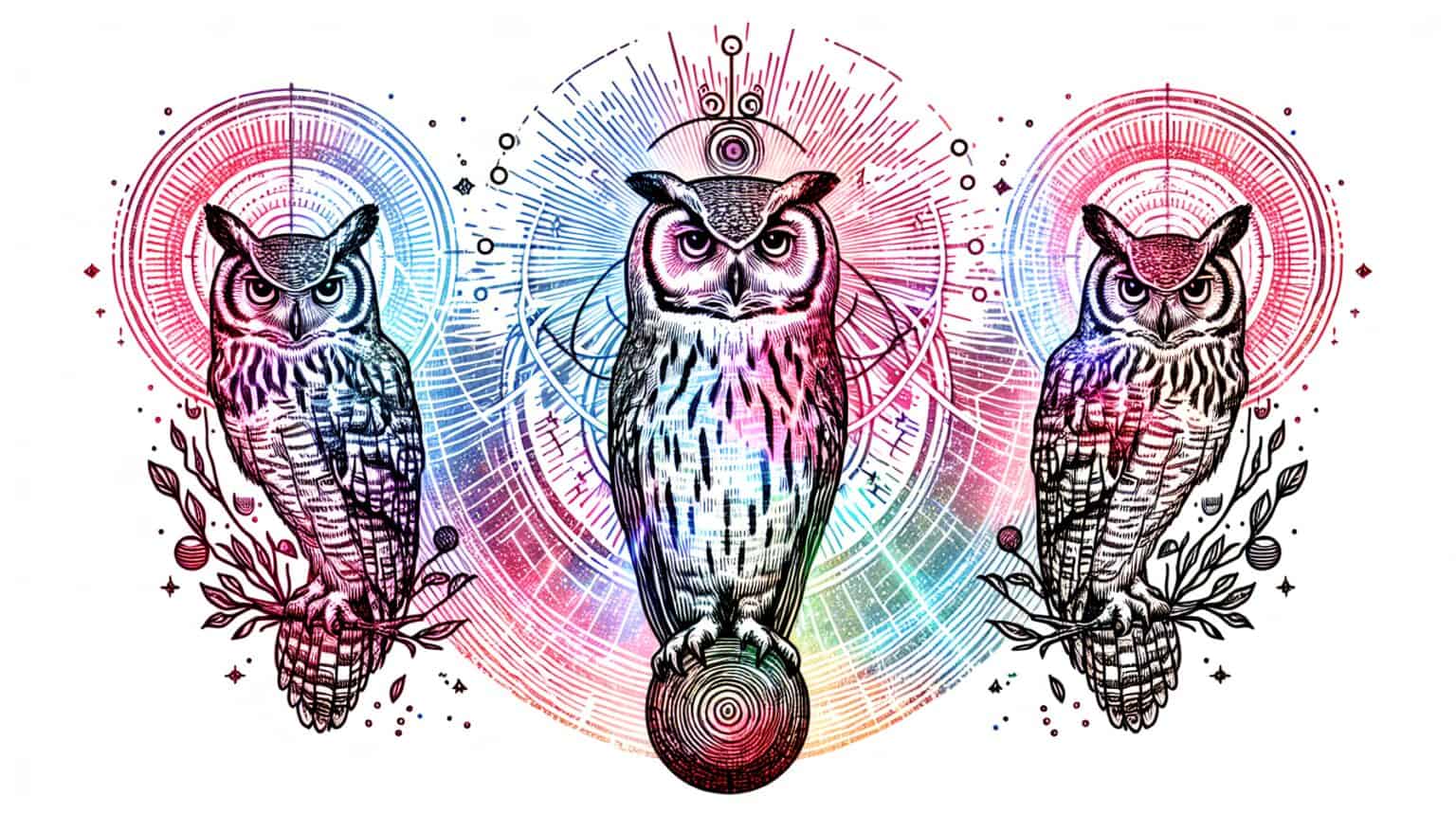
The owl, with its luminous gaze and silent flight, has long been a symbol that transcends the boundaries of mere ornithology. It is a creature that whispers to the human psyche, evoking both reverence and unease in equal measure. Across the tapestry of global spiritual traditions, the owl emerges as a spirit animal—an embodiment of wisdom, mystery, and transformation. But what does it truly represent? To unravel this enigma is to embark on a journey through the labyrinth of human consciousness, where the owl’s presence is both a guide and a mirror, reflecting the depths of our own souls.
The Owl as a Harbinger of Wisdom: Ancient Greek and Roman Traditions
In the cradle of Western thought, the owl soared as the sacred companion of Athena, the goddess of wisdom, warfare, and strategic prowess. The ancient Greeks revered this nocturnal bird as a symbol of knowledge, its piercing eyes a metaphor for the clarity of insight that comes only after the shadows of ignorance have been dispelled. The owl’s association with Athena was not merely ornamental; it was a testament to the idea that true wisdom is not passive but active, a force that must be wielded with discernment and purpose.
Yet, the owl’s role in Greek mythology was not without complexity. It was also a creature of the underworld, a silent observer of the mysteries that lie beyond the veil of the living. This duality—wisdom and death, light and shadow—suggests that the owl’s spirit is not one of mere enlightenment but of profound transformation. To invoke the owl as a spirit animal is to invite a reckoning with the unknown, to embrace the unsettling truths that lurk in the recesses of the mind.
The Owl as a Messenger of the Divine: Indigenous and Native American Beliefs
For many Indigenous cultures, the owl is far more than a symbol—it is a living messenger, a bridge between the earthly realm and the spiritual. Among the Lakota people, the owl is known as *Wíyakaȟča*, a creature that carries the whispers of the ancestors. Its hoot is not a mere sound but a sacred communication, a reminder that the past is never truly gone but lingers in the present, shaping our destinies.
In some traditions, the owl is seen as a guardian of secrets, its presence a warning against those who would pry into forbidden knowledge. To encounter an owl in dreams or visions is to be called to introspection, to confront the truths that society often suppresses. The owl, in this context, is not just a spirit animal but a catalyst for change—a force that compels us to shed our illusions and face reality with unflinching honesty.
The Owl as a Guide Through the Night: Celtic and Norse Mythologies
The Celts, with their deep connection to the natural world, viewed the owl as a psychopomp—a guide for the dead, leading souls through the liminal spaces between life and the afterlife. In Norse mythology, the owl is linked to the goddess Freyja, who possesses the ability to shapeshift and see into the future. Here, the owl is not just a creature of the night but a seer, a being that navigates the darkness with an unerring sense of direction.
This theme of guidance is central to the owl’s role as a spirit animal. It does not merely illuminate the path; it teaches us to trust our instincts, to move through uncertainty with grace. The owl’s silent flight is a lesson in patience, a reminder that sometimes the most profound revelations come not in the blaze of daylight but in the quietude of the night.
The Owl as a Symbol of Feminine Power: Eastern Spiritual Perspectives
In the East, the owl’s symbolism takes on a distinctly feminine hue. In Hinduism, the owl is associated with Lakshmi, the goddess of wealth and prosperity, but also with Saraswati, the embodiment of knowledge and the arts. Here, the owl is not just a creature of wisdom but a protector of sacred feminine energy—a force that nurtures, creates, and transforms.
Buddhist traditions, too, revere the owl as a symbol of discernment. The Dalai Lama has spoken of the owl as a reminder to cultivate “the wisdom eye,” the ability to see beyond superficial appearances. In this light, the owl becomes a feminist icon—a creature that challenges patriarchal norms by asserting the power of intuition and inner knowing.
The Owl as a Shadow Self: Jungian and Psychological Interpretations
Carl Jung would argue that the owl, with its nocturnal habits and piercing gaze, is a manifestation of the shadow self—the part of us that we often deny or suppress. To encounter the owl as a spirit animal is to confront the darker aspects of our psyche, to acknowledge the fears, desires, and unresolved traumas that shape our lives.
Yet, Jungian psychology also suggests that the owl is a guide through these shadows. Its presence is an invitation to integrate the fragmented parts of ourselves, to transform our wounds into wisdom. The owl does not judge; it observes. And in that observation, we find the courage to face our truths.
The Owl as a Catalyst for Change: Modern Spiritual Movements
In contemporary spiritual circles, the owl is often invoked as a symbol of awakening—a call to break free from societal conditioning and embrace a more authentic way of being. It is a spirit animal for those who feel called to challenge the status quo, to question the narratives that have been imposed upon them.
The owl’s nocturnal nature is a metaphor for the inner work that must be done in the quiet hours, away from the noise of the world. It is a reminder that transformation is not a linear process but a cyclical one, a dance between light and dark, knowledge and mystery.
Conclusion: The Owl’s Invitation
The owl, in all its enigmatic glory, is more than a spirit animal—it is a mirror, a guide, and a catalyst. It invites us to see beyond the surface, to embrace the unknown, and to trust in the wisdom that lies within. Whether as a harbinger of wisdom, a messenger of the divine, or a shadow self, the owl’s presence is a promise—a promise of transformation, of growth, of a shift in perspective that can change everything.
So the next time you encounter an owl, whether in a dream, a vision, or the quiet of the night, pause. Listen. The owl is speaking. Are you ready to hear what it has to say?