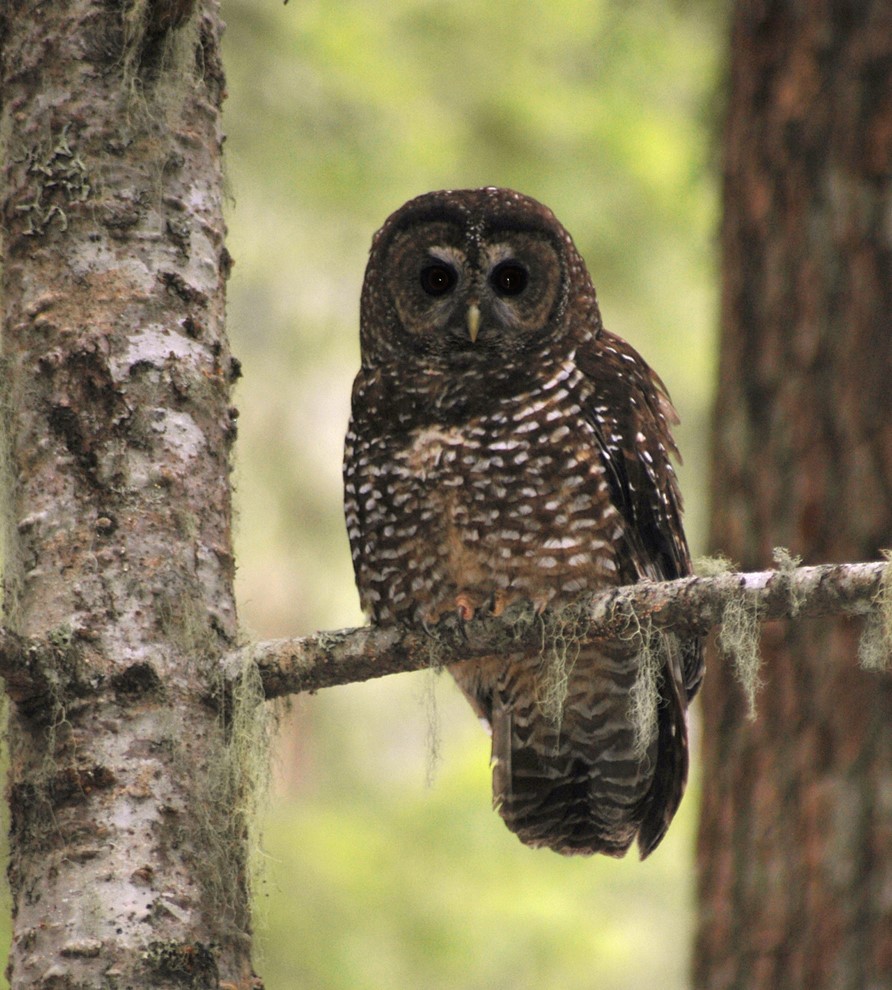
The Pacific Northwest’s emerald forests, where mist clings to ancient conifers like a lover’s embrace, are home to one of the most enigmatic creatures of the wild: the Northern Spotted Owl. This raptor, with its dark eyes that seem to hold the secrets of the old-growth canopy, has become an unlikely symbol of the climate crisis. As the world’s thermostat climbs, these birds face a future as uncertain as the shifting seasons. But what if the models predicting their fate could also illuminate a path forward—not just for them, but for the ecosystems they anchor? Climate models, those intricate digital orreries of wind, temperature, and precipitation, are now mapping the Spotted Owl’s potential trajectory with a precision that borders on prophecy. Yet, these predictions are more than cold calculations; they are a clarion call to rethink our relationship with the land, the sky, and the creatures that call it home.
The Owl as Oracle: Why Spotted Owls Are Climate Canaries
In the lexicon of ecological warning signs, the Northern Spotted Owl has long been a canary in the coal mine—a species whose decline signals broader environmental distress. These owls are inextricably tied to the ancient forests of the Pacific Northwest, where Douglas firs and western hemlocks rise like cathedral spires. Their survival hinges on two critical factors: old-growth habitat and a stable climate. But as temperatures rise and weather patterns grow erratic, the very foundations of their existence are crumbling. Climate models, those sophisticated simulations of Earth’s future, are now revealing a troubling truth: the Spotted Owl’s habitat is shrinking not just from logging, but from the creeping fingers of climate change. Droughts parch the soil, wildfires scorch the canopy, and invasive species muscle in on their territory. The owl, it seems, is not just a victim of deforestation—it is a prisoner of a changing climate.
What makes these models so compelling is their ability to peer into the future with a clarity that feels almost eerie. By weaving together data on temperature, precipitation, and forest dynamics, scientists can project how the Spotted Owl’s range might shift over the coming decades. Some models suggest that by 2050, the owl’s habitat could contract by as much as 30%, pushing it into higher elevations or fragmented pockets of forest. Others warn of a more dire scenario: a complete collapse of suitable habitat in the lowland forests where these birds have thrived for millennia. These predictions are not mere speculation; they are the result of decades of painstaking research, distilled into digital crystal balls that force us to confront uncomfortable truths.
The Alchemy of Models: How Climate Science Deciphers the Owl’s Fate
At the heart of these predictions lies a complex alchemy of data, algorithms, and ecological intuition. Climate models are not static snapshots; they are dynamic, evolving systems that simulate the interactions between the atmosphere, oceans, and land. For the Spotted Owl, these models must account for a dizzying array of variables: rising temperatures that alter prey availability, shifting precipitation patterns that dry up streams, and the increased frequency of extreme weather events that can ignite catastrophic wildfires. But the models don’t stop there. They also incorporate the owl’s own biology—its nesting habits, territorial range, and sensitivity to environmental stressors. By integrating these layers of data, scientists can paint a portrait of the owl’s future that is as nuanced as it is unsettling.
One of the most intriguing aspects of these models is their ability to explore “what-if” scenarios. What if global emissions continue unabated? What if we slash carbon output tomorrow? The answers are stark. Under a high-emissions scenario, the Spotted Owl’s habitat could vanish from the lowland forests of Oregon and Washington by the end of the century. But under a more optimistic pathway—one where emissions peak by 2040 and decline thereafter—the owl’s prospects improve dramatically. These scenarios are not just academic exercises; they are a roadmap for action, a way to quantify the cost of inaction and the rewards of intervention. They remind us that the fate of the Spotted Owl is not sealed; it is a choice we make, collectively, in the coming years.
The Fire and the Flood: How Climate Extremes Rewrite the Owl’s World
For the Spotted Owl, climate change is not a distant threat—it is an immediate reality, playing out in the form of wildfires that roar through the forest like a biblical plague and droughts that wither the streams where its prey once thrived. The Pacific Northwest has always been a land of fire and water, but the balance is tipping. Hotter, drier summers have turned the region’s forests into tinderboxes, while warmer winters bring rain instead of snow, disrupting the seasonal rhythms that sustain the ecosystem. These extremes are not anomalies; they are the new normal, and the Spotted Owl is caught in the crossfire.
Wildfires, in particular, are reshaping the owl’s world in ways that are both visible and invisible. On the surface, the flames consume the old-growth trees that the owl depends on for nesting and hunting. But beneath the charred canopy, the fires also alter the forest’s structure, creating a patchwork of burned and unburned areas that can fragment the owl’s territory. Some models suggest that by mid-century, the frequency of severe wildfires could double, leaving the owl with fewer and fewer refuges. Meanwhile, the increasing prevalence of droughts is drying up the streams and wetlands that support the owl’s prey—small mammals like flying squirrels and woodrats. Without these critical water sources, the owl’s food web unravels, leaving it stranded in a landscape that no longer sustains it.
Yet, even in the face of these challenges, there is a glimmer of hope. Some models predict that the Spotted Owl could adapt to these changes by shifting its range to higher elevations or cooler, moister forests. But this adaptation comes with a cost. Higher elevations often lack the same density of old-growth trees, and the owl’s territorial nature means that competition for space could intensify. Moreover, the owl’s slow reproductive rate—it takes years for a pair to raise a single chick—makes it ill-equipped to keep pace with rapid environmental change. The models, in their stark honesty, remind us that adaptation is not a given; it is a gamble, one that the Spotted Owl may not always win.
Beyond the Models: The Human Factor in the Owl’s Survival
Climate models are powerful tools, but they are not infallible. They cannot account for the unpredictable forces of human nature—the policies that protect or destroy habitat, the conservation efforts that revive populations, or the cultural shifts that redefine our relationship with the natural world. The Spotted Owl’s fate is not just a matter of science; it is a matter of choice. Will we prioritize the preservation of old-growth forests, or will we continue to log them into oblivion? Will we invest in reforestation and habitat restoration, or will we let the flames and floods dictate the terms? The models may predict the owl’s decline, but they also underscore the power we hold to rewrite the ending.
One of the most promising avenues for intervention lies in the concept of “climate refugia”—areas that remain relatively stable despite broader environmental changes. By identifying and protecting these refugia, we can create safe havens for the Spotted Owl and other species facing similar threats. Some models suggest that these refugia could be found in the wetter, cooler forests of the Cascade Range or the rugged coastlines of British Columbia. But protecting these areas will require more than just good intentions; it will demand bold action, from expanding protected areas to reducing carbon emissions to rethinking our approach to forest management. The Spotted Owl, in its silent, watchful way, is asking us to rise to the occasion.
There is also a deeper, more philosophical question at play here: What does the Spotted Owl’s struggle tell us about our own place in the world? These owls are not just indicators of ecological health; they are symbols of the wild, untamed spirit that once defined the Pacific Northwest. Their decline is a mirror held up to our own choices, a reminder that we are not separate from nature but a part of it. The models may predict a future where the Spotted Owl is a ghost of the old-growth forests, but they also offer a chance to imagine a different future—one where humans and owls coexist, where forests thrive, and where the climate crisis is met with the urgency it demands.
The Owl’s Legacy: A Call to Reimagine the Future
The story of the Spotted Owl is not just about a bird; it is about the forests that cradle it, the climate that shapes it, and the humans who share its world. The models predicting its fate are more than cold calculations; they are a narrative of loss and resilience, a testament to the fragility of life in the Anthropocene. But they are also a call to action, a plea to see the world through new eyes. What if we treated the Spotted Owl not as a relic of the past, but as a guide to the future? What if its survival depended not on our indifference, but on our ingenuity?
The Pacific Northwest’s forests are not just a backdrop to this story; they are the stage on which the drama of climate change is playing out. The Spotted Owl, with its piercing gaze and silent wings, is the protagonist of this tale—a creature whose fate is intertwined with our own. The models may show us a future where it vanishes, but they also show us a future where it thrives. The choice is ours. Will we let the flames consume the owl’s world, or will we be the architects of a new one?