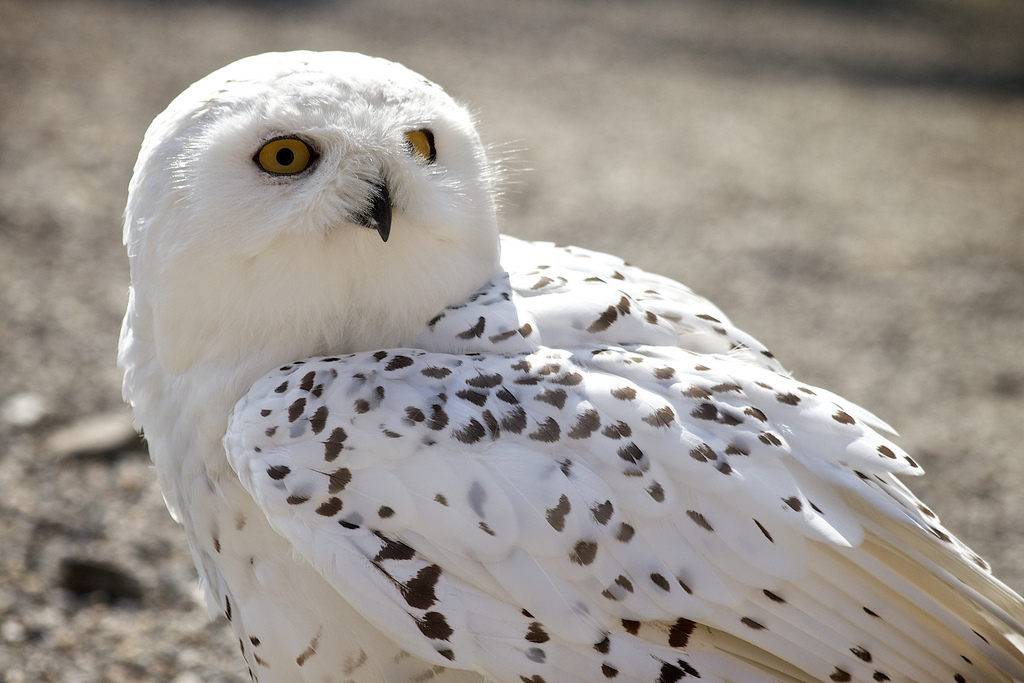
The winter of 2026 promises to be one unlike any other—for those who know where to look. As the Arctic winds howl across the tundra, a silent, feathered armada takes flight, descending upon the lower latitudes in a spectacle that has left ornithologists and casual observers alike in awe. But where exactly will these snowy sentinels alight? And what challenges might they—and their admirers—face along the way? The answers lie not in crystal balls, but in the careful study of migration patterns, environmental shifts, and the whims of nature itself.
The Great White Exodus: Why 2026 Could Be Different
Every few years, the Arctic’s most enigmatic raptor—the snowy owl (*Bubo scandiacus*)—embarks on a journey that defies the ordinary. Known as an irruption, this mass migration sees these birds abandon their frozen homelands in search of food, driven by the cyclical boom-and-bust dynamics of lemming populations. But 2026 isn’t just another year on the calendar; it’s a year poised to rewrite the rules. Climate anomalies, shifting prey availability, and even solar activity may conspire to create an irruption of unprecedented scale.
Imagine, if you will, a continent suddenly dotted with ghostly white figures perched atop fence posts, hay bales, or the skeletal remains of winter-stripped trees. These aren’t figments of a fever dream—they’re the harbingers of an ecological phenomenon that transforms landscapes into temporary aviaries. The question isn’t whether the owls will come, but where they’ll choose to make their temporary kingdoms. And for birders, photographers, and nature enthusiasts, the hunt is on.
Mapping the Flight Path: Hotspots to Watch
To predict where snowy owls will descend, we must first understand the invisible highways they follow. Unlike songbirds, which navigate by the stars and magnetic fields, snowy owls are opportunists, their routes dictated by the whims of prey and weather. Yet, patterns do emerge. The Great Lakes region, with its vast open farmlands and shorelines teeming with waterfowl, has long been a favored wintering ground. But 2026 could see this tradition upended.
In the Midwest, the fertile plains of North Dakota and Minnesota may witness an influx of owls, drawn by the promise of voles and mice thriving in the aftermath of a mild autumn. Meanwhile, the coastal stretches of New England—where salt marshes and dunes mimic the Arctic’s open vistas—could become veritable owl metropolises. Even the unexpected might occur: the rolling hills of Pennsylvania or the windswept moors of Scotland could find themselves graced by these Arctic wanderers, a testament to nature’s unpredictable generosity.
But the true wild card lies in the West. The Great Basin’s high deserts, with their sparse but resilient rodent populations, could lure owls deeper into the interior than usual. And let’s not forget the Pacific Northwest, where the convergence of marine and terrestrial ecosystems might offer a buffet of prey. The challenge? These regions are vast, and the owls are masters of camouflage. Spotting them requires not just luck, but strategy.
The Human Factor: Challenges of the Modern Irruption
For all their majesty, snowy owls face a gauntlet of human-made obstacles. Urban sprawl encroaches on their hunting grounds, while wind turbines and power lines pose silent, deadly threats. The rise of drone photography, while a boon for documentation, risks disturbing these birds at a critical time—when every calorie counts. And then there’s the paradox of popularity: the more people flock to see the owls, the greater the risk of habitat degradation.
Consider the case of a farmer in Wisconsin who, upon discovering an owl perched in his field, posts about it online. Within hours, dozens of cars line the roadside, their occupants armed with cameras and binoculars. The owl, stressed by the attention, may abandon its hunting grounds, leaving it to face the winter with diminished reserves. It’s a delicate balance—celebrating these birds while ensuring they’re not loved to death.
Even well-intentioned actions can backfire. Feeding owls, for instance, might seem like a kind gesture, but it can disrupt their natural foraging behaviors and even habituate them to human presence, making them vulnerable to predators or collisions. The challenge for 2026 isn’t just finding the owls—it’s ensuring they thrive once they arrive.
Beyond the Map: The Unseen Stories of the Irruption
Every snowy owl sighting is a chapter in a larger narrative, one that spans continents and seasons. Take, for example, the owl that winters in Iowa, only to be spotted the following summer in Manitoba—proof that these birds are not mere wanderers, but true nomads. Or the pair that establishes territory in a remote Alaskan valley, their presence a barometer of ecological health in a rapidly warming Arctic.
Then there’s the human side of the story. The retired schoolteacher in Michigan who, after decades of birdwatching, finally glimpses her first snowy owl at 70. The teenager in Nova Scotia who, armed with a sketchbook, captures the intricate patterns of an owl’s feathers in a way no camera ever could. These moments transcend the mere act of observation; they’re acts of connection, bridging the gap between species in a world that often feels divided.
But the irruption also serves as a reminder of nature’s fragility. As the Arctic warms and lemming populations fluctuate, the snowy owl’s future hangs in the balance. Will 2026 be a banner year for sightings, or a harbinger of decline? The answer may lie not in the skies above, but in the silent, frozen soils of the North.
Preparing for the Arrival: A Call to Action
If history is any guide, the snowy owl irruption of 2026 will be a fleeting but unforgettable spectacle. To make the most of it—and to ensure these birds are here for future generations—we must approach their arrival with respect and intention. That means educating ourselves on proper viewing etiquette, supporting conservation efforts that protect their habitats, and perhaps most importantly, embracing the uncertainty that makes nature so thrilling.
So, will you be ready when the owls descend? Keep your binoculars close, your camera settings primed, and your heart open to the unexpected. The Arctic’s silent ambassadors are coming—and they’re bringing a show that promises to be nothing short of extraordinary.