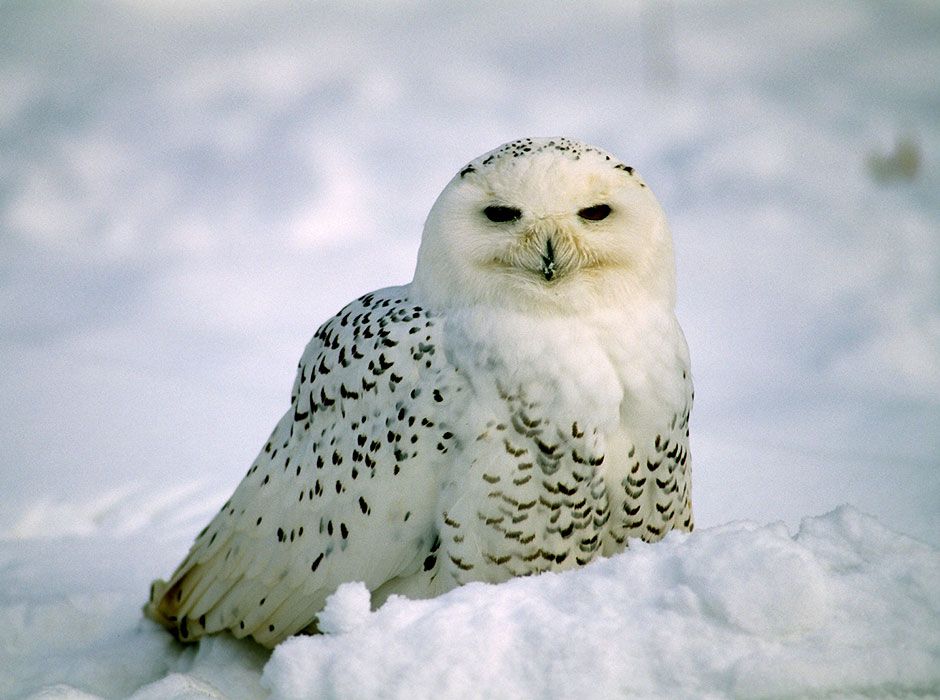
The Arctic tundra is a realm of stark beauty, where the wind sculpts the land into endless undulations of ice and snow. Beneath this frozen expanse, a silent revolution unfolds—one driven not by the might of glaciers, but by the quiet, relentless work of creatures like the snowy owl. These birds, with their piercing golden eyes and feathered cloaks of white, are not mere spectators to the tundra’s cycles. They are architects of nutrient redistribution, their existence a testament to the intricate, often overlooked connections that sustain this fragile ecosystem.
The Tundra’s Nutrient Paradox: A Land of Scarcity and Surplus
The Arctic tundra is a land of extremes. For nine months of the year, it is a frozen wasteland, where nutrients are locked in ice and permafrost. Yet, when summer arrives, the landscape erupts into a frenzy of life—migratory birds arrive in droves, plants burst forth from the thawing earth, and insects swarm in clouds. This seasonal abundance creates a paradox: a landscape that is both impoverished and overflowing. The key to resolving this paradox lies in the movement of nutrients—how they are captured, transformed, and redistributed across the land.
Enter the snowy owl, a creature of contradictions. A predator that thrives where others falter, it is both a harbinger of death and a catalyst for renewal. When an owl hunts, it does more than feed itself; it becomes a mobile nutrient pump, shifting energy from the soil to the sky and back again. Its prey—lemmings, voles, and other small mammals—are repositories of nitrogen, phosphorus, and carbon, elements that would otherwise remain trapped in the permafrost. By consuming them, the owl unlocks these nutrients, making them available to the ecosystem in a form that plants and microbes can utilize.
The Owl’s Hunting Grounds: A Nutrient Transfer Network
Imagine the tundra as a vast, interconnected web, where every thread is a pathway for nutrients. The snowy owl is a weaver of this web, its hunting grounds a lattice of energy transfer. When an owl selects a hunting perch—a hummock of moss, a rocky outcrop, or the skeletal remains of a dead willow—it is not merely choosing a vantage point. It is designating a nutrient deposition site.
Consider the lemming carcass left behind after a meal. Left to decompose, its body becomes a feast for scavengers—foxes, ravens, and insects—but more importantly, it leaches nutrients into the soil. The nitrogen-rich guano of the owl, scattered across the landscape, acts as a fertilizer, stimulating the growth of nitrogen-fixing lichens and mosses. Even the owl’s feathers, shed during molting, contribute to the nutrient cycle. As they decompose, they release keratin-bound nitrogen, a slow-release fertilizer that sustains the tundra’s sparse but resilient flora.
This process is not random. Owls exhibit a phenomenon known as nutrient hotspotting, where their hunting patterns create localized zones of enrichment. A study of owl territories in the Canadian Arctic revealed that areas frequented by snowy owls had soil nitrogen levels up to 30% higher than surrounding regions. This enrichment fosters the growth of nitrophilous plants—species that thrive in nitrogen-rich environments—such as Arctic willow and sedges. These plants, in turn, provide food for herbivores, creating a feedback loop that sustains the entire ecosystem.
The Owl as a Keystone Predator: Stabilizing the Tundra’s Delicate Balance
Keystone species are those whose presence shapes the very structure of an ecosystem. The snowy owl is such a creature. Without it, the tundra’s nutrient cycles would falter, leading to cascading collapses in plant and animal populations. Its role is not just about predation; it is about regulation.
Lemmings, the owl’s primary prey, undergo dramatic population cycles—booming one year, crashing the next. When lemming numbers are high, owls thrive, their reproductive success soaring. But when lemmings decline, owls do not vanish. Instead, they switch to alternative prey—ptarmigans, hares, or even fish—preventing overgrazing of the tundra’s vegetation. This dietary flexibility ensures that the ecosystem does not become overburdened by any single species, maintaining a delicate balance.
Moreover, the owl’s presence deters overpopulation of its prey. By keeping lemming numbers in check, it prevents the overconsumption of grasses and sedges, which would otherwise lead to soil erosion and nutrient depletion. In this way, the owl acts as a guardian of the tundra’s fertility, ensuring that the land remains productive even in the face of climatic volatility.
The Silent Alchemy: How Owls Transform Death into Life
There is a term in ecology—necromass—which refers to the dead organic matter that fuels an ecosystem. The snowy owl is a necromancer of sorts, transforming death into life through its hunting and scavenging habits. When an owl kills a lemming, it is not just ending a life; it is initiating a chain reaction of decomposition and nutrient release.
The process begins with the owl’s digestive system. Unlike many predators, owls do not digest bones. Instead, they regurgitate them in the form of pellets—compact masses of fur, teeth, and bones. These pellets, scattered across the tundra, become microhabitats for decomposers. Fungi and bacteria colonize them, breaking down the organic matter and releasing nutrients into the soil. Studies have shown that owl pellets can increase microbial activity in the surrounding area by up to 40%, accelerating the breakdown of organic material.
Even the owl’s own waste plays a role. The guano of snowy owls is rich in uric acid, a compound that, when broken down, releases ammonia—a form of nitrogen that plants can absorb. In the nutrient-poor tundra, this is a gift. The ammonia seeps into the soil, where it is converted by bacteria into nitrates, the primary nutrient for plant growth. Without the owl, this cycle would slow to a crawl, leaving the tundra in a state of perpetual nutrient deficit.
The Owl’s Legacy: A Blueprint for Arctic Resilience
The snowy owl is more than a predator; it is a symbol of the Arctic’s resilience. In a world where climate change is reshaping ecosystems at an unprecedented rate, the owl’s role in nutrient cycling offers a lesson in adaptability. As temperatures rise and permafrost thaws, the tundra faces new challenges—nutrient runoff, invasive species, and altered plant communities. Yet, the owl’s ability to redistribute nutrients may prove crucial in mitigating these changes.
Consider the thawing permafrost. As it melts, it releases vast stores of carbon and nitrogen, which could overwhelm the ecosystem if not properly cycled. The snowy owl, with its capacity to mobilize these nutrients, could act as a natural buffer, preventing nutrient imbalances that lead to algal blooms or toxic soil conditions. Its presence ensures that the tundra’s cycles remain intact, even as the climate shifts beneath its feet.
But the owl’s role extends beyond the physical. It is a cultural icon, a creature woven into the myths and stories of Indigenous Arctic peoples. For the Inuit, the snowy owl is a messenger between the human and spirit worlds, a guardian of the land. This spiritual significance underscores the owl’s importance—not just as an ecological actor, but as a symbol of the interconnectedness of all life.
The Future: Protecting the Owl, Preserving the Cycle
The snowy owl’s future is uncertain. Climate change, habitat destruction, and human encroachment threaten its existence. Yet, its role in the tundra’s nutrient cycles is irreplaceable. Protecting the owl is not just about saving a species; it is about preserving the very fabric of the Arctic ecosystem.
Conservation efforts must focus on safeguarding the owl’s habitat—protecting the vast, open landscapes it relies on for hunting. This means limiting industrial development in the Arctic, reducing carbon emissions to slow climate change, and supporting Indigenous-led conservation initiatives. The owl’s survival depends on a healthy tundra, and the tundra’s health depends on the owl.
As we stand on the precipice of an uncertain future, the snowy owl offers a reminder: nature’s cycles are intricate, and every creature, no matter how small or seemingly insignificant, plays a part. By protecting the owl, we protect the land itself—a land that has sustained life for millennia and holds the secrets to resilience in the face of change.