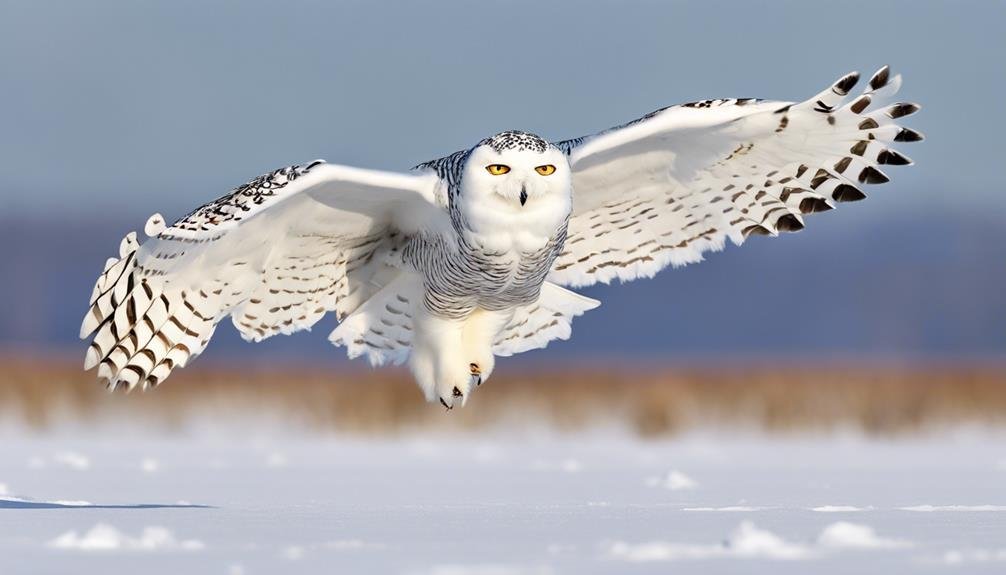
Beneath the vast, windswept expanse of the Arctic tundra, where the earth breathes in slow, deliberate rhythms, a silent symphony of life unfolds. The snowy owl, a ghostly sentinel of the frozen north, moves through this landscape not merely as a predator, but as an architect of soil health—a living conduit between the sky and the earth. Its hunting prowess, honed over millennia, does more than sustain the owl; it reshapes the very ground beneath our feet. Through the cycle of consumption and decomposition, the snowy owl becomes an unwitting steward of Arctic fertility, its prey serving as both sustenance and soil-enriching catalyst. To understand this relationship is to witness the intricate dance of predator and planet, where every talon strike echoes through the permafrost.
The Arctic as a Living Canvas: Soil as the Unsung Hero
The Arctic soil is no mere inert substrate—it is a living, breathing entity, a palimpsest of ancient carbon, microbial murmurs, and frozen time. Beneath the veneer of lichen and moss lies a fragile ecosystem, where the decomposition of organic matter is a glacial ballet, slowed by permafrost and accelerated by the unseen hands of scavengers and decomposers. Here, the snowy owl enters as an unlikely protagonist, its hunting grounds doubling as laboratories of soil regeneration. Each lemming it claims is not just a meal, but a parcel of nutrients destined for the earth’s embrace. The owl’s role transcends predation; it is a mobile fertilizer factory, redistributing nitrogen, phosphorus, and organic carbon across the tundra. The soil, in turn, whispers its gratitude through the lush growth of sedges and grasses, which then cradle the next generation of prey. This is not just a food chain—it is a feedback loop of reciprocity, where the owl’s hunger feeds the land’s vitality.
The Lemming Legacy: How Small Prey Shape the Land
To the untrained eye, a lemming is a fleeting morsel, a blur of fur vanishing into the tundra. But to the soil, it is a treasure chest of potential. When a snowy owl claims a lemming, it does not merely consume flesh—it unlocks a cascade of ecological alchemy. The lemming’s body, rich in nitrogen and minerals, becomes a microbial feast. Bacteria and fungi, those unseen artisans of decomposition, break down the carcass, transforming it into humus—a dark, crumbly elixir that binds the soil together. This humus, in turn, retains moisture, shelters seeds, and fosters the growth of plants that will feed the next generation of herbivores. The owl’s hunting grounds become oases of fertility, where the soil’s fertility is not static but dynamically renewed. Without the owl’s predation, lemming populations could spiral, overgrazing the tundra and leaving the soil barren. The owl, then, is not just a hunter; it is a regulator, a gardener of the Arctic’s fragile green threads.
The Nutrient Cascade: From Talons to Tundra
The journey of nutrients from prey to soil is a tale of transformation, a silent odyssey that begins with a snowy owl’s strike. Consider the phosphorus locked in a lemming’s bones—a mineral essential for plant growth. When the owl digests its meal, some of this phosphorus is excreted, while the rest is incorporated into the owl’s own body, only to be returned to the earth upon its death. But even in life, the owl’s presence ensures that phosphorus is not hoarded but circulated. Through its droppings, the owl deposits nutrient-rich guano across the tundra, fertilizing the soil in patches that mirror its hunting routes. These nutrient hotspots become magnets for plant life, drawing in willows and cotton grass that, in turn, shelter more lemmings. The soil, enriched and revitalized, breathes deeper, its microbial communities thriving in the wake of this aerial benefactor. This is the nutrient cascade—a ripple effect where the owl’s actions echo through the ecosystem, stitching together the fabric of Arctic life.
Permafrost’s Pulse: The Owl’s Role in Thawing and Sequestration
The Arctic’s permafrost is both a vault and a time bomb—trapping ancient carbon in its icy grip while threatening to release it as the planet warms. Here, the snowy owl’s influence takes on a new dimension. By promoting the growth of dense vegetation through its nutrient deposition, the owl indirectly strengthens the soil’s structure, reducing erosion and stabilizing the ground. This, in turn, slows the thawing of permafrost, preserving the carbon locked within. Moreover, the owl’s hunting grounds often feature patches of bare soil where lemming burrows aerate the earth, allowing for greater microbial activity. These microclimates become incubators for decomposition, where organic matter breaks down more efficiently, sequestering carbon in the form of stable humus. The owl, then, is not just a player in the Arctic’s carbon cycle—it is a moderator, a force that tempers the extremes of thaw and freeze, ensuring that the soil’s secrets remain buried a little longer.
The Tundra’s Tapestry: Weaving Biodiversity Through Predation
Biodiversity is not a static state but a dynamic equilibrium, a balance maintained by the invisible threads of predation. The snowy owl, as a keystone predator, pulls these threads taut, ensuring that no single species dominates the tundra’s stage. By keeping lemming populations in check, the owl prevents overgrazing, allowing a mosaic of plant species to flourish. This diversity, in turn, supports a web of life that extends far beyond the owl itself—from insects that pollinate the flowers to birds that nest in the shrubs. The soil, enriched by this biodiversity, becomes a cradle for resilience, its microbial communities diversifying to handle the ebb and flow of nutrients. The owl’s hunting grounds are not just hunting grounds; they are laboratories of coexistence, where every species, from the smallest bacterium to the largest predator, plays a role in the grand design of Arctic life.
The Silent Symphony: Listening to the Owl’s Soil Legacy
To stand on the Arctic tundra is to hear a symphony of silences—the whisper of wind through sedges, the crackle of frost, the distant cry of a snowy owl. But beneath these sounds lies another melody, one composed of microbial hums, root secretions, and the slow, rhythmic pulse of nutrient exchange. The snowy owl, though silent in its flight, conducts this symphony with every hunt. Its impact is not measured in decibels but in the quiet transformation of soil, the unseen enrichment of the earth. To ignore this role is to overlook the owl’s true legacy—not as a mere predator, but as a silent guardian of the Arctic’s soul. The soil remembers. It remembers the lemmings that fed the owls, the owls that fed the soil, and the generations of life that have thrived in this cycle of reciprocity. This is the owl’s gift to the Arctic: a land made fertile by the very act of consumption, where every meal is a seed, and every talon strike a promise of renewal.