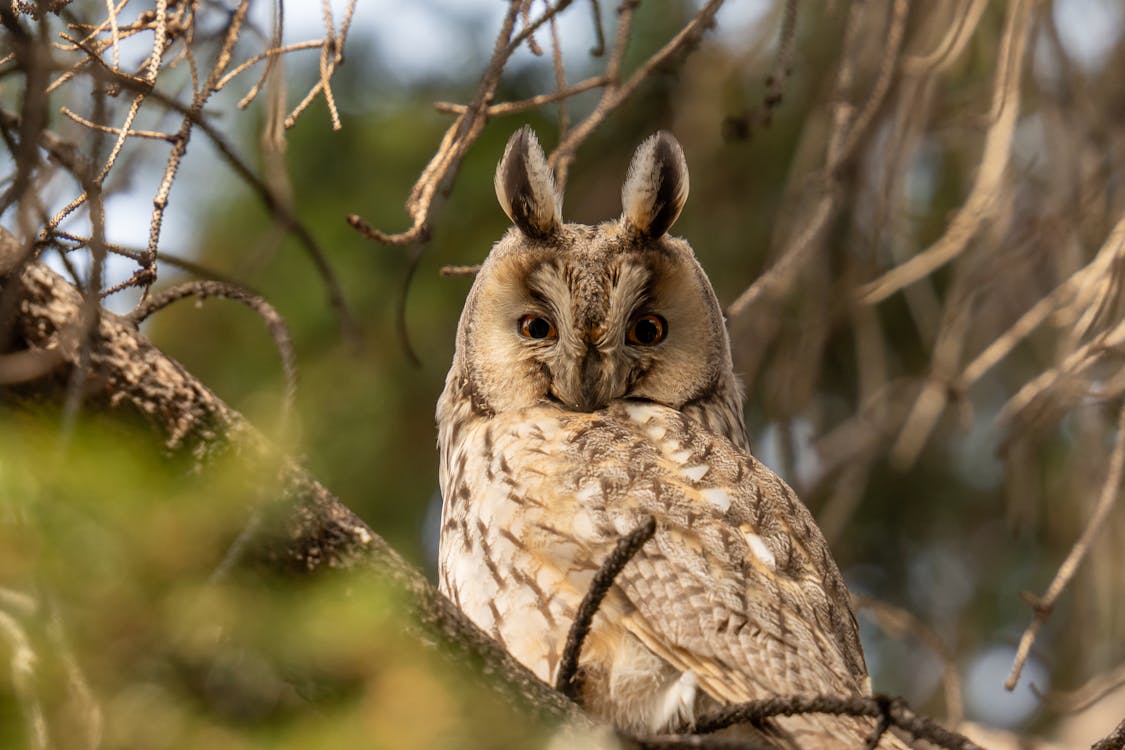
In the quiet embrace of Spain’s rejuvenated woodlands, a silent sentinel has returned—one that stirs both awe and curiosity in those who witness its presence. The long-eared owl, with its striking ear-like tufts and piercing amber gaze, is more than just a nocturnal hunter; it is a living testament to nature’s resilience and humanity’s capacity for restoration. Once on the brink of local decline, this enigmatic bird has made a remarkable comeback, its haunting calls echoing through forests that have been lovingly reclaimed from neglect. The story of its return is not merely one of ecological recovery, but a profound narrative about the intricate dance between human intervention and the wild, where every rustling leaf and shadowed bough tells a story of second chances.
The Vanishing Echo: Why the Long-Eared Owl Nearly Disappeared
For decades, the long-eared owl (*Asio otus*) faced a silent crisis across Spain’s landscapes. Once a familiar fixture in wooded regions, its numbers dwindled as forests were felled for agriculture, urban sprawl gnawed at its habitat, and pesticides poisoned its prey. The owl’s preference for dense coniferous or mixed woodlands—where it nests in the hollows of ancient trees and hunts small mammals under the cloak of night—made it particularly vulnerable. As these ecosystems fragmented, the owl’s once-thriving populations became isolated, their haunting calls fading into the echoes of a landscape that no longer sustained them. Conservationists noted the decline with growing alarm, recognizing that the owl’s disappearance was not just a loss for biodiversity, but a symptom of a deeper ecological unraveling. The long-eared owl, it seemed, was a canary in the coal mine, its struggles a harbinger of broader environmental distress.
The Turning Tide: How Restoration Became the Owl’s Salvation
The resurgence of the long-eared owl in Spain is a triumph of deliberate, science-driven habitat restoration. It began with a radical shift in land management—one that moved away from exploitation and toward rehabilitation. Conservationists and local communities collaborated to replant native tree species, restore degraded woodlands, and create corridors that reconnected fragmented habitats. In regions like Catalonia and Andalusia, where the owl once thrived, targeted reforestation efforts focused on species like holm oak and pine, which provide both nesting sites and shelter for its prey. Wetlands were reclaimed, allowing water tables to rise and ecosystems to flourish, while the banning of harmful pesticides ensured that the owl’s food sources remained abundant and uncontaminated. The transformation was slow, measured in years rather than seasons, but the results were undeniable. As the forests thickened and diversified, the owl’s presence became a sign that the land was healing.
The Owl’s Secret Life: A Glimpse into Its Nocturnal World
To understand the long-eared owl’s return is to peer into its secretive world—a realm of moonlit hunts and whispered calls. Unlike its more vocal relatives, this owl communicates in soft, eerie hoots that carry through the night like a ghostly serenade. By day, it camouflages itself among the branches, its mottled plumage blending seamlessly with the bark of ancient trees. Its hunting strategy is a masterclass in patience; it perches motionless, listening for the faint rustle of a vole or mouse below, then descends with silent wings to claim its prey. The owl’s ear tufts, though not actual ears, play a crucial role in its spatial awareness, allowing it to triangulate sounds with precision. This nocturnal ballet is a reminder of nature’s ingenuity, where every adaptation serves a purpose, and every creature, no matter how elusive, plays a vital role in the tapestry of life.
Beyond the Owl: The Ripple Effect of Restoration
The long-eared owl’s return is not an isolated victory. Its resurgence is a ripple that has reshaped entire ecosystems. With the owl’s presence, populations of small mammals—its primary prey—are kept in check, preventing overgrazing and allowing plant life to rebound. The owl’s nesting habits also benefit other cavity-dependent species, from woodpeckers to bats, creating a domino effect of ecological balance. Moreover, the restoration of these woodlands has bolstered carbon sequestration, improved soil health, and even revived traditional land-use practices like sustainable forestry. In essence, the owl’s comeback is a microcosm of a larger truth: when we heal the land, we heal ourselves. The forests that once sheltered the long-eared owl now offer cleaner air, purer water, and a sanctuary for countless species, including humans seeking solace in nature’s embrace.
The Cultural Resonance: Why the Owl Captivates the Human Imagination
There is something profoundly moving about the long-eared owl’s return—a creature that has long been shrouded in myth and symbolism. Across cultures, owls have been revered as omens, wisdom incarnate, or harbingers of change. In Spain, where folklore often casts the owl as a guardian of the wild, its resurgence feels like a restoration of balance. The bird’s haunting beauty, its ability to thrive in the liminal space between day and night, resonates with a human longing for mystery and resilience. When we see the long-eared owl perched in a rejuvenated woodland, we are reminded that nature is not a static backdrop but a dynamic, breathing entity—one that can recover if given the chance. Its story is a call to action, a testament to the fact that even the most fragile ecosystems can rebound when met with care and intention.
The Path Forward: Ensuring the Owl’s Legacy Endures
While the long-eared owl’s return is cause for celebration, the work is far from over. Climate change looms as a growing threat, with shifting weather patterns and prolonged droughts altering the very landscapes that have been so carefully restored. Invasive species, such as the American mink, pose additional risks to the owl’s prey base, while illegal logging and land development continue to encroach on its habitat. Conservationists are now turning to innovative solutions, from GPS tracking to monitor owl movements to community-led initiatives that educate locals on the importance of these birds. The key lies in balancing human needs with ecological integrity—ensuring that the forests remain wild, the prey remains plentiful, and the owl’s haunting calls continue to echo through the night. The long-eared owl’s story is not just a tale of recovery; it is a blueprint for coexistence, a reminder that when we nurture the wild, the wild nurtures us in return.