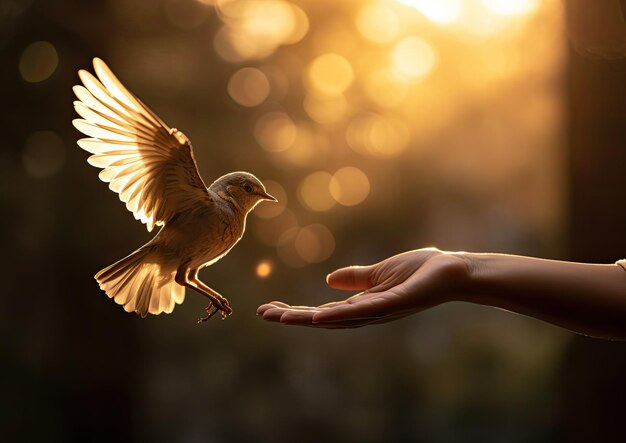
There is something profoundly moving about the moment an owl, once grounded by injury or illness, takes flight again—its wings cutting through the twilight like a silent exhortation to the heavens. This act of release is not merely a physical return to the wild; it is a poignant testament to resilience, a fleeting glimpse into the delicate balance between human intervention and nature’s unyielding rhythm. Yet beneath the quiet beauty of this scene lies a labyrinth of challenges, both seen and unseen, that rehabilitators must navigate with precision, patience, and humility. The journey of restoring an owl to its rightful domain is fraught with complexities that extend far beyond the confines of a recovery aviary.
The Psychological Weight of Captivity: Reconditioning the Wild Mind
Owls are creatures of instinct, their behaviors finely tuned by millennia of evolutionary pressure. When an owl is brought into captivity—whether due to a wing fracture, poisoning, or habitat encroachment—it does not merely lose mobility; it risks losing its very essence. The mind of an owl is a masterclass in hypervigilance, where every rustle in the undergrowth is a potential threat or a potential meal. Rehabilitators must therefore engage in a delicate act of psychological reconditioning, one that walks the razor’s edge between safety and self-sufficiency.
For weeks, or even months, the owl may exhibit behaviors that betray its internal turmoil: feather-plucking, erratic flight patterns, or an unnatural fixation on human presence. These are not mere quirks; they are symptoms of a psyche unmoored from its natural state. The challenge lies in recreating the stimuli that once governed its existence—scent trails of prey, the whisper of wind through foliage, the disorienting vastness of open sky—without imprinting it on human contact. It is a process akin to teaching a child to walk again, except the child is a predator whose survival depends on instincts honed over generations.
The Physical Hurdles: From Fractured Wings to Flight Proficiency
Even when an owl’s injuries heal, the road to flight is not guaranteed. A fractured coracoid bone, a common injury in window strikes, may mend, but the muscle atrophy that follows can leave the bird weak and uncoordinated. Rehabilitators must design exercise regimens that mimic the rigor of the wild—perches that demand balance, wind tunnels that test wing strength, and live prey simulations that rekindle the predatory drive. Yet, there is a fine line between conditioning and overtaxing; push too hard, and the owl may reinjure itself. Push too little, and it may never regain the stamina required for survival.
The mechanics of flight itself are a marvel of evolutionary engineering, and owls are particularly finicky fliers. Their asymmetrical wing beats, silent flight adaptations, and reliance on low-light vision make them uniquely vulnerable to even minor physical deficits. A rehabilitated owl that flaps laboriously or lands clumsily may become an easy target for predators or struggle to hunt effectively. The rehabilitator’s task is not just to mend but to refine—to ensure that every feather, every muscle, and every reflex is restored to its former precision.
The Predator’s Paradox: Relearning the Art of the Hunt
For an owl, hunting is not a learned skill but an instinctual imperative, one that is often suppressed in captivity. A rehabilitated owl may stare blankly at a live mouse, its natural reflexes dulled by months of being fed by hand. The challenge here is not just to reintroduce prey but to reignite the primal drive that once made it a fearsome hunter. Rehabilitators use a variety of techniques: hiding food in increasingly complex environments, introducing prey that mimics natural movement, and even using mirrors to simulate the presence of other owls, triggering territorial instincts.
Yet, there is a cruel irony in this process. The owl must rediscover its predatory nature, but too much success can be dangerous. A rehabilitated owl that becomes overly aggressive may lash out at handlers or fail to recognize when a fight is unwinnable. Conversely, an owl that is too passive may starve, unable to compete with its wild counterparts. The rehabilitator must walk this tightrope, fostering independence while preventing the development of maladaptive behaviors that could doom the bird in the wild.
The Habitat Mismatch: Finding a Home in a Changing World
Even if an owl regains its strength and hunting prowess, the wild it returns to may no longer be the same. Urban sprawl, deforestation, and pesticide use have fragmented habitats, leaving many areas inhospitable or even lethal for released owls. A rehabilitated bird may be released into a territory where its preferred prey has vanished or where traffic noise drowns out the sounds of its nocturnal hunts. Some rehabilitators opt for “soft releases,” where the owl is given time to acclimate to a new area before being fully set free, but even this is no guarantee of success.
The choice of release site is critical. Some owls are territorial and must be returned to their original home range, while others, particularly juveniles, may need to be relocated to areas with less competition. GPS tracking has become an invaluable tool in this process, allowing rehabilitators to monitor the owl’s movements and ensure it does not wander into danger. Yet, technology can only do so much. The ultimate test is whether the owl can carve out a niche in a world that has moved on without it.
The Emotional Toll: The Unseen Burden on Rehabilitators
Behind every successful release is a rehabilitator who has poured countless hours into a creature that may never acknowledge their efforts. The emotional labor of this work is immense. There is the heartbreak of an owl that does not recover, the frustration of a bird that refuses to hunt, and the quiet pride of watching one take flight for the first time in months. Rehabilitators often form deep bonds with their charges, and the act of release is bittersweet—a celebration of freedom, but also a farewell to a companion who has shared in their struggles.
This emotional investment can lead to burnout, especially when the odds are stacked against success. Studies suggest that only about 50% of rehabilitated owls survive their first year back in the wild, a statistic that weighs heavily on those who dedicate their lives to this cause. Yet, the work continues, driven by an unshakable belief in the importance of second chances. For every owl that does not make it, there is another that soars—an enduring reminder that even in a world of diminishing wild spaces, there is still room for hope.
The Deeper Fascination: Why We Care So Deeply
There is a reason why the image of an ornithologist releasing a rehabilitated owl resonates so deeply. It speaks to something fundamental in the human experience—the desire to heal, to restore, and to witness the triumph of life over adversity. Owls, with their ancient gaze and nocturnal mystique, embody this struggle in a way few creatures can. They are symbols of wisdom and mystery, but also of fragility and resilience. When we see one take flight again, we are reminded that nature’s cycles are not so different from our own: broken, mended, and ultimately free.
Perhaps that is why we are so fascinated by these moments. They are not just about owls. They are about us—our capacity for care, our willingness to confront loss, and our enduring hope that even in a broken world, there is still room for flight.