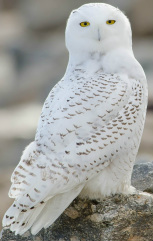
The Arctic is not just a land of ice and snow—it is a symphony of whispers and roars, a chorus where the wind’s lullabies dance with the crackling of glaciers and the distant calls of creatures adapted to the harshest of climates. Among these voices, the snowy owl stands as a haunting soprano, its piercing trills cutting through the frozen stillness like a blade through silk. But what happens when the stage itself begins to shift? When the Arctic’s soundscapes, once a predictable melody, start to warp under the weight of climate change? What if the owl’s serenade, a sound etched into the cultural and ecological identity of the North, begins to fade—or worse, becomes unrecognizable?
The Arctic’s Sonic Tapestry: A Delicate Interweaving of Sound and Silence
The Arctic’s soundscape is a paradox—a place where silence can be deafening, and where the slightest rustle of snow or the crack of ice can echo like thunder. For centuries, indigenous communities have relied on these acoustic cues to navigate, hunt, and connect with the land. The snowy owl, with its ghostly hoots and eerie shrieks, is more than just a predator; it is a living barometer of the ecosystem’s health. Its calls, carried on the frigid air, serve as a reminder that sound, like the Arctic itself, is not static. It breathes, it shifts, it responds. But as the ice melts and the permafrost thaws, the very foundation of this sonic world is trembling.
Imagine standing on the tundra at midnight, the sun skimming the horizon in a golden arc, the air thick with the scent of frost and lichen. The owl’s call pierces the hush—a sharp, staccato note that seems to hang in the air like a question mark. This is not just noise; it is a dialogue between predator and prey, between the land and its inhabitants. Yet, as the Arctic warms, the timing of these calls is shifting. Migratory patterns are disrupted. Prey populations fluctuate. The owl’s voice, once a reliable marker of the seasons, is now as unpredictable as the weather itself.
Climate Change: The Invisible Hand Reshaping the Arctic’s Acoustic Identity
Climate change is not merely altering the Arctic’s visual landscape; it is rewriting its sonic DNA. The melting of sea ice, a once-solid stage for the owl’s hunting grounds, is forcing these birds to adapt—or perish. With less ice, the open water absorbs more sound, muffling the echoes that once traveled for miles. The owl’s calls, which once ricocheted off the ice like a pinball, now dissipate into the dampened air, their reach diminished. Meanwhile, the thawing permafrost releases trapped gases, creating a cacophony of hisses and pops that drown out the subtler sounds of the ecosystem.
But the challenge runs deeper than mere acoustics. The Arctic’s food web is unraveling. Lemmings, the owl’s primary prey, are declining in numbers as their habitats shrink. The owl’s hunting grounds are shrinking too, as shrubs and grasses encroach on the open tundra. The owl’s voice, once a symbol of dominance and adaptability, is now a lament for a world in flux. What happens when the Arctic’s most iconic soundscape—the haunting duet of wind and owl—begins to lose its harmony? What happens when the owl’s call, no longer a beacon in the dark, becomes a ghostly echo of a past that is slipping away?
The Owl’s Dilemma: A Species Caught Between Adaptation and Extinction
The snowy owl is a survivor. It thrives in temperatures that would freeze lesser creatures solid, and its keen senses allow it to navigate a landscape where visibility is often limited by blizzards or the endless white expanse. Yet, survival is not the same as thriving. As the Arctic’s soundscape changes, the owl is forced into a precarious balancing act. It must adapt to new hunting grounds, new prey, new acoustic challenges—or face the grim reality of silence.
Consider the owl’s hunting strategy. Unlike other birds of prey, snowy owls are diurnal, active both day and night. Their white plumage camouflages them against the snow, but their greatest weapon is their hearing. They can pinpoint the faintest rustle of a lemming beneath the snow, a skill honed over millennia. But as the snowpack becomes thinner and more irregular, their ability to detect prey is compromised. The once-reliable crunch of snow underfoot is replaced by a muffled thud, a sound that no longer carries the same clarity. The owl’s ears, finely tuned to the Arctic’s acoustic nuances, are now struggling to keep up with a world that no longer makes sense.
And what of the owl’s own calls? These are not mere noises; they are a language, a means of communication that has evolved over generations. The male’s deep, resonant hoots serve to mark territory and attract mates, while the female’s higher-pitched trills signal her readiness to breed. But as the Arctic’s soundscape becomes more chaotic, these calls may no longer be effective. A mating call that once carried across the tundra might now be lost in the din of melting ice and shifting winds. The owl’s voice, a thread in the fabric of the Arctic’s identity, is at risk of unraveling.
The Human Factor: Can We Hear the Arctic’s Warning Before It’s Too Late?
We are not passive observers in this sonic tragedy. Human activity is the conductor of this change, the unseen hand that has accelerated the Arctic’s transformation. Industrial noise, from shipping lanes to oil drilling, is adding a layer of artificial sound to an already strained ecosystem. The owl’s calls, once the dominant voice in the Arctic’s chorus, are now competing with the hum of machinery and the roar of engines. This is not just a loss of biodiversity; it is a loss of cultural heritage. For indigenous communities, the owl’s call is more than a sound—it is a story, a connection to the land, a reminder of their place in the world.
But there is hope. Scientists are beginning to study the Arctic’s soundscape in earnest, using hydrophones and acoustic sensors to capture the symphony of the North before it changes forever. By understanding how sound travels in a melting Arctic, we can better protect the species that depend on it. Conservation efforts are underway to preserve the owl’s habitat, to reduce human interference, and to ensure that the Arctic’s acoustic identity is not lost to the silence of extinction.
The question we must ask ourselves is this: Will we listen before it’s too late? The Arctic’s soundscape is not just a backdrop to life in the North; it is a living, breathing entity, one that is crying out for our attention. The snowy owl’s call is not just a sound—it is a warning, a plea, a reminder that the world we know is changing, and that we must change with it. The Arctic is not just melting; it is singing a new song. The question is, will we hear it?