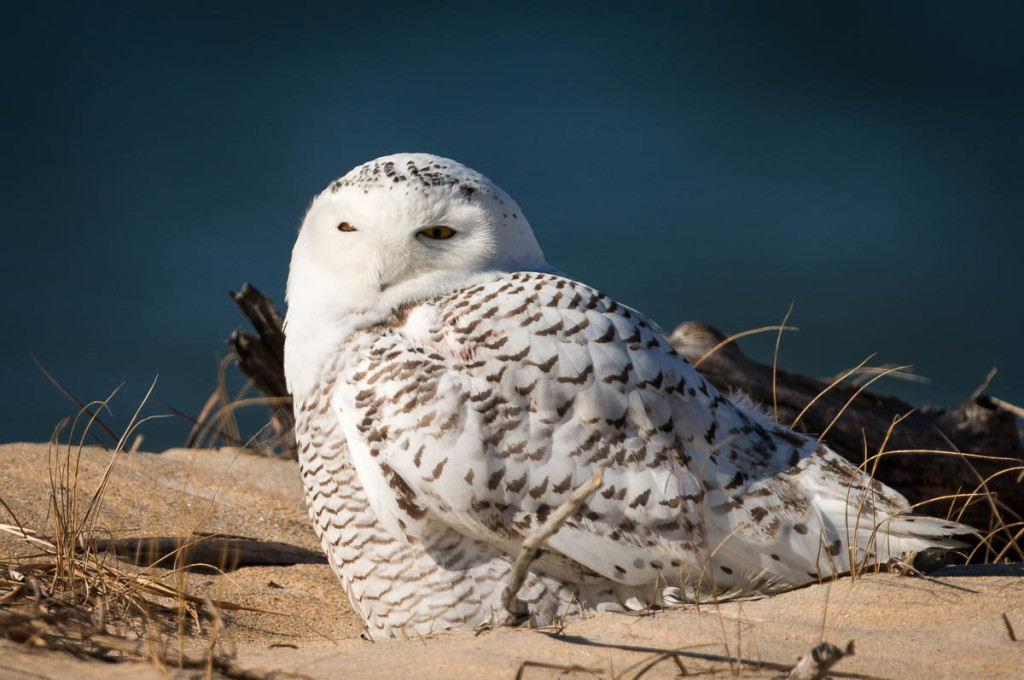
In the frozen silence of a northern winter, when the world is hushed beneath a blanket of snow and the air crackles with crystalline clarity, an unexpected visitor descends upon the landscape. The Snowy Owl, a ghost of the Arctic tundra, glides southward in a phenomenon known as an irruption—a mass migration triggered by scarcity of prey or overpopulation. These birds, clad in feathers as white as freshly fallen snow, become celestial messengers, their presence a fleeting yet unforgettable spectacle. But how do we, as mere spectators of nature’s grand theater, track such a transient and elusive phenomenon? The answer lies in the power of citizen science, a collaborative tapestry woven by the hands of everyday observers, scientists, and technology. Together, they transform scattered sightings into a coherent narrative, revealing the hidden rhythms of nature.
The Arctic’s Whisper: Understanding the Irruption Phenomenon
An irruption is not a migration in the traditional sense. It is a desperate exodus, a survival strategy enacted when the lemming populations of the Arctic plummet or when the owls’ breeding grounds become overcrowded. These owls, normally confined to the northernmost reaches of the globe, are compelled to venture southward, their white plumage standing out against the muted hues of winter like a beacon in the gloom. The irruption is not a singular event but a cascade of sightings, each one a thread in the larger story of ecological imbalance.
The triggers for these irruptions are as complex as they are fascinating. Climate change, shifting prey dynamics, and habitat degradation all play their roles, creating a domino effect that sends these birds far beyond their usual haunts. In some years, the irruptions are mild, with only a handful of owls venturing south. In others, they are spectacular, with hundreds of owls descending upon fields, shorelines, and even urban peripheries. These events are not just biological curiosities; they are harbingers of change, whispering secrets about the health of our planet.
The Eyes of the Masses: How Citizen Science Illuminates the Unknown
Tracking the movements of a creature as elusive as the Snowy Owl is no small feat. These birds do not announce their presence with the fanfare of a migrating goose or the territorial calls of a songbird. Instead, they rely on stealth, blending seamlessly into the winter landscape. Enter citizen science—a movement that democratizes the act of observation, turning every birder, photographer, and nature enthusiast into a potential data point collector.
Platforms like eBird, iNaturalist, and Project FeederWatch have become the modern-day oracles of wildlife tracking. Volunteers upload sightings, photographs, and even audio recordings, creating a real-time mosaic of biodiversity. For the Snowy Owl irruption, these platforms become a treasure trove of information. A farmer in Minnesota spots an owl perched on a fence post. A hiker in Michigan captures a photo of one gliding over a frozen lake. A schoolteacher in Maine logs a sighting from her backyard. Each of these moments, when stitched together, paints a vivid picture of the irruption’s scope and trajectory.
The beauty of citizen science lies in its inclusivity. It does not require a degree in ornithology or access to high-tech equipment. All it requires is curiosity and a willingness to share. In this way, the Snowy Owl irruption becomes a shared experience, a collective marvel that transcends borders and backgrounds. It is a reminder that science is not the sole domain of laboratories and universities; it is a living, breathing endeavor that thrives in the hands of the many.
The Alchemy of Data: Turning Sightings into Scientific Gold
But how do these scattered sightings transform into actionable knowledge? The process is akin to alchemy, where base metals are transmuted into gold. Volunteers’ observations are not merely anecdotes; they are data points that, when analyzed, reveal patterns and trends. Scientists pore over these records, cross-referencing them with environmental data, weather patterns, and prey availability to unravel the mysteries of the irruption.
For instance, a surge in Snowy Owl sightings in the Great Lakes region might correlate with a particularly harsh winter in the Arctic. Or perhaps a decline in lemming populations in their northern breeding grounds forced the owls to seek sustenance elsewhere. These insights are not just academic; they inform conservation strategies, helping us understand how climate change and human activity are reshaping ecosystems. The Snowy Owl, once a distant and mythical figure, becomes a living barometer of environmental health.
The power of this data lies in its granularity. Unlike satellite tracking, which can be expensive and limited to a few individuals, citizen science captures the movements of hundreds, if not thousands, of owls. It is a form of mass surveillance, but one that is driven by wonder rather than control. Each sighting is a brushstroke in the larger portrait of nature, and together, they create a masterpiece of understanding.
The Human Connection: Why We Are Drawn to These Feathered Nomads
There is something inherently magical about the Snowy Owl. Perhaps it is the contrast between its pristine white plumage and the stark winter landscape. Or maybe it is the way it embodies the wild, untamed spirit of the Arctic. Whatever the reason, these birds captivate us, drawing us into their world with an almost hypnotic allure.
Citizen science taps into this fascination, turning passive observers into active participants in the natural world. When a child spots her first Snowy Owl, her excitement is not just a personal triumph; it is a contribution to a larger story. When a retiree spends hours documenting owl sightings, her dedication becomes a testament to the enduring human connection to nature. These birds are not just subjects of study; they are ambassadors, bridging the gap between science and society.
Their irruptions are more than biological events; they are cultural phenomena. They inspire poetry, photography, and even folklore. In some communities, the arrival of a Snowy Owl is seen as a blessing, a sign of good fortune. In others, it is a reminder of nature’s unpredictability. Whatever the interpretation, these birds evoke a sense of awe and wonder, a reminder that the natural world is still full of mysteries waiting to be uncovered.
The Ripple Effect: How Citizen Science Shapes Conservation
The impact of citizen science extends far beyond the immediate thrill of spotting a Snowy Owl. It is a catalyst for conservation, a tool that empowers communities to take action. When data reveals that a particular region is a hotspot for Snowy Owl sightings, local conservation groups can advocate for habitat protection. When trends show a decline in owl numbers, scientists can sound the alarm and push for policy changes.
Moreover, citizen science fosters a sense of stewardship. When people are actively engaged in collecting data, they develop a deeper appreciation for the natural world. They become advocates, not just for Snowy Owls, but for all wildlife. This ripple effect can be seen in the rise of community-led conservation projects, the growth of urban wildlife corridors, and the increasing demand for sustainable practices.
The Snowy Owl irruption, then, is more than a fleeting spectacle. It is a call to action, a reminder that we are all part of a larger ecosystem. By tracking these birds, we are not just satisfying our curiosity; we are contributing to the preservation of the wild places that inspire us.
The Future of Tracking: Technology and the Next Frontier
As technology advances, so too does our ability to track and understand the movements of Snowy Owls. Drones equipped with thermal imaging can locate owls in remote areas. GPS tags, though still limited in scope, provide invaluable insights into individual birds’ journeys. Artificial intelligence is being harnessed to analyze vast datasets, identifying patterns that might otherwise go unnoticed.
Yet, for all its sophistication, technology cannot replace the human element. The passion of a volunteer, the keen eye of a birder, the dedication of a scientist—these are the forces that drive citizen science forward. The future of tracking lies in the fusion of cutting-edge technology and grassroots enthusiasm, a partnership that promises to unlock even more secrets of the natural world.
The Snowy Owl irruption is a fleeting phenomenon, a moment in time when the Arctic’s whisper becomes a chorus heard across continents. But through citizen science, we ensure that this chorus is not lost to the wind. We turn transient sightings into lasting knowledge, and in doing so, we honor the wild and wonderful creatures that share our planet.