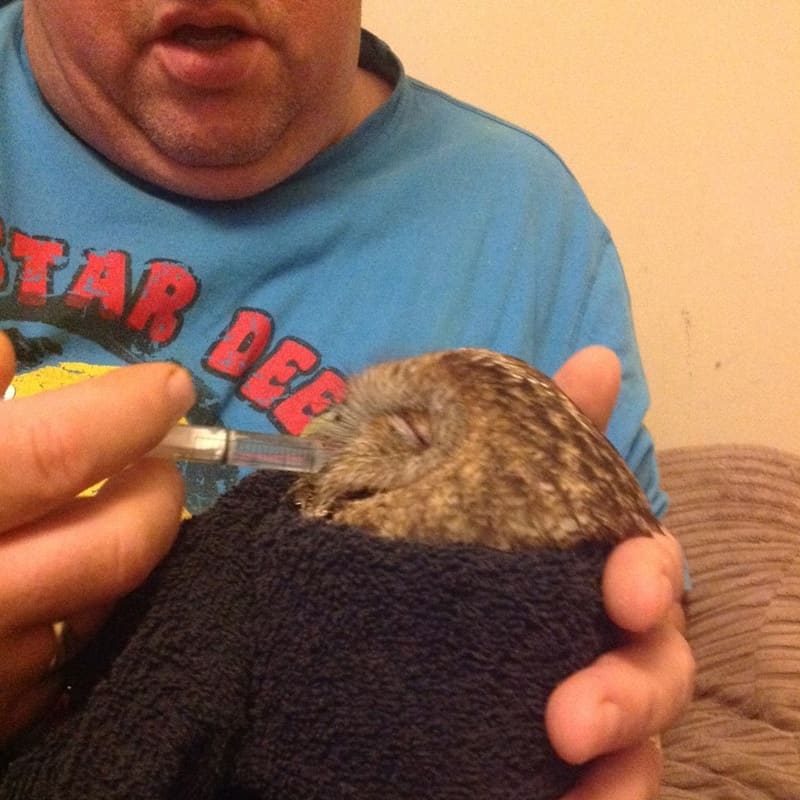
In the quiet hush of dawn, where the first light bleeds into the sky like watercolor on parchment, a silent revolution is taking flight—not with feathers, but with plastic and precision. The world of owl rehabilitation, once bound by the limitations of natural materials and human ingenuity, has found an unexpected ally in the hum of 3D printers. These machines, often associated with gadgets and prototypes, have become the unseen artisans of hope, crafting prosthetics, aviaries, and even surrogate nests for injured raptors. The marriage of biology and technology has birthed a new era, where the fragility of a broken wing meets the unyielding strength of additive manufacturing. This is not just innovation; it’s a symphony of science and compassion, where every layer printed is a step toward freedom for creatures that embody wisdom and mystery.
The Alchemy of Prosthetics: Forging New Wings from Filament
Imagine the despair of an owl, once a master of the night sky, now grounded by a shattered limb. Traditional veterinary solutions often fall short—metal implants are too heavy, natural grafts too unpredictable. Enter 3D printing, the modern-day Prometheus, stealing the fire of precision to ignite hope. Using biocompatible polymers and titanium alloys, veterinarians can now sculpt prosthetics tailored to the exact contours of an owl’s anatomy. These aren’t clunky, one-size-fits-all devices; they are bespoke marvels, designed with the same care as a couturier crafting a bespoke gown.
The process begins with a CT scan, a digital dissection of the owl’s injury. From there, engineers translate the data into a 3D model, tweaking every curve and contour to ensure the prosthetic mimics the natural movement of a wing. The printer then layers the material with the patience of a monk illuminating a manuscript, building up the structure until it is ready to be fitted. The result? An owl that can once again spread its wings—not with the weight of despair, but with the lift of possibility. This is not just healing; it’s a resurrection of flight.
Aviaries Reimagined: The Geometry of Freedom
Owls are creatures of the vertical. Their world is one of towering trees and moonlit perches, where space is not just a luxury but a necessity. Traditional aviaries, often cramped and utilitarian, can feel like prisons to these majestic birds. But 3D printing has shattered those constraints, allowing for the creation of aviaries that are as much works of art as they are functional sanctuaries. Architects and engineers, inspired by the fractal patterns of snowflakes and the organic curves of seashells, are designing structures that defy convention.
Imagine an aviary where every beam and perch is a lattice of intricate, honeycomb-like structures, optimized for both strength and airflow. The walls are not flat but undulating, mimicking the ripples of a pond disturbed by a diving kingfisher. The roof is a canopy of translucent panels, diffusing sunlight into a soft, dappled glow that soothes the owl’s keen senses. Even the perches are 3D-printed, their surfaces textured to prevent slippage yet gentle enough to cradle delicate talons. This is not just an enclosure; it’s a habitat that whispers to the owl’s instincts, a place where it can rediscover its place in the sky.
The Nest as a Blueprint: Rebuilding the Cradle of Life
For orphaned owlets or those recovering from injury, the nest is more than a home—it’s a cradle of survival. But what happens when a nest is destroyed, or a fledgling’s injuries prevent it from clinging to the branches of its natural habitat? 3D printing offers a lifeline, allowing conservationists to recreate the intricate architecture of a nest with astonishing fidelity. Using scans of natural nests as blueprints, they can print replicas that are indistinguishable from the real thing, complete with the same thermal properties and structural integrity.
The magic lies in the details. The nest’s interior is lined with a lattice of air pockets, mimicking the insulating properties of twigs and moss. The exterior is roughened to provide grip, while the interior is smoothed to cradle the owlet without causing injury. Some designs even incorporate biodegradable materials that gradually break down, ensuring the nest doesn’t become a permanent fixture in the environment. This is not just a stopgap; it’s a bridge between nature and nurture, a way to give owls the childhood they deserve.
The Silent Symphony of Sensors: Monitoring Without Intrusion
Rehabilitation is not just about physical healing; it’s about understanding the owl’s journey back to the wild. Here, 3D printing intersects with another marvel of modern technology: the Internet of Things. Embedded within 3D-printed prosthetics or aviaries are tiny sensors that monitor everything from movement to heart rate, painting a real-time portrait of the owl’s recovery. These sensors are so unobtrusive that the owl barely notices them, yet they provide data that is nothing short of revolutionary.
Imagine a prosthetic that not only supports a broken wing but also tracks the owl’s flight patterns, alerting veterinarians to any irregularities. Or an aviary where the perches themselves are sensors, measuring the owl’s weight distribution to ensure it’s regaining strength symmetrically. This is the silent symphony of rehabilitation—a world where technology listens without disturbing, where every beat of the owl’s heart is a note in a larger composition of healing.
The Ethical Alchemy: Balancing Innovation and Nature
With great power comes great responsibility, and the fusion of 3D printing and owl rehabilitation is no exception. The ethical implications are as layered as the prints themselves. On one hand, these innovations offer hope to creatures that might otherwise face a life of captivity or euthanasia. On the other, there is the risk of over-reliance on technology, of losing sight of the natural world’s own resilience. The key lies in balance—using 3D printing as a tool, not a crutch, and ensuring that every intervention serves the owl’s ultimate goal: return to the wild.
Conservationists are acutely aware of this tension. They approach each case with a blend of scientific rigor and humility, asking not just *can* we do this, but *should* we? The answer often lies in the owl’s response. If a 3D-printed prosthetic allows an owl to hunt again, if a custom aviary reduces stress levels, if a sensor-equipped nest accelerates recovery—then the innovation is justified. But if the owl shows signs of distress or dependency, the path is reevaluated. This is not just rehabilitation; it’s a dialogue between human ingenuity and the wild, a conversation that must be conducted with care.
The Future Takes Flight: What Lies Beyond the Horizon
The story of 3D printing in owl rehabilitation is still in its infancy, but the potential is as vast as the night sky. Already, researchers are experimenting with biodegradable materials that dissolve harmlessly into the environment once their purpose is served. Others are exploring the use of 4D printing, where structures can change shape over time in response to environmental conditions—imagine a nest that expands as the owlet grows, or a prosthetic that adjusts to the owl’s healing process. The boundaries of what’s possible are being redrawn with every layer printed.
But perhaps the most thrilling frontier is the one we can’t yet see. As 3D printing becomes more accessible, conservationists around the world are sharing designs and techniques, creating a global network of innovation. What if, one day, an injured owl in a remote forest could receive a custom prosthetic within hours, thanks to a 3D printer in a nearby village? What if aviaries could be designed not just for rehabilitation, but for reintroduction, with features that mimic the owl’s natural habitat so closely that the transition to the wild is seamless? The future is not just about healing; it’s about redefining the relationship between humans and the creatures we share the planet with.
The owl, with its golden eyes and silent wings, has long been a symbol of wisdom and mystery. Now, it is also a symbol of resilience—a creature that, even in its darkest hour, finds a way to rise. And in that rise, we are reminded that the tools of the future need not be cold and mechanical. They can be warm, they can be alive, they can be as full of wonder as the creatures they help to save. This is the true magic of 3D printing: not just in the things it creates, but in the lives it transforms.