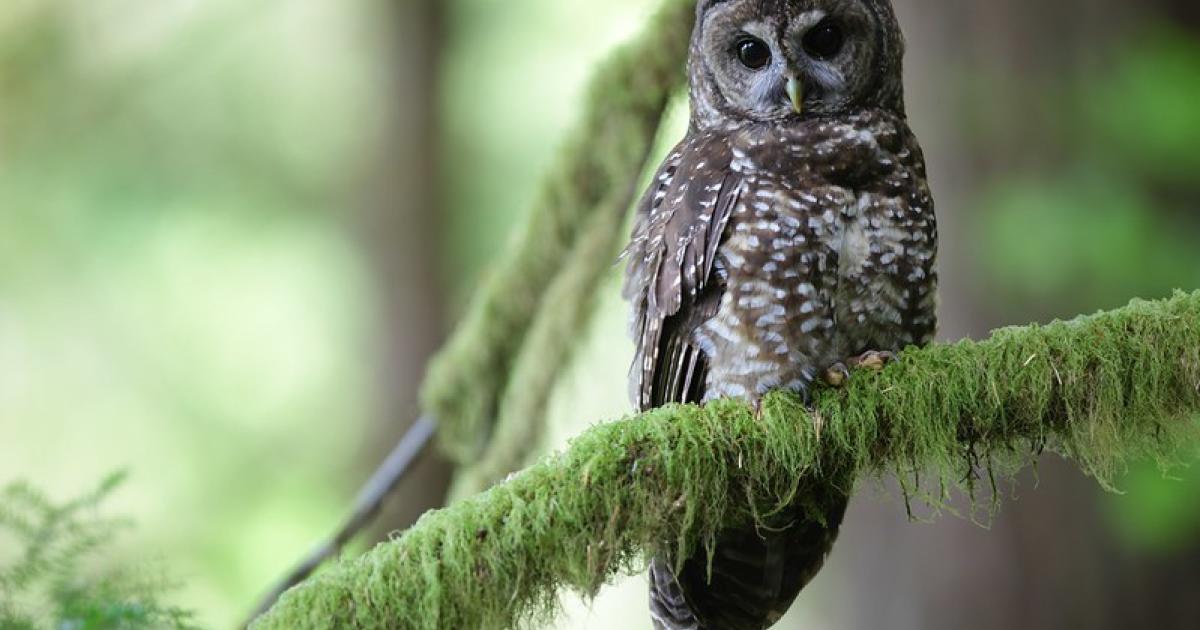
The twilight of old-growth forests is not merely the ebbing of ancient trees but the unraveling of an intricate symphony where each creature’s role shapes the ecosystem’s soul. Within these venerable woodlands, the whispered hoots of owls tell a story far beyond their haunting call—one of encroachment, survival, and an ecological tug-of-war. The barred owl, a creature emblematic of adaptability, is simultaneously a herald and an agent of change, weaving a paradoxical narrative with the endangered spotted owl. This tale is anything but simple; it is a vortex of competition and decline, entwined inexorably with the fate of towering forests and their ensconced inhabitants.
The Enigma of Old-Growth Forests: Nature’s Timeless Cathedrals
Old-growth forests stand like living cathedrals—majestic, stoic, and imbued with the wisdom of centuries. They are landscapes layered with ecological complexity, structured by towering conifers, rotund snags, and a rich understory that cradles myriad species. These forests are the lifeblood for many creatures, especially the spotted owl, a sentinel species whose very existence depends on these ancient groves. The intricate canopy offers irreplaceable nesting sites, while the multifaceted food web sustains their predatory needs.
Yet, these forests have become a mosaic scarred by logging, fire suppression mistakes, and urban expansion. Each incision into the forest canopy erodes the habitat continuity that the spotted owl requires. Even subtle shifts in microhabitats ripple outward, impacting species composition and forest resilience. The old-growth is not simply trees in repose but a dynamic community, a fragile balance delicately maintained across generations.
Barred Owls: The Unwelcome Encroachers of the West
Imagine a force of nature unbound by historical limits—this is the barred owl, an ecological interloper with a ravenous adaptability unlike any other bird of prey in the Pacific Northwest. Originating east of the Rockies, barred owls have flexed their range westward over the past century, infiltrating the once-exclusive domain of the spotted owl. This expansion is not a graceful migration but an assertive occupation, akin to a bold new tenant seizing residence in a cherished home.
Barred owls possess a broader dietary palate and a tolerance for varied habitats, rendering them formidable competitors. Their flexible nesting and hunting behaviors allow them to thrive in fragmented forests, edge habitats, and even young second-growth stands. With their larger size and aggressive disposition, barred owls challenge spotted owls directly, leading to territorial disputes and declines in spotted owl reproductive success. Where barred owls flourish, spotted owls falter.
The Vicious Cycle: Habitat Degradation Amplifying Biotic Conflict
The interplay between barred owls and the decline of old-growth forests crystallizes into a vicious cycle—a feedback loop of ecological degradation and interspecies warfare. As old-growth trees vanish, spotted owls lose the structural refugia essential for nesting and hunting. The resulting fragmentation engenders edge habitats, which paradoxically favor barred owls’ opportunistic nature, enabling them to encroach further.
This habitat alteration is not merely spatial but also temporal and behavioral. Barred owls, freed from the physiological constraints that limit spotted owls, exploit resources year-round and engage in more frequent breeding cycles. Their invasion thus intensifies predation pressures and competition for dwindling prey, compounding the setbacks for spotted owl populations already struggling under habitat stress. The decline of the spotted owl is, in essence, inextricably linked to both habitat loss and the unchecked expansion of barred owls.
Ecological Chess: Managing the Barred Owl Threat
Conservationists find themselves entrenched in a complex game of ecological chess, where every move to safeguard the spotted owl must balance ethical, biological, and practical considerations. The removal or control of barred owls is one such controversial strategy, undertaken to mitigate their impact and afford spotted owls a chance at recovery. This management is delicate, fraught with emotional and ecological implications because it involves culling a native species—albeit one expanding unnaturally due to human-altered landscapes.
Successes in this arena have shown that carefully targeted removal of barred owls can slow the decline of spotted owl populations, offering a glimpse of reprieve in the battle for survival. However, this is no panacea; habitat restoration remains imperative. Without the renewal of old-growth characteristics—the dense canopy, mature trees, and complex understory—the spotted owl’s niche will remain vulnerable. The problem demands multifaceted solutions grounded in an understanding that ecosystems are not static puzzles but processes in flux.
The Unique Appeal of Owls: Guardians of Forest Mysteries
Owls captivate us, perched at the crux of myth and nature, their silent wings slicing through moonlit forests with an almost supernatural grace. The spotted owl, in particular, embodies the mystique and fragility of old-growth ecosystems—its presence a living testament to the high-stakes drama unfolding within these forest cathedrals. The barred owl, by contrast, symbolizes the adaptive resilience and, simultaneously, the challenges wrought by ecological upheaval.
Both species remind us that biodiversity is not merely a catalog of creatures but an elaborate narrative woven through time and space. Their struggle underscores the profound interconnectedness between wildlife and habitat. In guarding the spotted owl, we protect the essence of ancient forests themselves—a sanctuary that extends beyond trees into the very heart of natural heritage. The story of these owls is a clarion call, imploring stewardship and reverence for the wild places that continue to inspire wonder and awe.
Charting a Path Forward: Restoration and Coexistence
To break the vicious cycle, strategies must transcend reactive measures and embrace regenerative ecology. Restoring old-growth forest dynamics through selective thinning, controlled burns, and reforestation with native species can recreate the structural complexity vital for spotted owls. Such holistic approaches nurture resilience, supporting both predator and prey populations while mitigating barred owl dominance.
Promoting coexistence involves managing landscapes at a scale that recognizes the fluidity of species boundaries and the impacts of climate change. This requires interdisciplinary collaboration—melding ecology, wildlife biology, forestry, and community engagement—to craft adaptive management plans. Monitoring and research must continue iteratively, refining our understanding as the ecosystem evolves.
The vision is ambitious: a future where old-growth forests thrive once more, where spotted owls reclaim their ancestral realms, and where barred owls find balance without unseating their counterparts. In this delicate dance of survival and adaptation, lies the hope for a renewed forest symphony—one that sings of redemption amid loss.