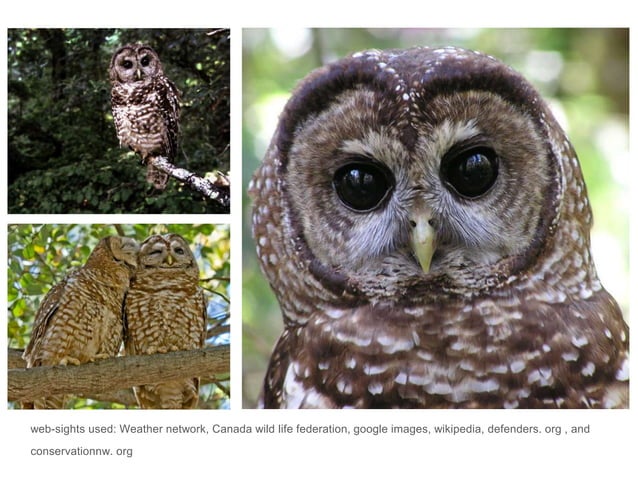
The spotted owl, with its piercing amber eyes and silent wings, has long captivated the human imagination. Yet beyond its symbolic allure, this enigmatic creature embodies a critical lesson in ecological balance—a lesson that schools must urgently impart to the next generation. In an era where biodiversity faces unprecedented threats, the role of education in fostering stewardship of species like the spotted owl cannot be overstated. Schools are not merely institutions of academic rigor; they are incubators of empathy, curiosity, and environmental consciousness. By weaving the story of the spotted owl into curricula, educators can transform classrooms into laboratories of ecological empathy, where students don’t just learn about conservation but become its most ardent advocates.
The Spotted Owl as a Keystone of Ecological Storytelling
At first glance, the spotted owl may appear as just another nocturnal bird, its mottled brown and white plumage blending seamlessly into the forest canopy. Yet, this species is far more than a mere inhabitant of old-growth forests—it is a keystone species, a linchpin whose survival dictates the health of entire ecosystems. The spotted owl’s dependence on ancient, undisturbed forests makes it a living barometer of environmental integrity. When its populations decline, it signals a cascade of ecological unraveling: the loss of understory plants, the displacement of other wildlife, and the erosion of forest resilience.
Schools must leverage this ecological narrative to teach students about interdependence—the invisible threads that bind species together. A biology lesson on the spotted owl’s habitat can evolve into a broader discussion on trophic cascades, where the decline of a top predator reverberates through the food web. Imagine a classroom where students map the spotted owl’s territory, not just as a geographic exercise, but as an exploration of how human activities—deforestation, urban sprawl, climate change—disrupt these delicate balances. Such lessons transcend rote memorization; they cultivate a systemic understanding of nature, where every creature, no matter how obscure, plays a role in the grand tapestry of life.
From Classroom to Conservation: Bridging Knowledge and Action
Knowledge without application is like a tree without roots—it may stand tall, but it will never flourish. Schools must bridge the gap between learning and activism by transforming classroom insights into tangible conservation efforts. The spotted owl’s plight offers a perfect case study for project-based learning, where students don’t just study the species but actively contribute to its preservation. Picture a high school biology class partnering with local wildlife rehabilitation centers to design nest boxes for displaced owls. Or a middle school art project where students create awareness campaigns to reduce light pollution, which disrupts the owl’s nocturnal hunting patterns.
Such initiatives do more than educate; they instill a sense of agency. When students see their efforts—whether planting native trees or lobbying for protected forest zones—they realize that conservation is not a distant, abstract concept but a collective responsibility. Schools can further amplify this impact by inviting ecologists, Indigenous knowledge keepers, and conservationists to share their work. These interactions humanize the struggle of the spotted owl, transforming it from a textbook example into a living, breathing call to action. By fostering these connections, schools nurture a generation that doesn’t just care about the environment but actively fights for it.
The Cultural Resonance of the Spotted Owl: More Than Just a Bird
The fascination with the spotted owl extends beyond its ecological significance; it is deeply embedded in human culture, mythology, and symbolism. Across Indigenous traditions of the Pacific Northwest, the owl is often revered as a messenger between the physical and spiritual worlds, a guardian of sacred knowledge. Its haunting hoots echo through centuries of oral histories, where it is both a protector and a harbinger of change. This cultural dimension is a goldmine for interdisciplinary learning, where literature, art, and science converge to enrich students’ understanding of the owl’s role in human societies.
In a literature class, students can analyze how the spotted owl is portrayed in poetry and folklore, comparing its symbolic meanings across cultures. Is it a symbol of wisdom, as in many Native American traditions, or a harbinger of doom, as in European folklore? Meanwhile, a visual arts class might explore how artists have depicted the owl in paintings, sculptures, and even protest art, where it becomes a potent emblem of environmental resistance. By examining these cultural narratives, students learn that conservation is not just a scientific endeavor but a deeply human one—a struggle to reconcile our place in nature with our responsibility to protect it.
Climate Change and the Spotted Owl: A Lesson in Urgency
No discussion of the spotted owl’s future can ignore the looming specter of climate change. Rising temperatures, prolonged droughts, and shifting forest dynamics are altering the owl’s habitat at an alarming rate. For students, this presents an opportunity to grapple with one of the most pressing challenges of our time—not as distant data points, but as a lived reality for a species they’ve come to know and care about. Schools can frame climate change education around the spotted owl’s plight, using its story to illustrate the broader impacts of global warming on biodiversity.
Imagine a geography lesson where students use GIS mapping to track the shrinking range of the spotted owl alongside rising temperatures. Or a chemistry class where they model how increased CO2 levels affect the owl’s prey—rodents and insects whose populations are also in flux. These lessons move beyond fear-mongering; they equip students with the tools to understand and respond to climate change in meaningful ways. By connecting the dots between local and global issues, schools can foster a generation that sees climate action not as a political stance but as a moral imperative.
The Role of Policy: Teaching Students to Advocate for Wildlife
Conservation is not just about science; it’s about policy, ethics, and collective decision-making. Schools have a unique opportunity to demystify the world of environmental policy, using the spotted owl as a lens to explore how laws shape the fate of species. Students can dissect case studies like the Northern Spotted Owl’s listing under the Endangered Species Act, examining the debates between economic development and ecological preservation. They can role-play as policymakers, scientists, and industry representatives, debating the trade-offs of logging versus habitat protection.
This kind of civic education is transformative. It teaches students that their voices matter—that they can write to representatives, participate in public hearings, or join advocacy groups to protect species like the spotted owl. Schools can partner with organizations like the Audubon Society or local conservation groups to provide students with real-world advocacy opportunities. By engaging with policy, students learn that conservation is not a passive endeavor but an active, ongoing struggle—one that requires vigilance, courage, and unwavering commitment.
Conclusion: Owls as Ambassadors of a Greener Future
The spotted owl is more than a bird; it is a symbol of what we stand to lose if we fail to act. In a world where human dominance often overshadows the needs of other species, the owl serves as a poignant reminder of our shared responsibility. Schools have the power to turn this symbol into a catalyst for change, using the spotted owl’s story to inspire a generation of environmental stewards. By integrating ecological, cultural, and policy-based learning, educators can cultivate a deep, enduring connection between students and the natural world.
Let us not relegate the spotted owl to the pages of a textbook. Instead, let us make it a living, breathing part of our classrooms—a creature whose survival depends on the choices we make today. For in teaching the next generation about the spotted owl, we are not just preserving a species; we are nurturing a future where humans and nature coexist in harmony.