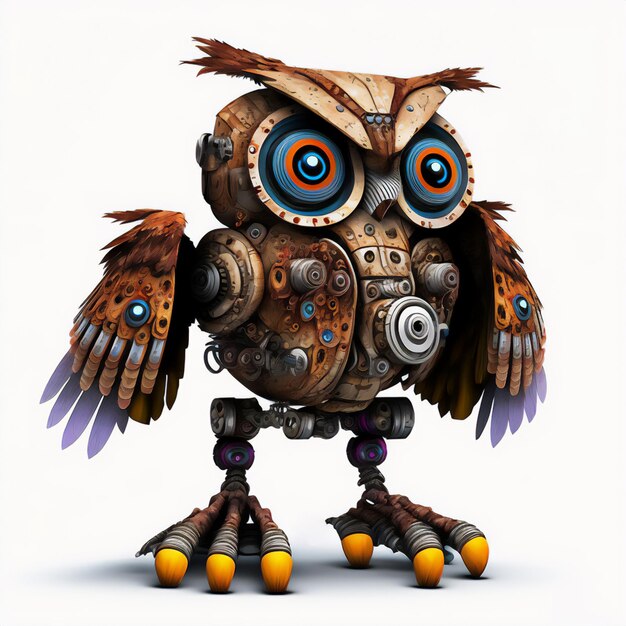
In the quiet, moonlit forests where the ancient call of the owl once echoed unchallenged, a new symphony is beginning to take shape. Robotics, those marvels of modern ingenuity, are stepping beyond the confines of factories and laboratories to lend a mechanical wing to the rehabilitation of these enigmatic birds. No longer confined to the realm of science fiction, robotic assistance is becoming a cornerstone in the recovery and reintroduction of owls injured by human encroachment, vehicular collisions, or the silent, creeping threats of habitat degradation. This transformation is not merely about restoring flight—it’s about restoring dignity, autonomy, and the very essence of what it means to be wild. From precision-engineered prosthetics to AI-driven behavioral training, robotics are rewriting the rehabilitation playbook for owls, offering hope where once there was only despair.
The Dawn of Robotic Prosthetics: Restoring Flight and Function
Imagine an owl, once a master of silent aerial pursuit, now grounded by a fractured wing or a severed limb. For such birds, the loss of mobility is not just a physical setback—it’s a psychological rupture. Enter the era of robotic prosthetics, where 3D-printed titanium bones and carbon-fiber tendons are meticulously crafted to mimic the intricate biomechanics of an owl’s wing. These devices are not mere attachments; they are lifelines, engineered to restore not just the ability to fly, but the instinct to hunt and evade predators. Engineers collaborate with avian physiologists to design prosthetics that account for the owl’s unique skeletal structure, where even a millimeter’s misalignment can mean the difference between soaring and stumbling. The integration of micro-sensors allows these prosthetics to respond to the bird’s neural impulses, enabling a seamless, almost organic restoration of movement. It’s a testament to how robotics can transcend their mechanical origins to become extensions of life itself.
AI-Powered Behavioral Training: Relearning the Art of the Hunt
Rehabilitation isn’t just about physical repair—it’s about relearning the instincts that define an owl. Here, artificial intelligence steps in as an unseen mentor, crafting adaptive training regimens tailored to each bird’s cognitive and behavioral profile. Robotic prey, controlled by AI algorithms, mimic the erratic movements of a mouse or the evasive tactics of a rabbit, forcing rehabilitated owls to hone their predatory reflexes. These systems don’t just repeat the same motions; they evolve, adjusting difficulty based on the owl’s performance, much like a coach refining an athlete’s technique. The AI can simulate varying environmental conditions—from dense forest canopies to open meadows—preparing owls for the unpredictable realities of the wild. This dynamic interaction ensures that when these birds are released, they are not just physically capable, but mentally primed to survive. It’s a fusion of nature’s wisdom and machine precision, a dance where both partners must lead.
Robotic Nesting Systems: Fostering Independence in Captive Owls
For owls that cannot be released into the wild—whether due to permanent injury or imprinting on humans—robotics are creating environments that foster independence and reduce stress. Automated nesting systems, equipped with climate control, soundscapes of natural habitats, and even robotic “parents” that mimic the feeding behaviors of adult owls, provide a bridge between captivity and freedom. These systems are not static; they adapt in real-time, responding to the owl’s stress levels or feeding patterns detected through non-invasive sensors. For example, if an owl shows signs of agitation, the system might adjust lighting or introduce calming auditory cues. The goal is to simulate the unpredictability and richness of the wild, ensuring that even non-releasable owls retain their natural behaviors. It’s a humane revolution in captive care, where robotics act as silent guardians, preserving the dignity of creatures that once ruled the night.
Drone-Assisted Monitoring: The Eyes in the Sky for Rehabilitation
The vast, untamed landscapes where owls once thrived are now fragmented by human development, making post-release monitoring a daunting challenge. Drones, equipped with thermal imaging and AI-powered object recognition, are becoming the unsung heroes of owl rehabilitation. These aerial sentinels patrol release sites, tracking the movements of rehabilitated owls with pinpoint accuracy. They can detect signs of distress, such as erratic flight patterns or prolonged ground dwelling, and alert rehabilitation teams in real-time. Some drones even carry lightweight GPS trackers, allowing for long-term studies on migration patterns and territory establishment. This technology doesn’t just monitor—it provides a lifeline, ensuring that the owls’ journey back to the wild is not a solitary one. It’s a marriage of cutting-edge aeronautics and conservation science, where the sky itself becomes a tool for healing.
Ethical Considerations: Balancing Innovation with Welfare
With every technological leap comes the weight of ethical responsibility. The use of robotics in owl rehabilitation raises profound questions: How much intervention is too much? Can a bird truly be considered “wild” if its survival depends on machines? Rehabilitation experts grapple with these dilemmas daily, ensuring that robotics serve as a bridge, not a crutch. The guiding principle is autonomy—every robotic intervention must ultimately empower the owl to thrive without assistance. This means setting clear boundaries: prosthetics are temporary, AI training is phased out, and drones are used sparingly, only when necessary. The ethical framework is built on respect for the owl’s intrinsic wildness, ensuring that technology enhances life, rather than replacing it. It’s a delicate balance, one that demands both innovation and humility.
The Future: A Symphony of Nature and Machine
The horizon of owl rehabilitation is shimmering with possibilities. Imagine robotic exoskeletons that not only restore flight but enhance it, allowing owls to navigate urban landscapes with the same grace they once reserved for forests. Picture neural interfaces that translate an owl’s thoughts directly into robotic commands, creating a symbiotic relationship between bird and machine. The future may even hold biohybrid robots—part machine, part living tissue—that could one day integrate seamlessly with an owl’s body. Yet, as we peer into this future, the core mission remains unchanged: to heal, to restore, and to honor the wild spirit of these creatures. Robotics are not here to replace nature, but to stand beside it, offering a hand when the path back seems impossible. In this dance of feathers and circuits, we are reminded that conservation is not just about saving species—it’s about rediscovering our own place in the tapestry of life.