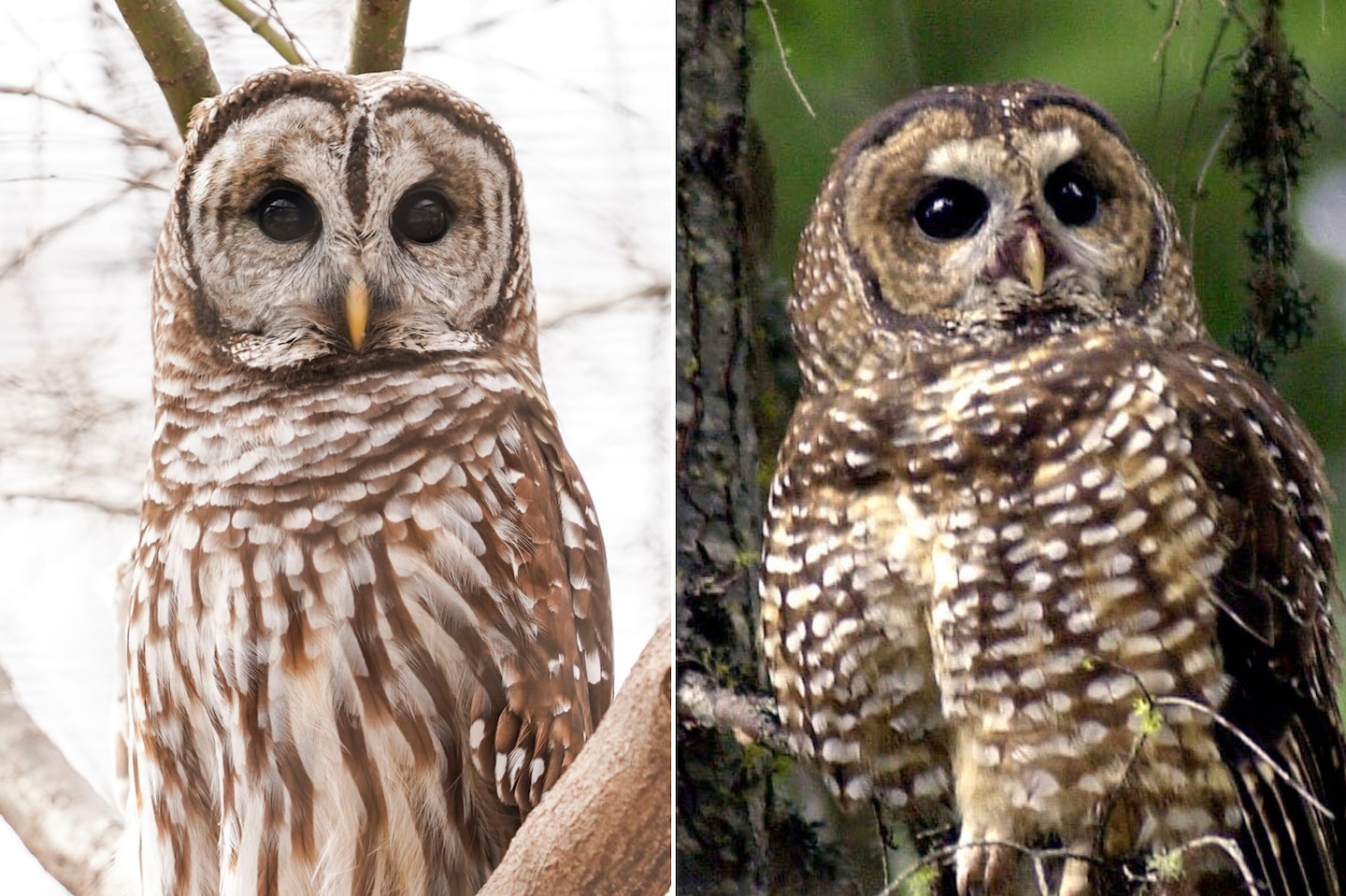
In the shadowy realms of old-growth forests, a silent drama unfolds—a competition that captivates conservationists and naturalists alike. The delicate balance of these ecosystems hinges upon the existence of an enigmatic resident, the spotted owl, a symbol of biodiversity and ecological health. Yet, this emblematic bird now wrestles with an invasive adversary: the barred owl. At first glance, the rivalry seems straightforward, but the deeper intricacies reveal a complex web of ecological, behavioral, and evolutionary dynamics. Understanding the top ten threats posed by barred owls to spotted owls illuminates not only the current plight of these majestic creatures but also the profound lessons about coexistence, adaptation, and the fragility of nature.
1. Direct Competitive Displacement for Habitat
The most glaring threat barred owls present is the competition for prime habitat. Both species thrive in dense, mature forests with ample canopy cover, but the larger and more adaptable barred owls are displacing spotted owls by aggressively occupying their territories. Unlike their more habitat-specialized cousins, barred owls exhibit remarkable plasticity in habitat use, enabling them to encroach on previously exclusive spotted owl domains. This forced displacement incrementally fragments the spotted owl’s already limited range, reducing their ability to find suitable nesting and roosting spots essential for survival and reproduction.
2. Diminished Food Resources and Prey Competition
Competition extends beyond physical space into the crucial realm of sustenance. Barred owls and spotted owls share overlapping diets, primarily feeding on small mammals, birds, and insects. Barred owls’ generalist hunting strategy allows them to exploit a broader array of prey species, thus depleting essential food reserves. This depletion hampers spotted owls’ ability to secure adequate nutrition, especially during breeding seasons when energy demands peak, thereby negatively impacting their reproductive success and juvenile survival rates.
3. Aggressive Territorial Behavior
Barred owls exhibit a level of territorial aggression that starkly contrasts with the more reserved nature of spotted owls. This assertiveness often leads to confrontations, where barred owls physically oust spotted owls from nesting sites. Such encounters inflict stress, disrupt breeding cycles, and can lead to injury or mortality among spotted owl populations. The psychological toll of constant displacement further undermines the spotted owl’s capacity to thrive.
4. Hybridization and Genetic Assimilation
One of the more insidiously subtle threats lies in the genetic dilution caused by hybridization between barred and spotted owls. These interspecific matings produce hybrid offspring, which, over time, can erode the genetic distinctiveness of spotted owls. This blending complicates conservation efforts aimed at preserving genetic integrity and may ultimately lead to the loss of unique species traits that have adapted over millennia to specific ecological niches.
5. Increased Exposure to Disease
Barred owls potentially act as vectors for novel pathogens and parasites uncommon to spotted owls. The close quarters resulting from habitat overlap heighten the risk of transmission of diseases, some of which may prove particularly lethal to spotted owls with less immune resilience. Such epidemiological pressures compound the threats posed by environmental and ecological stressors, pushing already vulnerable spotted owl populations closer to the brink.
6. Altered Acoustic Communication
Sound plays a vital role in nocturnal avian life, especially in establishing territory and attracting mates. Barred owls have a more varied and louder vocal repertoire, effectively masking the subtle calls of spotted owls. This acoustic interference disrupts communication, impeding mating rituals and territory maintenance. The resulting confusion can lead to missed breeding opportunities and fragmented social structures within spotted owl communities.
7. Ecological Cascade Effects
The displacement of spotted owls by barred owls triggers cascading effects throughout the ecosystem. As a top predator, the spotted owl helps regulate prey populations, maintaining ecological balance. Its decline prompts shifts in prey dynamics and vegetation patterns, inadvertently favoring species that may not support spotted owl survival. This domino effect recalibrates entire forest ecosystems in ways that may permanently undermine the spotted owl’s habitat and resources.
8. Reduced Reproductive Success
The combined pressures of competition, displacement, and stress manifest acutely in the spotted owl’s reproduction rates. Lowered food availability, habitat disruption, and interrupted nesting due to barred owl intrusions culminate in fewer fledglings. Over time, this decline in reproductive output jeopardizes population resilience and stymies recovery efforts designed to stabilize spotted owl numbers.
9. Behavioral Displacement and Stress-Induced Maladaptation
Under mounting pressure, spotted owls may alter their natural behaviors, retreating to marginal habitats or adjusting hunting strategies less optimized for survival. These maladaptive responses, triggered by chronic stress, reduce fitness and increase mortality risk. Such behavior modifications underscore the profound psychological and physiological impacts imposed by the barred owl invasion, revealing an often overlooked facet of interspecies conflict.
10. Challenges to Conservation and Management Efforts
The presence of barred owls complicates conservation strategies aimed at protecting the spotted owl. Management actions, such as selective removal or population control measures, spark ethical debates and logistical challenges. Balancing predator control with ecosystem integrity demands innovative and often controversial approaches, highlighting the intricate interplay between human intervention and natural processes. This challenge underscores the broader, often contentious struggle to preserve biodiversity in an era of rapid environmental change.