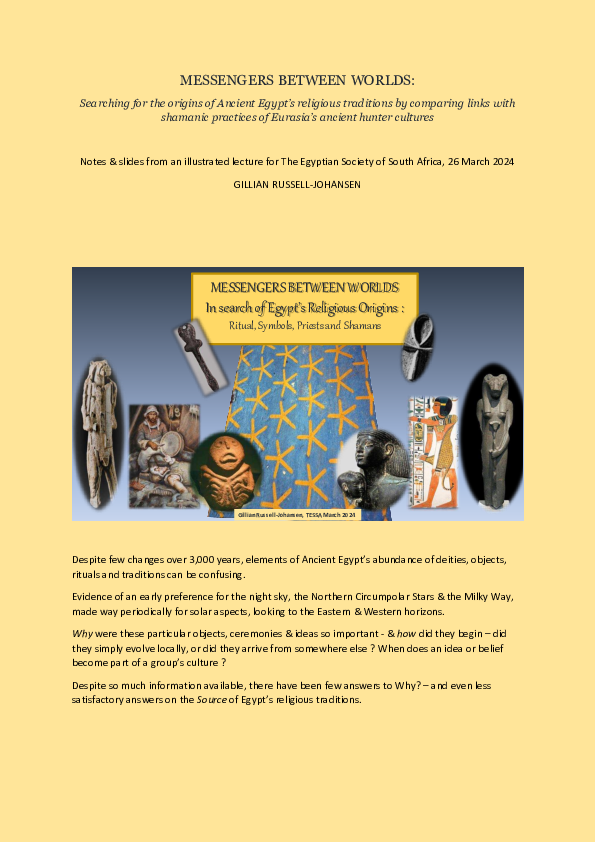
The owl, with its luminous eyes and silent flight, has long been a creature of paradox—both revered and reviled, a bridge between the seen and unseen. In the rich tapestry of African traditions, this nocturnal bird is far more than a mere predator; it is a celestial courier, a guardian of ancestral wisdom, and a silent witness to the mysteries that unfold under the cloak of night. Across the continent, from the savannas of the Maasai to the dense rainforests of the Congo, owls occupy a sacred space in the cultural imagination, embodying dualities that reflect the complexities of existence itself. Their presence in myths, rituals, and folklore is not a mere coincidence but a testament to their role as messengers between the physical and spiritual realms—a role that has shaped the spiritual and social fabric of countless communities.
The Owl as a Celestial Courier: Voices from the Spirit World
In many African traditions, owls are believed to traverse the boundary between the living and the dead, their haunting calls echoing the voices of ancestors. Among the Yoruba people of Nigeria, the owl is known as *Àjẹ́* or *Ìtẹ̀fà*, a creature that carries messages from the *Orun*, the spiritual realm, to the *Aye*, the earthly plane. Elders recount how the owl’s hoot is not a random sound but a deliberate transmission, a whisper from the divine that must be deciphered with care. To ignore such a message is to risk misfortune, for the owl does not speak lightly—it is the voice of the unseen, the translator of omens that guide human destiny.
The Akan people of Ghana hold a similar belief, where the owl is called *Akuma*, a symbol of divine communication. Their proverbs speak of the owl as a “silent teacher,” one that imparts knowledge not through words but through the language of signs. A farmer might interpret an owl’s presence near his fields as a sign of impending harvest or a warning against greed. In this way, the owl becomes a living oracle, its behavior a mirror of the cosmic order. To dismiss its significance is to sever the thread that connects humanity to the rhythms of the universe.
The Owl in Ritual and Ceremony: Guardians of Sacred Knowledge
Rituals across Africa often incorporate the owl as a sacred intermediary, its feathers, bones, or even its image used in ceremonies to invoke protection or divine favor. Among the Zulu of South Africa, the owl is associated with *Inkosi*, the ancestral spirits, and is invoked during healing rituals to cleanse negative energies. Traditional healers, or *sangomas*, may wear owl feathers in their headdresses as a symbol of their connection to the spirit world, their wisdom drawn from the same well as the owl’s silent vigilance. The owl’s role here is not passive; it is an active participant in the ritual, its presence amplifying the healer’s ability to commune with the divine.
In the Dogon cosmology of Mali, the owl is linked to the *Nommo*, the primordial deities who brought knowledge to humanity. Their creation myth speaks of the owl as a celestial guide, leading the first humans through the labyrinth of existence. During the *Dama* funeral rites, owl imagery adorns masks and altars, symbolizing the soul’s journey beyond death. The owl, in this context, is not just a messenger—it is a psychopomp, a guide for the departed, ensuring their safe passage into the afterlife. To omit the owl from such ceremonies is to leave the dead without direction, a fate worse than oblivion.
The Owl as a Symbol of Duality: Light and Shadow in African Cosmology
Few creatures embody the duality of existence as profoundly as the owl. In African traditions, it is both a bringer of wisdom and a harbinger of doom, its presence a reminder that knowledge is not always benign. Among the Maasai of Kenya and Tanzania, the owl is called *Eng’ang’o*, and its hoot is considered an omen of death. To hear its call at night is to be warned of impending loss, a reminder of life’s fragility. Yet, the same owl is also a symbol of foresight, its keen eyes piercing the veil of ignorance. This paradox is not a contradiction but a reflection of reality itself—wisdom and warning are two sides of the same coin.
The San people of Southern Africa weave the owl into their rock art, depicting it alongside figures of shamans in trance states. Here, the owl represents the shaman’s ability to transcend the physical world, to see beyond the ordinary. Yet, in other tales, the owl is a trickster, a creature that leads the unwary astray with its eerie calls. This duality is not a flaw but a feature of African cosmology, where the world is not divided into neat categories of good and evil but exists in a state of constant flux. The owl, with its nocturnal habits and piercing gaze, is the perfect embodiment of this fluidity.
The Owl in Folklore and Proverbs: Lessons from the Night
African folklore is replete with tales of the owl, each story a lesson disguised as a myth. Among the Igbo of Nigeria, the owl is the protagonist of a cautionary tale about curiosity and consequence. A young woman, disobeying her elders, follows an owl into the forest and is led to a hidden world where time moves differently. When she returns, she finds that decades have passed, and her village is unrecognizable. The owl, in this story, is not a villain but a teacher, its actions a metaphor for the dangers of defying tradition. The moral is clear: some knowledge is not meant for mortal minds, and some paths are best left unexplored.
Proverbs about the owl abound across the continent, each one a nugget of wisdom passed down through generations. The Akan say, *”The owl does not hoot for nothing,”* a reminder that every sign, no matter how subtle, carries meaning. The Yoruba proverb *”The owl that flies by day does so because it has no choice”* speaks to the owl’s nocturnal nature as a choice, not a limitation—a testament to its adaptability and resilience. These proverbs are not mere sayings; they are living guides, shaping behavior and thought in ways that echo through time.
The Owl in Modern African Thought: A Legacy of Resilience
In contemporary Africa, the owl’s symbolism has evolved but never faded. It appears in modern literature, music, and art as a symbol of resistance, intelligence, and connection to heritage. Writers like Chimamanda Ngozi Adichie and poets like Ben Okri have invoked the owl as a metaphor for the African intellectual—observant, wise, and often misunderstood. In music, the owl’s call is sampled in Afrobeat tracks, its haunting melody a reminder of the continent’s deep spiritual roots. Even in urban settings, where traditional beliefs are often overshadowed by modernity, the owl retains its power, a silent guardian of a heritage that refuses to be erased.
The owl’s role in African traditions is a testament to the continent’s rich spiritual landscape, where the natural and supernatural worlds are not separate but intertwined. It is a creature of paradox, a symbol of both wisdom and warning, a messenger between realms. To understand the owl is to understand the African worldview—a world where the night is not a time of absence but a time of revelation, where the unseen is as real as the seen, and where every shadow holds a story waiting to be told.