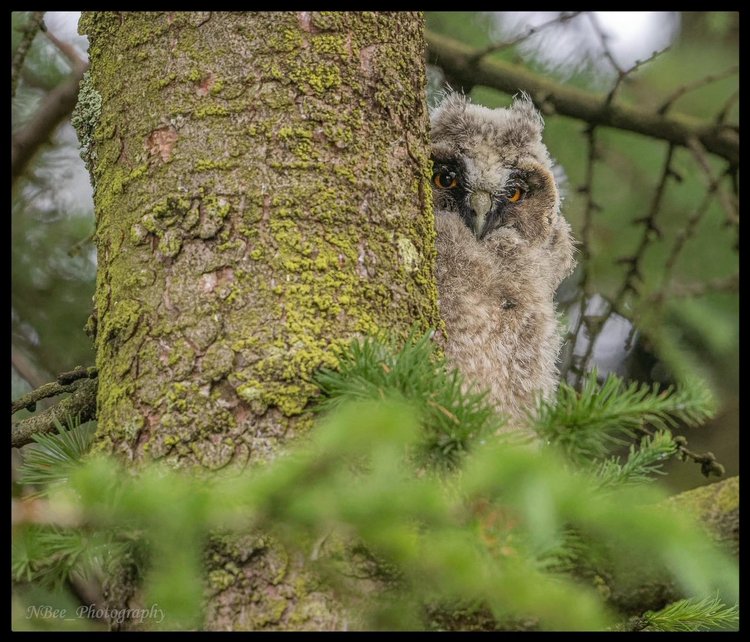
The intricate dance between climate models and owl conservation strategies is a symphony of science, foresight, and urgent action. As the planet’s thermostat continues its relentless climb, the habitats of these nocturnal sentinels—once predictable and stable—are being rewritten by shifting climates. Climate models, those sophisticated crystal balls of atmospheric science, are no longer mere academic tools; they are lifelines for species teetering on the edge of survival. For conservationists, these models are the compass guiding adaptive strategies, revealing where owls may thrive or vanish in the coming decades. But how exactly do these models shape conservation efforts? What revelations do they offer about the future of owl populations, and how can we translate data into tangible protection? This exploration dives into the heart of climate-driven conservation, where numbers meet nature, and predictions become protection.
The Alchemy of Climate Models: Turning Data into Conservation Gold
Climate models are the unsung architects of modern conservation, transforming raw atmospheric data into actionable intelligence. These models simulate Earth’s complex systems—from ocean currents to carbon cycles—painting a dynamic portrait of how climate change will unfold. For owl conservation, they serve as a diagnostic tool, identifying vulnerabilities in habitats long before they become irreversible. By analyzing variables like temperature gradients, precipitation patterns, and extreme weather events, scientists can pinpoint regions where owls may face habitat compression or food scarcity. The magic lies in their granularity: high-resolution models reveal microclimates critical to owl nesting sites, allowing conservationists to prioritize interventions in areas that will remain climatically stable. Yet, the alchemy isn’t flawless. Models are only as reliable as the data fed into them, and uncertainties abound—especially in remote or understudied ecosystems. The challenge, then, is to wield these models not as oracles, but as adaptive guides, constantly refined by real-world observations.
The Silent Shift: How Climate Change Reshapes Owl Habitats
The impact of climate change on owl habitats is a slow-burning crisis, unfolding in the shadows of more dramatic ecological collapses. Yet, its effects are profound. Rising temperatures are compressing altitudinal ranges, forcing cold-adapted species like the boreal owl to retreat to ever-higher elevations where suitable prey and nesting sites dwindle. Meanwhile, altered precipitation patterns are transforming forests and grasslands into alien landscapes—some lusher, others desiccated beyond recognition. The snowy owl, a creature of the Arctic tundra, now faces a paradox: warming winters bring rain instead of snow, collapsing the subnivean spaces it relies on for insulation and hunting. Even generalist species, like the great horned owl, are not immune; their adaptability is tested as prey populations fluctuate unpredictably. Climate models act as a time machine, allowing conservationists to peer into these shifts before they become irreversible. They highlight the urgency of creating climate-resilient corridors—networks of protected areas that allow owls to migrate as their habitats migrate with the climate.
From Predictions to Protection: Adaptive Conservation in a Warming World
Adaptive conservation is the bridge between climate model predictions and real-world protection. It’s a philosophy that embraces flexibility, where strategies evolve as new data emerges. For owls, this might mean relocating nest boxes to higher elevations where temperatures remain suitable, or planting native vegetation to restore food sources disrupted by drought. Some conservationists are experimenting with “assisted colonization,” a controversial but increasingly necessary tactic where species are translocated to regions predicted to become climatically favorable. Others are focusing on reducing indirect threats—like light pollution, which disorients nocturnal hunters, or rodenticide use, which decimates prey populations. The key is to integrate climate model insights into existing conservation frameworks, ensuring that every intervention is climate-informed. This approach demands collaboration across disciplines: climatologists must work hand-in-hand with field biologists, policymakers, and local communities. The goal isn’t just to save individual species, but to weave resilience into entire ecosystems.
The Prey Paradox: Climate Models and the Future of Owl Diets
An owl’s survival hinges on a delicate balance of prey availability, and climate change is tipping that balance in unpredictable ways. Climate models reveal that shifts in temperature and precipitation can trigger cascading effects through food webs. For instance, warmer springs may cause voles and lemmings—staple prey for many owl species—to reproduce earlier, leading to a temporary glut of food. But this abundance is often followed by a crash, as overpopulation depletes resources and triggers population collapses. Conversely, prolonged droughts can shrink insect populations, starving insectivorous owls like the eastern screech-owl. Some models predict that as forests migrate poleward, the prey communities owls rely on may not keep pace, leaving them stranded in a landscape of dwindling resources. Conservationists are responding by monitoring prey dynamics in real-time, using camera traps and acoustic sensors to track shifts in small mammal and insect populations. The data informs not just where to protect habitats, but how to manage them—whether through controlled burns to maintain grassland prey, or by restoring riparian zones to support aquatic food chains.
The Urban Owl Dilemma: Cities as Climate Refuges or Traps?
Cities, those bastions of concrete and steel, are emerging as unexpected players in the climate-owl narrative. While urbanization typically spells doom for wildlife, some owl species are finding refuge in green spaces, golf courses, and even high-rise gardens. Climate models suggest that as rural habitats become inhospitable, urban areas—with their milder microclimates and abundant prey like rats and pigeons—may become critical refuges. The barn owl, for example, has adapted to hunt in the glow of streetlights, capitalizing on the artificial illumination that attracts insects and small mammals. Yet, urban life is not without peril. Light pollution disrupts circadian rhythms, while rodenticides and vehicle collisions take a heavy toll. Conservationists are exploring “owl-friendly urban design,” advocating for dark-sky initiatives, native plant landscaping, and nest box programs in parks. The challenge is to transform cities from ecological traps into stepping stones, where owls can persist as their rural habitats transform.
The Policy Puzzle: Integrating Climate Models into Conservation Legislation
Climate models don’t just inform fieldwork—they are reshaping the legal and political landscape of conservation. Governments and NGOs are increasingly using model predictions to justify protected area expansions, prioritize species listings under endangered species acts, and design climate adaptation plans. For example, the U.S. Fish and Wildlife Service has incorporated climate projections into recovery plans for the northern spotted owl, identifying “climate strongholds” where populations are most likely to persist. Internationally, the Convention on Biological Diversity now emphasizes climate-resilient conservation strategies, urging signatory nations to integrate model data into national biodiversity strategies. Yet, the policy puzzle is complex. Climate models often produce conflicting scenarios, leaving policymakers grappling with uncertainty. Should they act on the most optimistic projections to avoid overreach, or prepare for the worst-case scenarios? The answer lies in adaptive governance—frameworks that allow policies to evolve as new data emerges. This requires not just scientific rigor, but political will and public engagement to ensure that climate-informed conservation becomes a cornerstone of environmental policy.
The Human Dimension: Community-Led Conservation in a Changing Climate
No conservation strategy succeeds without the buy-in of local communities, and climate models are no exception. Indigenous peoples, farmers, and rural residents are often the first to witness the subtle shifts in owl behavior and habitat that climate change brings. Their traditional knowledge, when combined with scientific data, creates a powerful synergy. In parts of Europe, for instance, farmers are partnering with conservationists to maintain hedgerows and old-growth trees—microhabitats that provide shelter for owls and their prey. In North America, Indigenous communities are leading “culturally modified” conservation efforts, blending traditional ecological knowledge with climate model insights to protect sacred owl species like the great gray owl. The key is to move beyond top-down approaches, empowering communities to co-design solutions that align with both cultural values and climate realities. This human-centered approach ensures that conservation strategies are not just scientifically sound, but socially just and sustainable.