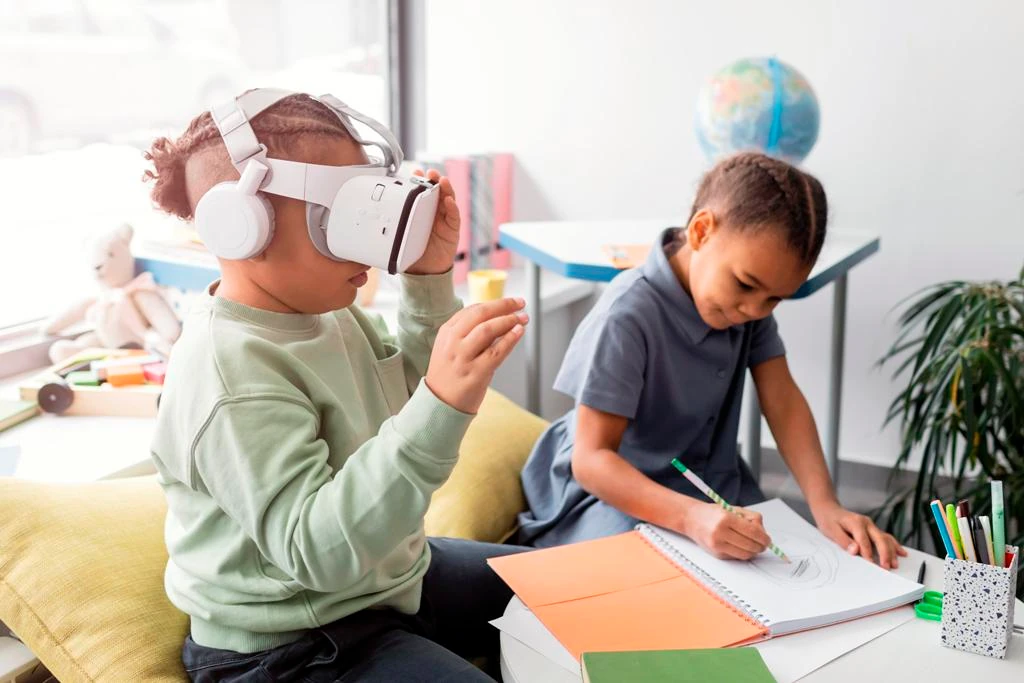
The future of education is not merely an evolution—it is a revolution, one that is unfolding with the quiet yet relentless grace of an owl surveying its domain from the shadows of twilight. Just as the owl embodies wisdom, adaptability, and silent observation, so too must modern education adapt to the shifting tides of technology, pedagogy, and societal expectation. The classroom of tomorrow is no longer confined to four walls; it is a dynamic ecosystem where artificial intelligence tutors converse with human educators, virtual reality transports students to ancient civilizations, and micro-credentials redefine the value of lifelong learning. This transformation is not a distant dream—it is already in motion, and those who dare to embrace it will shape the intellectual landscape of generations to come. From immersive storytelling to gamified mastery, the future of education is rich with innovation, brimming with opportunity, and demanding of our collective imagination.
The Rise of Adaptive Learning Platforms: Personalized Education at Scale
Imagine an educational experience tailored not just to your grade level, but to your cognitive rhythm—the pace at which you absorb, reflect, and retain knowledge. Adaptive learning platforms are doing precisely that, leveraging machine learning algorithms to dissect learning patterns in real time. These systems do not merely adjust difficulty; they curate content based on emotional engagement, prior knowledge gaps, and even motivational triggers. A student struggling with quadratic equations might receive a visual simulation of parabolas in motion, while another excelling in literature could be guided through comparative analysis of feminist dystopian novels. The brilliance lies not in the technology itself, but in its ability to democratize personalized education—once a luxury reserved for elite tutors, now accessible to every learner with an internet connection. The implications are profound: standardized testing may fade into obsolescence as assessment becomes continuous, organic, and deeply human.
Immersive Storytelling: Where History and Science Come Alive
Education has long been criticized for its reliance on passive absorption—students memorizing dates, formulas, and theories without truly experiencing their resonance. Enter immersive storytelling, a pedagogical paradigm that transforms abstract concepts into visceral journeys. Virtual reality (VR) and augmented reality (AR) are no longer novelties; they are the new textbooks. Picture a biology student dissecting a frog not on a cold slab, but within the lush ecosystems of a digital rainforest, where each organ pulses with life and decay. Or a history class where the fall of Rome is not narrated but lived—students navigate the Colosseum as gladiators, negotiate with senators, and witness the chaos of civil war firsthand. This is not edutainment; it is edu-reality, a fusion of narrative and knowledge that etches lessons into memory with the permanence of a tattoo. The emotional stakes are higher, the retention deeper, and the curiosity sparked is nothing short of revolutionary.
Gamification: The Alchemy of Play and Mastery
Games have always been the ultimate teachers—teaching strategy, resilience, and collaboration through trial and error. Modern education is finally catching on. Gamification infuses learning with the dopamine-driven thrill of achievement, turning even the most mundane tasks into quests. A mathematics module might resemble a fantasy RPG, where solving equations unlocks new spells or treasures. Language learning apps like Duolingo have already proven that streaks and leaderboards can coax fluency from reluctant learners. But the future lies in narrative-driven gamification, where students embark on epic journeys to unlock interdisciplinary knowledge. Imagine a geography class where students must navigate a global crisis—balancing resource allocation, diplomacy, and environmental ethics—all while mastering cartography and climate science. The line between play and pedagogy dissolves, revealing a landscape where curiosity is the only prerequisite for mastery.
Micro-Credentials and the Death of the Monolithic Degree
The traditional four-year degree is undergoing a metamorphosis, shedding its rigid structure like a snake outgrowing its skin. In its place emerges the micro-credential—bite-sized, stackable certifications that validate specific skills in real time. A software developer might earn a credential in ethical AI design after a 10-week intensive. A teacher could specialize in trauma-informed pedagogy without committing to a full master’s program. Platforms like Coursera and edX are leading this charge, but the true disruptors are blockchain-based skill passports, where achievements are immutable and portable across institutions. This shift empowers lifelong learners, career switchers, and global citizens to upskill on demand. The university of the future may resemble a knowledge marketplace, where students curate their own intellectual portfolios, trading credentials like rare artifacts in a bazaar of expertise.
The Democratization of Knowledge: Breaking Barriers to Access
Education has never been a level playing field, but the future promises to dismantle the walls that have kept marginalized voices in the shadows. Open educational resources (OER) are dismantling paywalls, offering free, high-quality materials to anyone with a device. AI-powered translation tools are breaking language barriers, allowing a student in rural India to learn calculus in their native tongue. Community-driven platforms like Khan Academy and Wikipedia are evolving into global knowledge cooperatives, where expertise is crowdsourced and curated by the many, not dictated by the few. The rise of low-bandwidth educational tools—such as text-based AI tutors for offline use—ensures that even in regions with intermittent internet, learning never ceases. This is not just equity; it is epistemic justice, the right to knowledge as a birthright, not a privilege.
Ethical AI and the Human Touch: Navigating the Digital Divide
With great innovation comes great responsibility. As AI tutors proliferate, so too do concerns about algorithmic bias, data privacy, and the erosion of human connection. The future of education must strike a delicate balance—leveraging AI to scale personalized learning while preserving the irreplaceable role of educators as mentors, not just facilitators. Ethical AI in education demands transparency: students must understand how algorithms shape their learning paths. It demands accountability: platforms must audit their models for cultural insensitivity or socioeconomic blind spots. And it demands humility: no machine can replicate the empathy of a teacher who notices a student’s silent struggle or the inspiration of a mentor who sees potential where others see failure. The classroom of tomorrow will be a hybrid ecosystem, where silicon and soul coexist in harmony.
The Role of Educators: From Sages to Facilitators of Curiosity
The teacher of the future is not a lecturer, but a curiosity architect—designing experiences that ignite wonder. Their role shifts from disseminating information to cultivating critical thinking, ethical reasoning, and interdisciplinary synthesis. In a world where facts are a Google search away, the educator’s value lies in their ability to ask the right questions: Why does this matter? How does this connect to the bigger picture? What are the unintended consequences? Professional development will focus on emotional intelligence, cultural competency, and technological fluency. The best educators will be those who can pivot from STEM to art, from history to coding, seamlessly weaving disciplines into a tapestry of holistic learning. They will be the guides in a labyrinth of knowledge, not the gatekeepers of it.
Challenges and Opportunities: The Road Ahead
The path forward is not without obstacles. Digital equity remains a glaring issue—how do we ensure that the future of education does not deepen the divide between the connected and the disconnected? The commercialization of edtech looms large; will platforms prioritize profit over pedagogy? And what of the human cost—how do we prevent the isolation of screen-based learning from eroding the social fabric of education? Yet for every challenge, there is an opportunity waiting to be seized. The future of owl education is not about replacing the human element with machines, but about augmenting it—creating a symphony where technology and humanity play in concert. It is about redefining success not as a degree, but as a lifelong journey of growth. It is about ensuring that every learner, regardless of background, has the tools to not just navigate the future, but to shape it.