In the shadowed cloak of twilight, where the world blurs into a canvas of whispers and wings, owls reign as silent sentinels of the night. Their lives unfold in a tapestry woven with secrets—secrets of diet, migration, and survival etched not in ink, but in the very fabric of their bones. Isotope analysis, a scientific alchemy of sorts, unlocks these enigmas, transforming the silent flight of these raptors into a symphony of data. It is a dance of atoms, a ballet of chemistry, where every meal and every journey leaves an indelible mark. To study owl diet and migration through this lens is to peer into the hidden chronicles of their existence, where the past is not buried but embedded in the very marrow of their being.
The Alchemy of Isotopes: Decoding the Silent Language of Owls
Isotopes, those subtle variants of elements that differ only in their atomic weight, are the unsung heroes of this narrative. They are the fingerprints of nature, unique to each environment and diet. For owls, whose lives are entwined with the rhythms of the wild, these isotopes become a cryptic code—a language of survival whispered through the food chain. When an owl consumes a vole, the isotopes from that vole’s diet are assimilated into the owl’s tissues, leaving a traceable signature. Over time, these signatures accumulate, painting a portrait of the owl’s dietary habits with precision that borders on the mystical.
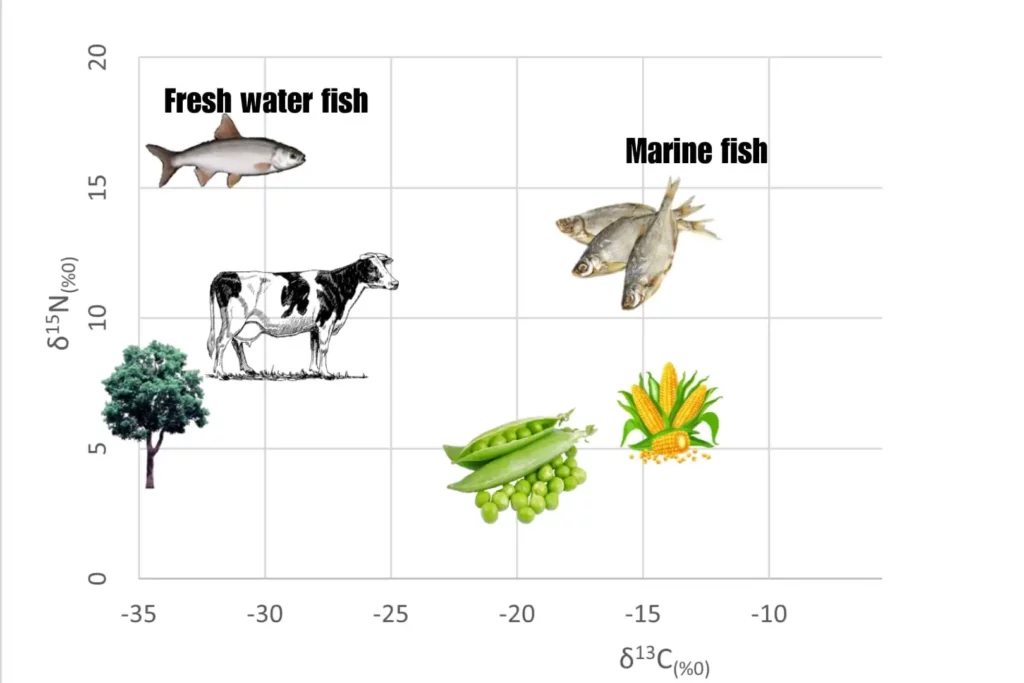
The magic lies in the ratios. Carbon isotopes, for instance, reveal whether an owl’s prey feasted on C3 or C4 plants, hinting at the ecosystems it traversed. Nitrogen isotopes, on the other hand, expose the trophic level of its diet, distinguishing between herbivores and carnivores. Oxygen isotopes, sensitive to temperature and water sources, map the owl’s migratory routes with an almost poetic accuracy. Together, they form a mosaic of the owl’s life, a silent testament to its existence.
The Owl’s Pantry: A Culinary Map Forged in Bone
Imagine, if you will, an owl’s skeleton as a ledger, its pages inscribed not with ink but with the isotopic echoes of its meals. Each bone, each feather, each talon holds a record of what it ate and where it roamed. The femur might whisper of a diet rich in voles, while the wing feathers could sing of a migratory journey across vast, unseen landscapes. This culinary cartography is not merely academic; it is a revelation of the owl’s role in the ecosystem, a glimpse into the delicate balance of predator and prey.
Consider the barn owl, a master of stealth and adaptability. Its diet, often a smorgasbord of small mammals, leaves a distinct isotopic signature. But what if, in a season of scarcity, it turns to insects or birds? The isotopes shift, revealing this dietary pivot with unerring clarity. Such shifts are not trivial; they are the owl’s survival strategies laid bare, a testament to its resilience in the face of environmental upheaval. Through isotope analysis, we can trace these dietary adaptations, understanding how owls navigate the caprices of nature.
Even the humble snowy owl, a creature of the Arctic’s harsh embrace, leaves its isotopic mark. Its prey, often lemmings and other tundra dwellers, imprints a signature unique to the frozen north. But as climate change reshapes these landscapes, the isotopes tell a story of change—of owls forced to adapt, to seek new hunting grounds, or to starve. The bones of these owls become archives of environmental transformation, their isotopes the ink with which nature writes its warnings.
Wings of Migration: The Invisible Threads That Bind Owls to Their Homelands
Migration is the owl’s greatest mystery, a journey shrouded in darkness and silence. Yet, isotopes are the lanterns that illuminate this path. By analyzing the isotopic composition of owl feathers, scientists can reconstruct their migratory routes with astonishing detail. A feather grown in the Arctic will bear the isotopic fingerprints of that region, while one grown in a temperate forest will sing a different tune. The transition between these signatures marks the owl’s journey, a silent odyssey etched in chemistry.
Take the example of the long-eared owl, a species known for its nomadic tendencies. Its feathers, collected over time, reveal a pattern of movement that defies simple explanation. Some owls remain sedentary, their isotopes a steady hum of local life. Others embark on epic migrations, their isotopic signatures shifting dramatically with each season. These journeys are not random; they are responses to the ebb and flow of prey populations, the whisper of climate shifts, the call of distant lands. Isotope analysis transforms these migrations from mere speculation into a tangible narrative, a story of survival written in the language of atoms.
The power of this method lies in its subtlety. Unlike GPS tags, which require capturing and handling the owl, isotope analysis is non-invasive. It allows scientists to study migration patterns without disturbing the owls themselves, preserving the sanctity of their nocturnal lives. In this way, isotopes become not just tools of discovery, but guardians of the owls’ privacy, respecting their silent dominion over the night.
The Owl as Ecological Zeitgeist: A Mirror to the World’s Shifting Rhythms
Owls are more than predators; they are barometers of ecological health. Their diets and migrations are not isolated phenomena but reflections of the broader world’s pulse. Isotope analysis, therefore, is not merely a scientific endeavor—it is an act of ecological empathy. By studying owls, we gain insight into the health of ecosystems, the impact of human activity, and the resilience of life in the face of adversity.
Consider the impact of agriculture on owl populations. The shift from diverse, wild landscapes to monoculture fields alters the isotopic signatures of prey, which in turn are reflected in the owls that hunt them. A barn owl feeding in a pesticide-laden farmland will have a different isotopic profile than one hunting in a pristine meadow. These differences are not just academic; they are cries for help, warnings of an ecosystem in distress. Isotope analysis allows us to listen to these cries, to understand the toll of human intervention on the natural world.
Similarly, climate change leaves its mark on owl isotopes. As temperatures rise and habitats shift, the isotopic signatures of owl prey change, and so too do the owls themselves. A snowy owl forced southward by melting Arctic ice will carry the isotopic echoes of its new home, a silent testament to the planet’s warming heart. These signatures are not just data points; they are the owl’s voice in the chorus of climate change, a reminder of the interconnectedness of all life.
The Future of Owl Whispering: Where Science and Wonder Converge
The study of owl isotopes is still in its infancy, a frontier where science and wonder collide. With each new discovery, we edge closer to understanding these enigmatic creatures, to unraveling the secrets of their silent world. But this journey is not just about knowledge; it is about connection. Owls, with their piercing gaze and ghostly flight, have long captivated human imagination. Now, through isotope analysis, they invite us into their world, offering us a glimpse of their lives in a language we can finally understand.
As technology advances, so too will our ability to decode the isotopic whispers of owls. New techniques, such as compound-specific isotope analysis, promise to reveal even more intimate details of their diets and migrations. We may one day be able to trace the isotopic journey of an owl from its first meal to its final resting place, a life story written in the language of atoms. This is not just science; it is poetry, a symphony of data that celebrates the beauty and complexity of the natural world.
The owls, with their silent wings and watchful eyes, remind us that the world is far stranger and more wondrous than we often realize. Through isotope analysis, we are given the gift of hearing their silent songs, of understanding their hidden lives. It is a privilege, one that demands not just curiosity, but reverence—a recognition that in the study of owls, we are not just observers, but participants in the grand, unending dance of life.