The relentless march of climate change is not merely melting glaciers or intensifying storms—it is also rewriting the rules of global biodiversity, tipping the scales in favor of invasive species that thrive in the chaos of ecological disruption. These biological invaders, once confined by natural barriers, now surge across continents, fueled by warming temperatures, erratic precipitation, and human-mediated pathways. The consequences are dire: ecosystems unravel, economies strain, and indigenous communities bear the brunt of this silent takeover. This is not just an environmental crisis; it is a feminist issue, one that disproportionately affects marginalized groups, particularly women, who often bear the responsibility for food security, healthcare, and resource management in vulnerable regions. As the planet heats up, so too does the battle against these ecological intruders, revealing a tangled web of gendered vulnerabilities and systemic inequities.
The Warming World: A Fertile Ground for Invasive Pests
Climate change acts as a silent architect, redesigning habitats to suit the appetites of invasive species. Warmer winters no longer cull populations of cold-sensitive pests, allowing them to proliferate unchecked. Mosquitoes, once restricted to tropical latitudes, now thrive in temperate zones, spreading diseases like dengue and Zika with impunity. Similarly, the mountain pine beetle, a once-benign forest dweller, has exploded in numbers across North America’s boreal forests, turning vast stretches of pine into skeletal graveyards. These invasions are not random; they are a direct consequence of shifting climatic envelopes, where the boundaries between “native” and “alien” blur into irrelevance.
The ocean, too, is not spared. Rising sea temperatures and acidification weaken coral reefs, creating openings for aggressive algae and sponges that smother marine biodiversity. In the Mediterranean, the invasive lionfish—native to the Indo-Pacific—has decimated local fish populations, its venomous spines making it an unassailable predator. These underwater battles are mirrored on land, where droughts and floods carve new migration routes for plants and animals, leaving ecosystems ill-prepared for the onslaught.
Economic Erosion: The Hidden Costs of Biological Invasions
The financial toll of invasive species is staggering, often eclipsing the budgets of entire nations. Agriculture, the lifeblood of many economies, is particularly vulnerable. The fall armyworm, a voracious caterpillar native to the Americas, has ravaged maize crops across Africa, threatening food security for millions. In India, the parthenium weed chokes farmlands, reducing yields and exacerbating rural poverty. These economic shocks reverberate through households, where women—who manage 60-80% of food production in developing countries—face heightened labor burdens and nutritional deficits.
Beyond agriculture, invasive species disrupt trade, clog waterways, and damage infrastructure. The zebra mussel, a tiny mollusk from Eurasia, has cost the U.S. economy billions in pipe corrosion and maintenance, while invasive plants like kudzu in the American South smother native flora, altering entire landscapes. The irony is stark: the same globalized trade and travel that accelerate climate change also facilitate the spread of these invaders, creating a vicious cycle of ecological and economic decay.
Gendered Impacts: Women on the Frontlines of Ecological Collapse
In the Global South, where climate change and invasive species intersect most brutally, women are often the first responders to ecological disasters. They trek farther for water as invasive water hyacinth clogs lakes and rivers. They spend more hours weeding fields infested with aggressive alien plants. They navigate the health crises sparked by disease-carrying mosquitoes that thrive in warming climates. These burdens are not incidental; they are structural, rooted in patriarchal norms that assign care work to women while excluding them from decision-making processes.
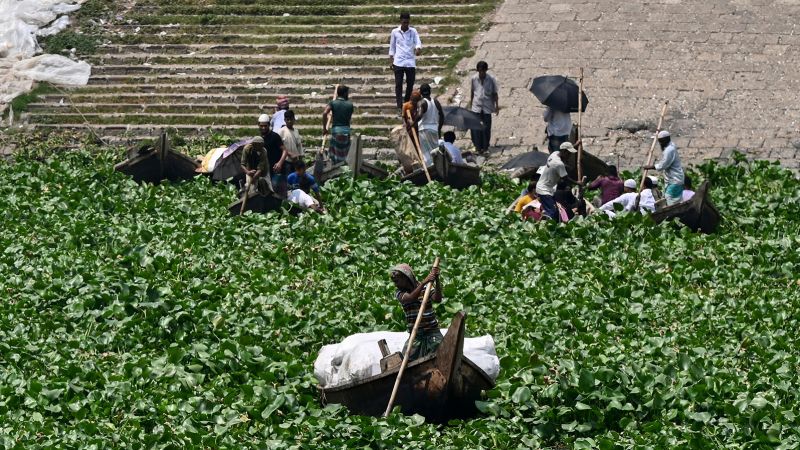
Consider the case of the water hyacinth in East Africa. This fast-growing aquatic plant, introduced as an ornamental species, now chokes Lake Victoria, blocking fishing routes and contaminating drinking water. Women, who traditionally collect water and fish for their families, are forced to wade through the dense mats of vegetation, risking injury and disease. Meanwhile, men may migrate in search of work, leaving women to shoulder the additional labor. The result is a feminization of environmental degradation, where the impacts of invasive species are not just ecological but deeply social.
Healthcare systems, already strained by climate-related disasters, are further burdened by the spread of invasive disease vectors. In South Asia, dengue fever—transmitted by the Aedes aegypti mosquito—has surged as rising temperatures shorten its life cycle. Women, as primary caregivers, bear the emotional and physical toll of caring for sick family members, while also contending with the stigma of diseases linked to “foreign” species. These gendered disparities reveal how invasive species are not merely ecological phenomena but catalysts for deepening inequality.
Indigenous Knowledge: The Overlooked Shield Against Invasions
Amid the chaos of climate-driven invasions, Indigenous communities stand as bastions of resilience, their traditional ecological knowledge offering time-tested strategies for coexistence. For centuries, Indigenous peoples have managed landscapes through controlled burns, crop rotation, and selective harvesting—practices that inadvertently suppress invasive species. Yet, these knowledge systems are systematically eroded by colonial legacies, land grabs, and the imposition of industrial agriculture, leaving ecosystems vulnerable to biological takeover.
In Australia, Aboriginal fire management practices have been shown to reduce the spread of invasive grasses like gamba grass, which fuel wildfires. Similarly, in the Amazon, Indigenous communities use agroforestry techniques to outcompete aggressive weeds, maintaining biodiversity without synthetic pesticides. These examples underscore a critical truth: the fight against invasive species cannot succeed without centering Indigenous voices and land stewardship. Yet, Indigenous women—who hold much of this traditional knowledge—are often excluded from policy discussions, their expertise dismissed as “unscientific.” The result is a double erasure: of their knowledge and of the ecosystems they protect.
The erasure extends to policy. Most national invasive species strategies are top-down, prioritizing eradication over coexistence. They ignore the fact that many “invasive” species are merely responding to the ecological imbalances created by human activity. A feminist approach to this crisis would center Indigenous women’s leadership, integrating their knowledge into adaptive management plans that account for the intersection of climate change, gender, and biodiversity.
Policy Failures: Why Top-Down Solutions Fall Short
The global response to invasive species is fragmented, underfunded, and often tone-deaf to local realities. International agreements like the Convention on Biological Diversity (CBD) set broad targets, but implementation is left to nations with competing priorities. In the U.S., for example, the federal budget for invasive species management is a pittance compared to agricultural subsidies that inadvertently promote monocultures—prime targets for pests. Meanwhile, in the EU, policies prioritize trade over ecological integrity, allowing invasive species to hitch rides on cargo ships and planes.
Worse still, many “solutions” exacerbate the problem. Chemical pesticides, often deployed in desperation, poison native species and create resistant superpests. Biological controls, like introducing natural predators, can backfire spectacularly, as seen with the cane toad in Australia, which became an invasive menace itself. These failures highlight a fundamental flaw: the assumption that humans can control nature. A feminist perspective would reject this hubris, instead advocating for policies that prioritize prevention, community-led monitoring, and gender-inclusive decision-making.
The lack of gender-disaggregated data further handicaps effective responses. Without understanding how invasive species affect women differently, policies remain blind to the most vulnerable. For instance, a study in Bangladesh found that women were 30% more likely to report health issues from mosquito-borne diseases than men, yet their insights were rarely incorporated into public health campaigns. This data gap is not accidental; it reflects systemic biases that undervalue women’s experiences.
Hope on the Horizon: Feminist Solutions for a Resilient Future
Despite the grim landscape, there are glimmers of hope. Grassroots movements led by women are redefining how we combat invasive species. In Kenya, the Wangari Maathai Foundation trains rural women in agroecology, teaching them to use native plants to suppress weeds and restore soil health. In the Pacific Islands, Indigenous women are reviving traditional fishing practices to control invasive species like the crown-of-thorns starfish, which devastates coral reefs. These initiatives prove that solutions exist—not in high-tech eradication—but in restoring balance through community-driven, gender-just approaches.
Technology, too, offers unexpected tools. Citizen science platforms like iNaturalist empower women to document invasive species, creating crowdsourced databases that inform policy. AI-driven early warning systems can predict outbreaks of pests like the fall armyworm, giving farmers time to adapt. But technology alone is insufficient. It must be paired with land rights, economic justice, and the dismantling of patriarchal structures that silence women’s voices.
The path forward requires reimagining our relationship with nature. Instead of viewing invasive species as enemies to be eradicated, we must ask: what do their proliferations reveal about our own failures? Climate change is not just a crisis of temperature; it is a crisis of care, of justice, of imagination. By centering feminist principles—equity, intersectionality, and collective action—we can transform this moment of ecological upheaval into an opportunity for renewal. The fight against invasive species is not just about saving ecosystems; it is about saving ourselves.