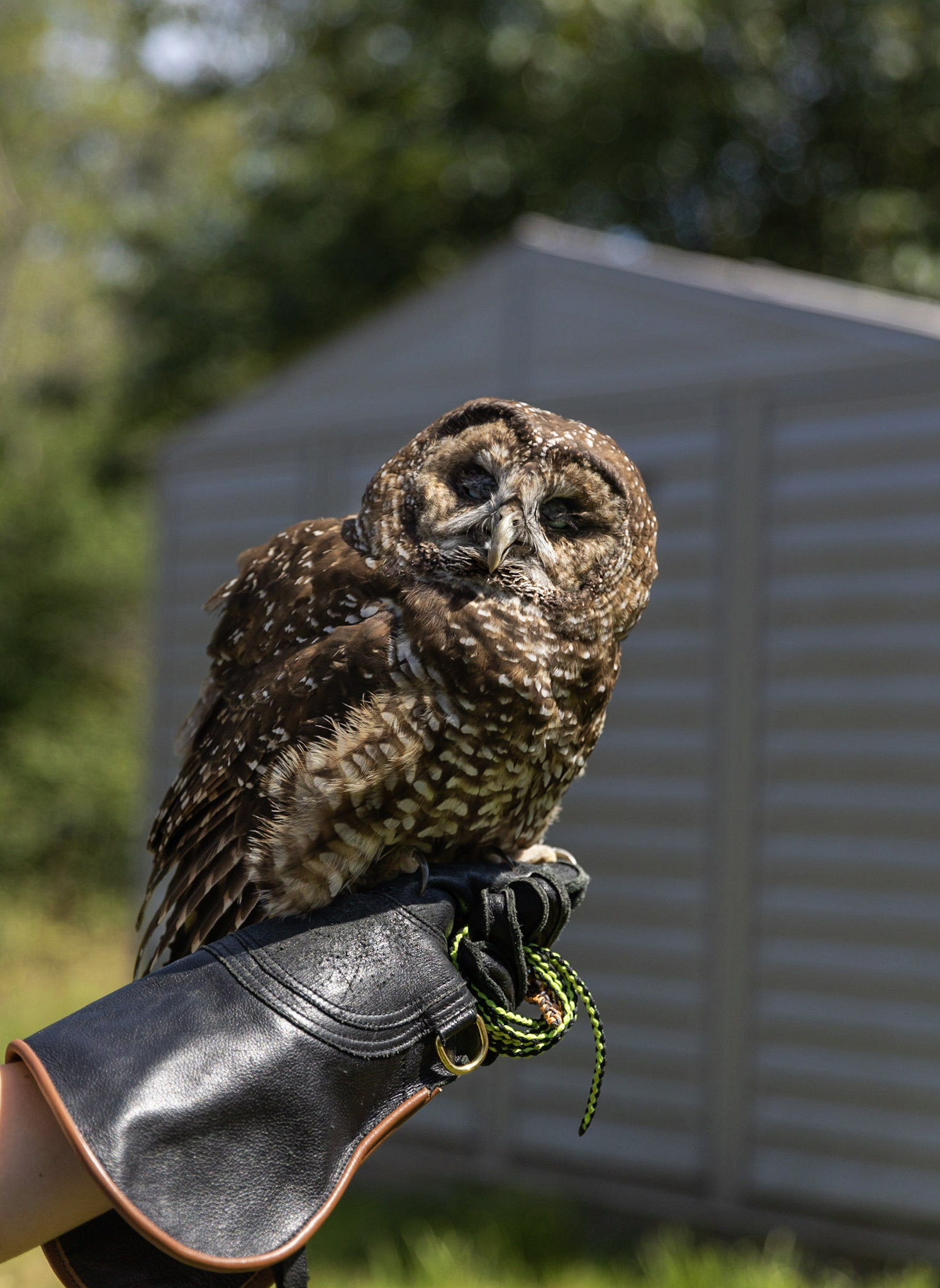
The Northern Spotted Owl is more than a bird—it is a living emblem of the ancient forests, a silent witness to the slow erosion of biodiversity. Its haunting call echoes through the mist-laden canopies of the Pacific Northwest, a reminder of what we stand to lose when ecosystems unravel. Hosting a conservation workshop dedicated to this enigmatic raptor is not merely an educational endeavor; it is an act of defiance against ecological amnesia. It is a call to remember that every species, no matter how elusive, plays a vital role in the grand symphony of life. This guide will walk you through crafting an immersive, transformative experience that doesn’t just inform—it inspires action, reverence, and a renewed sense of responsibility toward our natural world.
The Philosophy Behind the Workshop: Why the Spotted Owl Matters
To understand the Northern Spotted Owl is to confront the fragility of coexistence. This bird, with its dark, soulful eyes and barred plumage, is an indicator species—its presence or absence speaks volumes about the health of old-growth forests. Yet, its significance transcends ecological metrics. The Spotted Owl embodies the tension between human ambition and natural heritage. Its decline is not just a biological crisis; it is a cultural one. Indigenous communities have long revered this owl as a guardian of sacred knowledge, while modern society often reduces it to a statistic in logging debates. A workshop must begin by reframing the owl not as a victim, but as a teacher—one that demands we question our relationship with the land. By grounding the event in this dual narrative—scientific urgency and cultural reverence—you create a space where participants don’t just learn facts; they feel the weight of a shared responsibility.
Designing the Venue: Where Nature and Learning Collide
The setting of your workshop should mirror the owl’s habitat: immersive, quiet, and alive with the textures of the wild. Opt for a location enveloped by trees—perhaps a forest retreat, a nature reserve, or even a repurposed barn with large windows overlooking a wooded area. The key is to minimize artificial distractions. Use natural lighting, arrange seating in a circle to foster intimacy, and incorporate elements like fallen logs as makeshift tables or moss-covered stones as placeholders for materials. If indoors, bring the outside in with potted ferns, pinecones, and the subtle scent of cedar. The goal is to dissolve the boundary between the classroom and the wild, so participants feel they are stepping into the owl’s world rather than observing it from afar. This sensory immersion primes the mind for deeper engagement and emotional connection.
Curating the Participant Experience: Beyond Passive Listening
A workshop that merely lectures about conservation will leave attendees informed but unchanged. To spark true transformation, design an experience that engages all senses and emotions. Begin with a guided “owl prowl”—a silent, moonlit walk through the woods where participants listen for the owl’s call, mimicking its vocalizations in response. This exercise isn’t just about hearing; it’s about attuning to the rhythms of the forest, understanding the owl’s role as both predator and prey. Follow this with a tactile activity: have participants handle replica owl pellets, dissecting them to uncover the bones of their prey. The visceral reaction to holding the remnants of a meal—something so distant from human experience—creates a visceral connection to the owl’s life cycle. Pair these activities with storytelling: share Indigenous legends of the owl as a keeper of secrets, or recount the first time a biologist heard its call in the dead of night, sending shivers down their spine. These narratives weave emotion into the science, making the owl’s plight unforgettable.
Interactive Learning Stations: Hands-On Conservation in Action
Break the workshop into thematic stations, each designed to explore a facet of Spotted Owl conservation through active participation. At the “Habitat Mapping” station, provide topographic maps and ask teams to delineate old-growth forest corridors, debating where logging pressures are most acute. Use augmented reality tools to overlay historical forest cover, revealing the stark contrast between past and present. At the “Soundscapes” station, play recordings of Spotted Owl calls alongside the cacophony of chainsaws and traffic, challenging participants to identify which environments the owl can—and cannot—thrive in. The “Policy Playground” station is where the rubber meets the road: present simplified versions of forest management bills and let teams role-play as loggers, conservationists, and policymakers, negotiating a compromise that balances economic needs with ecological integrity. These stations transform abstract concepts into tangible dilemmas, forcing participants to grapple with the complexities of conservation in a way no lecture ever could.
Fostering Community: The Power of Shared Purpose
Conservation is not a solitary pursuit; it thrives on collective action. Dedicate a portion of the workshop to building a community of advocates. Start with a “Story Circle,” where each participant shares a personal connection to nature—perhaps a childhood memory of hearing an owl at dusk or a moment of awe while hiking through ancient forests. These stories humanize the issue, revealing that the Spotted Owl’s struggle is not just about a bird, but about the places and memories we hold dear. Then, facilitate the creation of a “Conservation Compact”: a pledge where attendees commit to actions like volunteering with local habitat restoration projects, advocating for protected areas, or even installing owl boxes in their own backyards. Provide templates for social media toolkits, letter-writing campaigns, and citizen science initiatives like eBird reporting. The workshop’s legacy should extend beyond the event itself, embedding conservation into the daily lives of its participants.
Closing the Circle: Rituals of Commitment and Reflection
End the workshop with a ritual that seals the experience in memory and spirit. Gather participants in a circle around a central fire pit or a single candle, symbolizing the fragile flame of hope for the Spotted Owl’s future. Ask each person to share one insight or action they will take as a result of the day’s learning. Then, pass around a small wooden owl figurine—hand-carved if possible—as a token of their commitment. The figurine is not just a keepsake; it is a reminder that they are now stewards of this story. Follow this with a moment of silence, inviting everyone to listen for the owl’s call one last time, whether in the rustling leaves or in their own imagination. This closing ritual transforms the workshop from an event into a rite of passage—a moment where participants transition from passive observers to active guardians of the wild.
The Northern Spotted Owl is a mirror held up to humanity. In its declining numbers, we see our own complicity in the unraveling of the natural world. But in its resilience, we find a reason for hope. Hosting a conservation workshop is not just about saving a species; it is about reclaiming our place within the web of life. It is about remembering that we are not separate from the forests, the owls, or the ancient trees—we are a part of them. And when we act from that understanding, we do more than conserve a bird. We begin to heal the world.