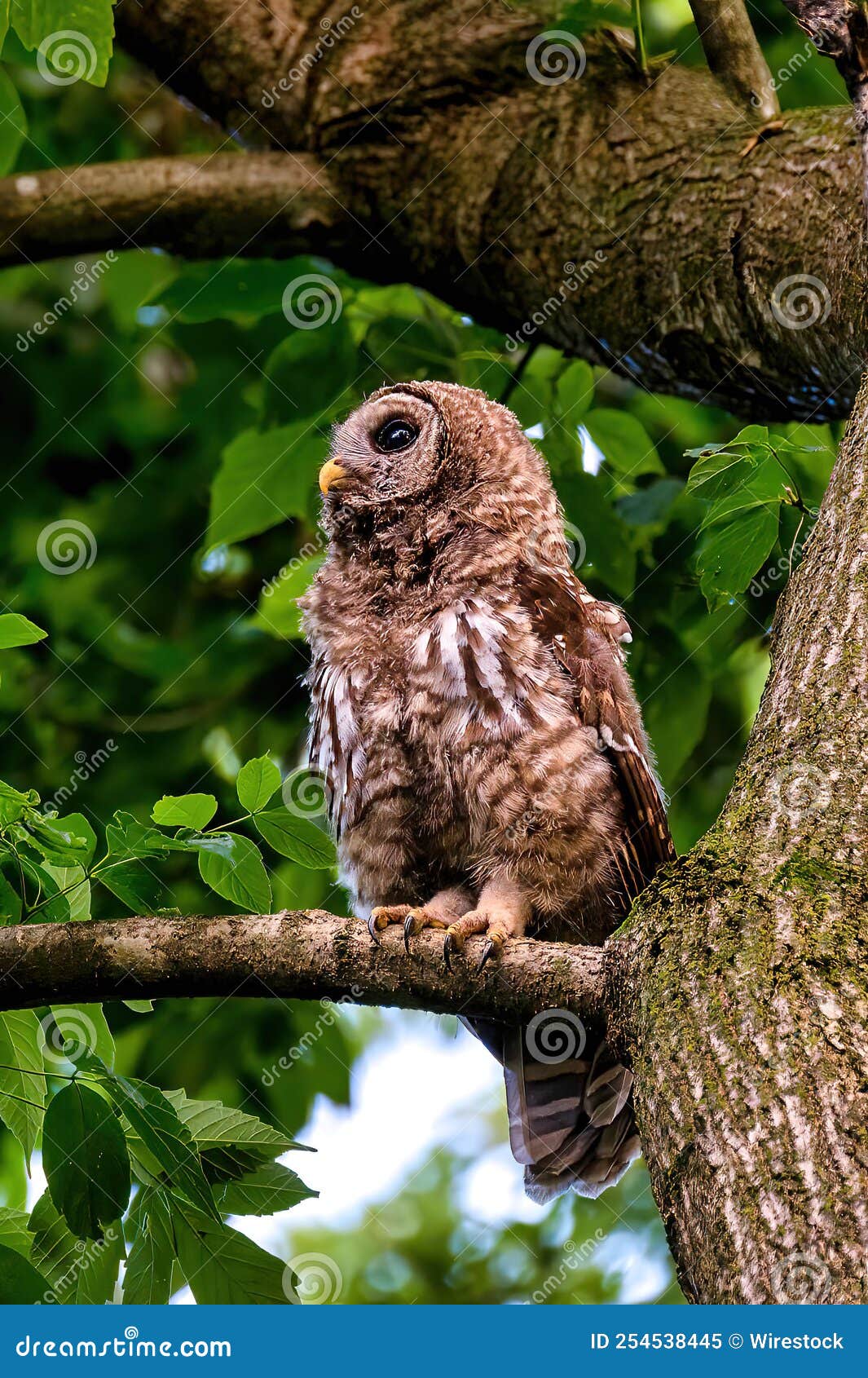
The barred owl, with its hauntingly rhythmic “Who cooks for you? Who cooks for you-all?” call, and the spotted owl, a silent sentinel of ancient forests, are not merely birds—they are living barometers of ecological health. Their habitats, woven into the fabric of North America’s old-growth woodlands, are under siege—not just by loggers or climate change, but by the very tools we use to understand them. Yet, in this paradox lies opportunity: drones, those buzzing mechanical avians, have emerged not as intruders, but as unexpected allies in the conservation of these elusive raptors. Far from being mere gadgets, they are the modern-day arboreal detectives, slipping through the canopy’s labyrinthine corridors to reveal secrets that once demanded decades of patient observation.
The Silent Wings of Progress: How Drones Redefine Habitat Surveillance
Imagine, if you will, a forest so dense that sunlight fractures into a thousand emerald shards, where the air hums with the susurrus of unseen wings. This is the domain of the barred and spotted owl—terrains where human footsteps are disturbances, where binoculars strain against the dappled obscurity. Enter the drone: a quadcopter that does not tread, but floats, its rotors a whisper against the wind. Unlike traditional ground surveys, which are as intrusive as a marching band in a cathedral, drones glide with the stealth of a shadow. They carry multispectral cameras that see beyond the visible spectrum, mapping chlorophyll density to reveal the health of ancient oaks and maples. Thermal imaging? Oh, it’s not just for night vision—it’s for detecting the faintest heat signatures of nesting owls, those feathered phantoms that vanish into the foliage like smoke.
But the magic doesn’t end there. Drones equipped with LiDAR can peer through the canopy itself, constructing 3D models of the forest floor with a precision that would make a cartographer weep. This isn’t just data—it’s a revelation. For the first time, researchers can quantify the vertical stratification of these ecosystems, tracking how barred owls—those bold interlopers from the east—are encroaching upon the spotted owl’s dwindling territories. The drone becomes a cartographer of silence, charting the uncharted territories where these owls reign.
From Buzzing Nuisance to Conservation Catalyst: The Drone’s Dual Role
Critics decry drones as harbingers of ecological disruption, their whirring propellers a modern-day cacophony in the sacred hush of the wild. Yet, to dismiss them outright is to ignore their potential for redemption. Consider the paradox: a machine that can both disturb and protect. In the hands of trained ecologists, drones are not invaders—they are mediators. Their greatest strength lies in their ability to conduct non-invasive surveys, reducing the need for researchers to trample through fragile understories or set up invasive camera traps that may spook their subjects.
Take, for instance, the barred owl’s expansion into the Pacific Northwest. Once confined to eastern forests, this adaptable predator has muscled its way into spotted owl territory, outcompeting its rarer cousin for food and nesting sites. Drones allow scientists to monitor this shift with unprecedented granularity. By tracking barred owl movements in real-time, conservationists can identify hotspots of conflict and deploy targeted interventions—whether it’s habitat restoration or, in extreme cases, carefully managed removals to protect the spotted owl’s last refuges. The drone, then, is not just a tool; it’s a peacemaker, a silent arbiter in a silent war.
The Aerial Choreography: Drones and the Dance of Data Collection
There is an artistry to drone-based habitat surveying, a ballet of algorithms and aerodynamics. Picture a drone executing a lawnmower pattern over a forest canopy, its camera snapping high-resolution images at precise intervals. Each frame is a pixelated mosaic of moss, bark, and sky, but when stitched together, it reveals the forest’s hidden architecture. Yet, the true genius lies in the drone’s ability to adapt. Wind gusts? The drone adjusts its altitude. Sudden rain showers? It retreats, only to resume its mission when conditions stabilize. This adaptability is crucial in the owl’s domain, where weather can shift from serene to tempestuous in minutes.
But the dance doesn’t end with still images. Drones equipped with acoustic sensors can eavesdrop on the forest’s symphony—the hoots, trills, and screeches that compose the barred and spotted owl’s vocabulary. By recording and analyzing these calls, researchers can estimate population densities without ever laying a hand on a single bird. It’s a form of sonic archaeology, where the echoes of the past inform the conservation strategies of the future.
The Ethical Quandary: Balancing Innovation with Intrusion
No discussion of drones in conservation is complete without confronting the elephant—or rather, the quadcopter—in the room. The ethical dilemma is as tangled as the roots of a thousand-year-old redwood. Can a machine that hums like a mechanical insect truly be considered non-invasive? What of the stress it might cause to nesting owls, even if it’s fleeting? These are not idle concerns. Studies have shown that some birds exhibit stress responses to drone overflights, though the impact varies by species and altitude.
The solution lies in ethical aeronautics. Researchers are developing protocols that prioritize minimal disturbance—flying at higher altitudes, avoiding sensitive nesting periods, and using AI to process data on-site, reducing the need for repeated flights. The goal is not to eliminate risk entirely, but to mitigate it with intention. After all, the alternative—sending teams of humans into these fragile ecosystems—carries its own set of ethical burdens. The drone, then, becomes a necessary compromise, a bridge between human curiosity and ecological integrity.
The Future: Drones as Guardians of the Canopy
As technology advances, so too does the drone’s potential. Imagine swarms of autonomous aerial sentinels, each programmed to patrol a specific territory, their AI trained to recognize owl calls, nest structures, and even the subtle signs of habitat degradation. Paired with machine learning, these drones could predict ecological shifts before they become crises, alerting conservationists to the first tremors of barred owl encroachment or the creeping decline of old-growth forests.
Yet, the most profound promise of drone technology may lie in its ability to reconnect humans with the wild. In an era where most people experience nature through screens, drones offer a glimpse of the unseen—a way to witness the barred owl’s patient vigil or the spotted owl’s elusive grace without leaving a trace. They are not just tools; they are storytellers, narrating the silent dramas that unfold in the forest’s emerald depths.
The barred and spotted owl are more than species; they are ecological barometers, their survival a testament to the health of entire ecosystems. And drones? They are the modern-day oracles, their buzzing wings a harbinger of hope in a world where the wild is increasingly under siege. To use them wisely is not to exploit the forest, but to listen to it—to finally hear what it has been trying to tell us all along.