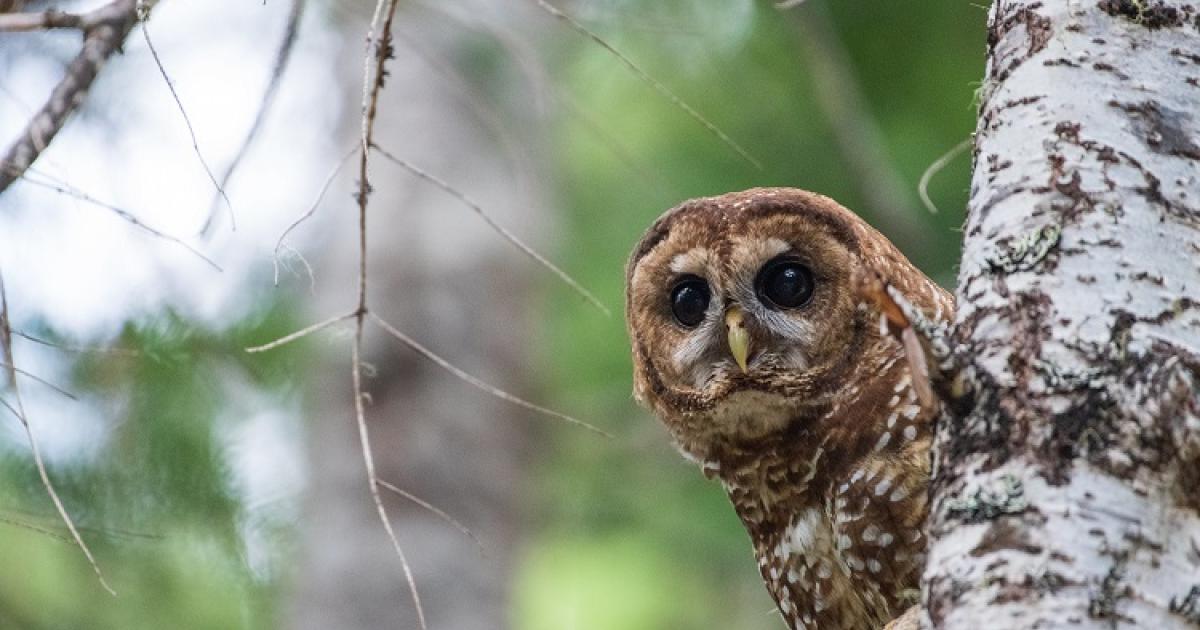
The barred owl, a creature of the ancient forests, has become an unlikely protagonist in a modern ecological drama. Its haunting eight-note call echoes through the canopies of the Pacific Northwest, a region where the specter of extinction looms not for the owl itself, but for its quieter, more reclusive cousin—the northern spotted owl. The barred owl, an adaptable and aggressive invader, has muscled its way into the spotted owl’s territory, outcompeting it for resources and nesting sites. In response, wildlife managers have turned to drastic measures: lethal removal. Yet, this strategy, though rooted in ecological necessity, has collided with the cold, unyielding machinery of judicial review. The courts, those bastions of procedural rigor, have become the arbiters of conservation, their rulings shaping the fate of species in ways that reverberate far beyond the courtroom.
The Paradox of Protection: When Conservation Becomes Litigation
At first glance, the barred owl’s expansion seems like a natural ecological phenomenon—a testament to nature’s relentless adaptability. But beneath this veneer of neutrality lies a harsh truth: the barred owl’s dominance is not a mere shift in biodiversity but a symptom of deeper ecological disruptions. Climate change, habitat fragmentation, and the suppression of natural wildfires have all played a role in reshaping the forests of the Pacific Northwest. The barred owl, a generalist par excellence, thrives in these altered landscapes, while the spotted owl, a specialist of old-growth forests, falters. Conservationists, desperate to preserve the latter, have proposed culling the former—a strategy that, while pragmatic, is ethically fraught and legally contentious.
The judicial review process, designed to ensure that government actions do not trample on legal or ethical boundaries, has become a bottleneck in this conservation effort. Environmental groups, armed with statutes like the Endangered Species Act, have filed lawsuits to halt barred owl removals, arguing that such actions violate the spirit of wildlife protection. The irony is palpable: the very laws meant to safeguard biodiversity are now being wielded to obstruct measures intended to save a species from extinction. This paradox underscores a fundamental tension in conservation—how does one balance the immediate needs of an endangered species with the long-term health of an ecosystem?
The Courts as Ecological Gatekeepers: A Double-Edged Sword
Judicial reviews are not merely procedural hurdles; they are transformative forces that can redefine the boundaries of conservation policy. When a court blocks a barred owl removal program, it does more than delay an action—it forces wildlife managers to reconsider the very foundations of their strategies. The legal system, with its emphasis on precedent and due process, often lacks the flexibility required to address the urgency of ecological crises. A single ruling can send ripples through conservation planning, forcing agencies to pivot from proactive management to reactive scrambling.
Consider the case of a barred owl removal program that was greenlit by federal wildlife agencies, only to be enjoined by a federal court after a lawsuit by an environmental nonprofit. The court’s decision hinged on procedural grounds—whether the agencies had adequately considered the cumulative impacts of the removals on the barred owl population. Yet, the deeper question—whether the removals were necessary to prevent the spotted owl’s extinction—remained unanswered. This is the crux of the issue: judicial reviews prioritize process over outcomes, a framework that is ill-suited to the fast-paced, unpredictable nature of ecological crises. Conservationists are left navigating a labyrinth of legal challenges, where every step forward is met with a potential roadblock.
The Human Dimension: Who Decides the Fate of the Forests?
Behind the legal battles and ecological calculations lies a more profound question: who holds the authority to decide which species lives and which must make way? The barred owl, often dismissed as an invasive nuisance, is itself a victim of the same ecological disruptions that have marginalized the spotted owl. Its unchecked expansion is not a choice but a consequence of human actions—deforestation, climate change, and the suppression of natural fire regimes. To cast the barred owl as the villain of this story is to ignore the systemic forces that have reshaped its environment.
Yet, the judicial system, in its quest for neutrality, often reduces these complexities to black-and-white legal arguments. Environmental groups argue that barred owl removals violate the ethical principle of non-interference, while wildlife managers counter that inaction is a tacit endorsement of extinction. The courts, bound by precedent and statutory language, are ill-equipped to mediate these moral quandaries. The result is a system where the fate of species is decided not by ecologists or Indigenous knowledge-keepers, but by judges interpreting laws written decades ago. This is not to say that judicial reviews are without merit—they are essential for holding governments accountable—but their limitations in addressing ecological urgency are glaring.
The Unseen Costs: Delays, Distrust, and the Erosion of Conservation
The delays imposed by judicial reviews come at a cost that is not always visible in the courtroom. Every month that a barred owl removal program is stalled is another month that the spotted owl’s population dwindles. Every legal challenge that forces agencies to re-evaluate their strategies is another drain on limited conservation resources. The cumulative effect is an erosion of trust—not just between conservationists and the courts, but between the public and the institutions tasked with protecting biodiversity.
Moreover, the uncertainty created by legal challenges can have unintended consequences. Wildlife managers, wary of litigation, may hesitate to implement even the most necessary conservation measures. The specter of a lawsuit looms large, discouraging bold action in favor of cautious, legally defensible strategies. This risk aversion stifles innovation and leaves ecosystems vulnerable to further degradation. The barred owl, meanwhile, continues its relentless march across the Pacific Northwest, its presence a stark reminder of the gaps in our conservation frameworks.
Toward a New Paradigm: Integrating Ecology and Justice
The current impasse between conservation and judicial review is not insurmountable. It demands a reimagining of how we approach ecological crises—one that integrates the urgency of the moment with the rigor of legal and ethical scrutiny. This could mean developing adaptive management frameworks that allow for rapid, science-based interventions while still providing avenues for public input and legal challenge. It could mean empowering Indigenous communities, whose deep ecological knowledge could guide conservation efforts in ways that transcend the limitations of Western legal systems.
It could also mean rethinking the very language of conservation. The barred owl is not an invader but a harbinger—a messenger of the changes wrought by human hands. To frame its removal as a simple act of eradication is to ignore the deeper story of ecological disruption. Conservation must evolve beyond binary thinking—save this species, cull that one—and instead embrace a holistic approach that addresses the root causes of biodiversity loss. Only then can we hope to break the cycle of litigation and inaction that has come to define so many conservation battles.
The barred owl’s call, once a symbol of the wild, has become a siren song of ecological crisis. The courts, in their quest for justice, must find a way to harmonize with the rhythms of the natural world—not as adversaries, but as partners in the fragile dance of conservation.