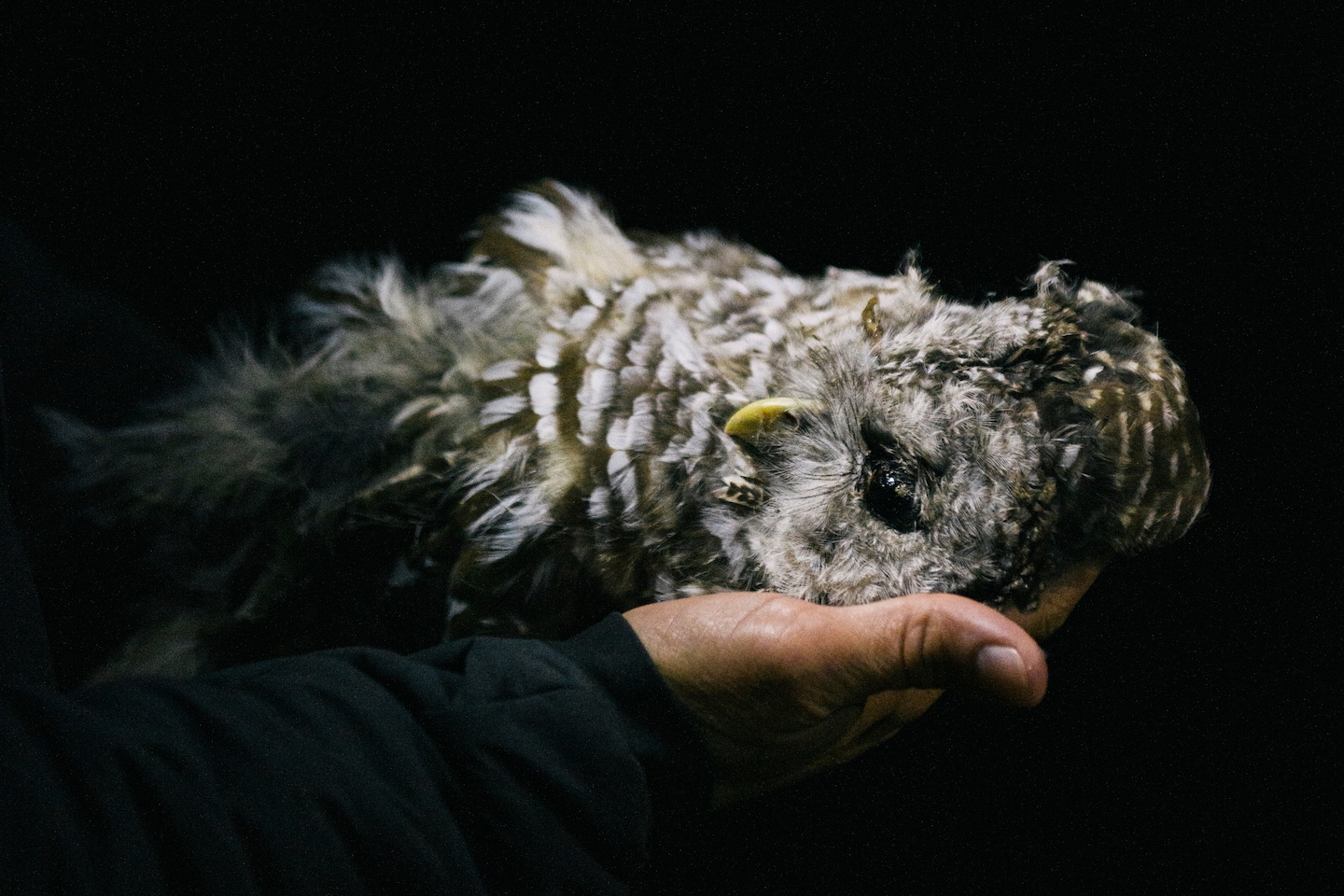
What if the key to saving two of North America’s most iconic owl species lay not in the hands of a few elite researchers, but in the collective curiosity of birdwatchers, hikers, and backyard naturalists? This isn’t a fable—it’s the reality of how crowdsourced data is revolutionizing the study of barred and spotted owls, two species locked in a silent struggle for survival. As climate change and habitat loss reshape their world, these birds face an uncertain future. Yet, amid the shadows of ancient forests, a new kind of conservation is taking flight, one powered by the unassuming yet mighty force of public participation.
The Silent Symphony of Citizen Science
Picture this: a suburbanite in Oregon, stirring their morning coffee, glances out the window to spot a barred owl perched on a fence post. Without a second thought, they snap a photo, jot down the time, and upload the details to a citizen science platform. Meanwhile, a college student in British Columbia, tracking owl calls during a late-night study session, records the haunting trill of a spotted owl and shares it with a global database. These seemingly mundane moments are the building blocks of a scientific revolution.
Crowdsourced data—collected by volunteers rather than professional researchers—has become the lifeblood of owl conservation. Platforms like eBird, iNaturalist, and specialized owl monitoring networks harness the power of the public to gather real-time observations, acoustic recordings, and even genetic samples. This decentralized approach doesn’t just fill gaps in data; it creates a living, breathing tapestry of ecological knowledge. For barred and spotted owls, whose territories span dense forests and remote wilderness, this means researchers can now track their movements, breeding patterns, and habitat preferences with unprecedented precision.
From Backyard to Backcountry: The Power of Ubiquitous Observation
Traditional research often relies on labor-intensive fieldwork, limited by funding, permits, and sheer logistical hurdles. But barred and spotted owls don’t adhere to these constraints. They thrive in fragmented landscapes, adapting to urban edges and second-growth forests where human observers are most likely to encounter them. Crowdsourced data bridges this gap, turning every hiker’s trail, every backyard feeder, and every roadside rest stop into a potential research site.
Consider the barred owl, a relative newcomer to the Pacific Northwest, whose range expansion has collided with the threatened spotted owl’s habitat. By crowdsourcing sightings, researchers can map the barred owl’s relentless march into spotted owl territory, identifying hotspots where competition is most fierce. Meanwhile, acoustic monitoring—where volunteers record owl calls using smartphone apps—captures the subtle shifts in vocalizations that signal stress, territorial disputes, or even hybridization between the two species. This isn’t just data; it’s a symphony of survival, played out in real time.
The Challenge of Noise in the Data Deluge
Yet, for all its promise, crowdsourced data is not without its pitfalls. The sheer volume of information can be overwhelming, a digital cacophony where true signals are buried beneath misidentifications, blurry photos, and well-meaning but inaccurate reports. How do researchers separate the barred owl’s distinctive “who-cooks-for-you” call from the hoot of a great horned owl? How do they distinguish a juvenile spotted owl’s fledgling screeches from the chatter of a squirrel?
This is where the art of data curation meets the science of owl ecology. Machine learning algorithms, trained on verified recordings, now sift through thousands of submissions to flag potential matches. Citizen science platforms employ gamification—leaderboards, badges, peer review—to incentivize accuracy. And in a delightful twist, some projects even pit human intuition against AI, using crowdsourced validation to refine automated detection. The result? A hybrid model where technology and human expertise dance in tandem, ensuring that every data point is a note in the owl’s survival story.
Conservation in the Age of the Crowd
The impact of this data revolution extends far beyond academic journals. Armed with real-time insights, conservationists can target their efforts with surgical precision. Need to know where to place nest boxes for spotted owls? Crowdsourced data reveals the most promising microhabitats. Wondering if barred owls are outcompeting their spotted cousins in a particular watershed? A heatmap of citizen reports pinpoints the conflict zones. Even genetic studies benefit, as volunteers collect feathers or scat samples, providing DNA for analysis without disturbing the birds.
But the true magic lies in the ripple effect. Every shared observation, every recorded call, every tagged photo is a spark that ignites public engagement. When a fifth-grader in Washington state uploads their first barred owl sighting, they’re not just contributing data—they’re becoming a steward of the forest. When a retiree in Oregon spends weekends documenting owl nests, they’re not just filling a spreadsheet—they’re forging a personal connection to the wild. This is conservation democratized, where the barriers between scientist and citizen dissolve into a shared mission.
The Future: A World Where Owls and Humans Co-Create Knowledge
As technology advances, so too does the potential of crowdsourced owl research. Drones equipped with thermal cameras could soon patrol the treetops, guided by real-time crowdsourced alerts. Smartphone apps might soon use AI to identify owl species in real time, turning every nature walk into a citizen science expedition. And as climate change accelerates, the need for adaptive, large-scale monitoring has never been greater.
Yet, the heart of this movement remains human. It’s the quiet hum of a volunteer’s voice recorder in the predawn darkness. It’s the flicker of a barred owl’s eyes in a smartphone flashlight. It’s the collective whisper of a planet learning to listen. For barred and spotted owls, the future is not just about survival—it’s about cohabitation. And in that cohabitation, crowdsourced data is the bridge between two worlds: the wild and the watched, the observed and the observer.