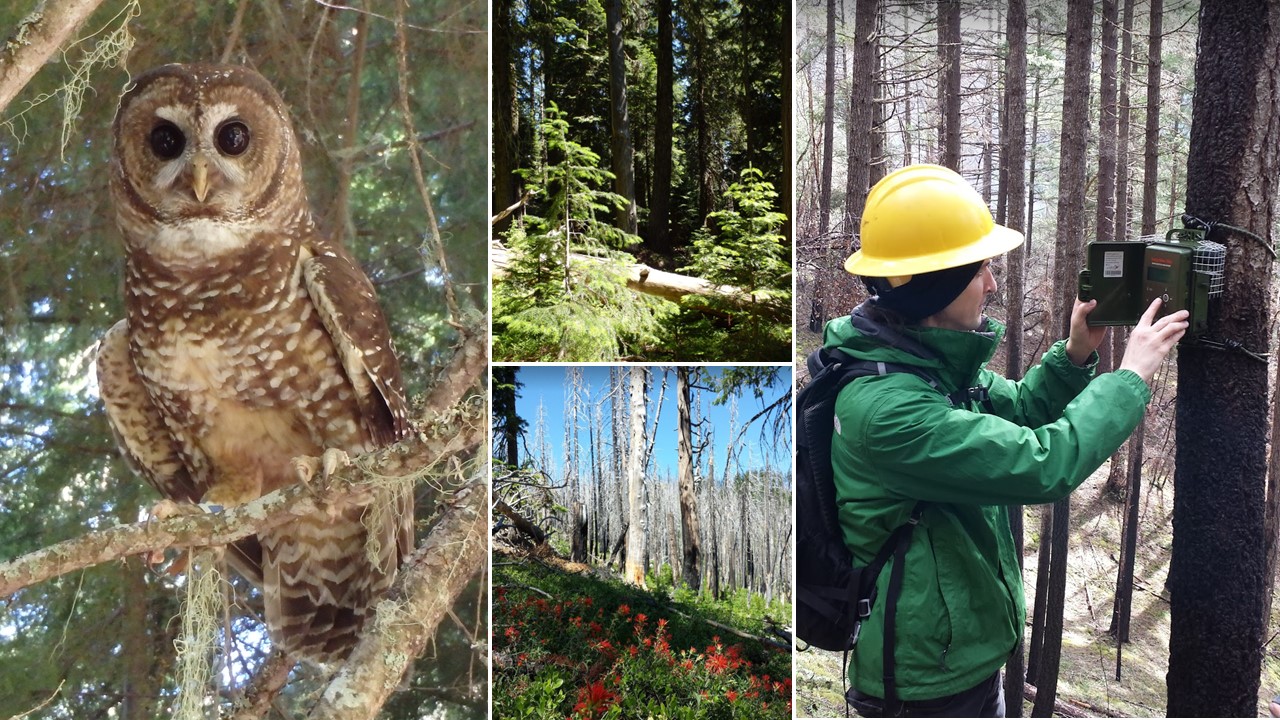
What if the fate of a tiny, feathered sentinel—one that whispers secrets through the ancient forests—rested not in the hands of distant bureaucrats, but in the curious eyes and eager ears of everyday people? The spotted owl, that enigmatic denizen of the Pacific Northwest’s old-growth canopies, has long been a symbol of ecological fragility and conservation urgency. But here’s the playful paradox: while its survival hinges on rigorous monitoring, the very act of tracking its presence might just be the most democratic—and delightfully subversive—tool we have to protect it. Welcome to the world of citizen science, where armchair naturalists, weekend hikers, and even schoolchildren become the unsung heroes of biodiversity preservation.
The Canopy’s Whisperers: Why Spotted Owls Need Citizen Scientists
Spotted owls (*Strix occidentalis*) are not your average backyard birds. These nocturnal, territorial creatures thrive in the dense, moss-draped forests of the Pacific Northwest, where their haunting four-note calls echo like nature’s own lullaby. But their habitat is under siege—not just from loggers, but from the creeping shadows of climate change, invasive species, and urban sprawl. Traditional scientific methods, while invaluable, often struggle to cover the vast, rugged terrain where these owls dwell. Enter citizen science: a movement that transforms passive observers into active stewards of the wild.
Imagine a retiree in Oregon, coffee in hand, venturing into the misty woods at dusk with a parabolic microphone and a notebook. Or a classroom of middle schoolers in Washington, their faces lit by flashlights as they mimic owl calls to elicit a response. These aren’t just feel-good anecdotes—they’re the front lines of a revolution. Citizen scientists expand the reach of professional biologists, filling in the gaps of data collection with boots-on-the-ground enthusiasm. Their efforts don’t just supplement research; they redefine it, turning the act of observation into a communal act of defiance against ecological erasure.
From Backyard Birders to Forest Detectives: The Tools of the Trade
The tools of the citizen scientist are as varied as the people wielding them. Some are high-tech: automated recording units (ARUs) that capture owl calls 24/7, or GPS-enabled trail cameras that snap photos of nesting sites. Others are delightfully low-fi: a simple voice recorder, a printed field guide, or even a smartphone app that logs sightings in real time. The beauty of this approach lies in its accessibility. You don’t need a PhD to contribute meaningful data—just curiosity, patience, and a willingness to brave the elements.
Yet, here’s the challenge: how do we ensure that this data is not just abundant, but *reliable*? Citizen science thrives on enthusiasm, but enthusiasm alone can’t replace rigor. Misidentifications, inconsistent methodologies, and even the occasional overzealous mimicry of owl calls can muddy the waters. The solution? Training, standardization, and collaboration. Organizations like the Cornell Lab of Ornithology and the Audubon Society have pioneered protocols that guide volunteers in everything from call playback techniques to data entry best practices. It’s a dance between passion and precision—a reminder that even the most democratic science must bow to the altar of accuracy.
The Power of Many: Crowdsourcing Conservation
There’s a certain magic in numbers. When hundreds—or even thousands—of eyes and ears turn toward the same ecological puzzle, the results can be revelatory. Take the Spotted Owl Monitoring Program in California, where citizen scientists have helped track population declines across decades. Their data has revealed trends that might have gone unnoticed in a smaller, more controlled study. For instance, volunteers noticed that owls in certain regions were shifting their nesting habits in response to rising temperatures—a finding that could reshape conservation strategies entirely.
But the impact of citizen science extends beyond raw data. It fosters a sense of ownership among participants, turning abstract environmental concerns into tangible, local action. When a community rallies around the protection of a spotted owl habitat, they’re not just saving a bird—they’re preserving a way of life. This is the alchemy of citizen science: it doesn’t just measure biodiversity; it *cultivates* it by weaving ecological awareness into the fabric of everyday life.
The Thorny Thicket: Ethical Dilemmas and Unintended Consequences
Of course, no revolution is without its thorns. Citizen science, for all its virtues, is not immune to ethical quandaries. Consider the dilemma of disturbance: while a well-trained volunteer might observe an owl nest from a respectful distance, an overeager participant could inadvertently flush a brooding female from her eggs. Or take the issue of data ownership—who gets to decide how crowdsourced information is used? Should it be freely accessible to all, or protected under strict guidelines to prevent exploitation by logging companies or developers?
Then there’s the question of inclusivity. Historically, citizen science has skewed toward those with the time, resources, and privilege to participate. How do we bridge the gap for marginalized communities, ensuring that the voices shaping conservation reflect the diversity of the ecosystems they’re trying to protect? These are not mere footnotes in the story of citizen science—they’re the very chapters that will determine whether this movement lives up to its potential or becomes yet another tool of exclusion.
The Future Holds Its Breath: What’s Next for Owl-Watchers?
As technology advances, so too do the possibilities for citizen science. Drones equipped with thermal imaging could soon map owl territories from above, while machine learning algorithms sift through hours of audio recordings to identify calls with uncanny precision. But technology is only as good as the hands that guide it. The real frontier lies in fostering a culture of collaboration—one where scientists, Indigenous knowledge-keepers, and citizen volunteers work in tandem, each bringing their unique strengths to the table.
So, what’s the next step for those who want to join this feathered crusade? Start small: join a local owl survey, download a citizen science app, or simply spend an evening listening to the night’s symphony with newfound attentiveness. Remember, the spotted owl’s fate is not a spectator sport. It’s a call to action—one that demands not just data, but devotion.
The forests are listening. Are you?