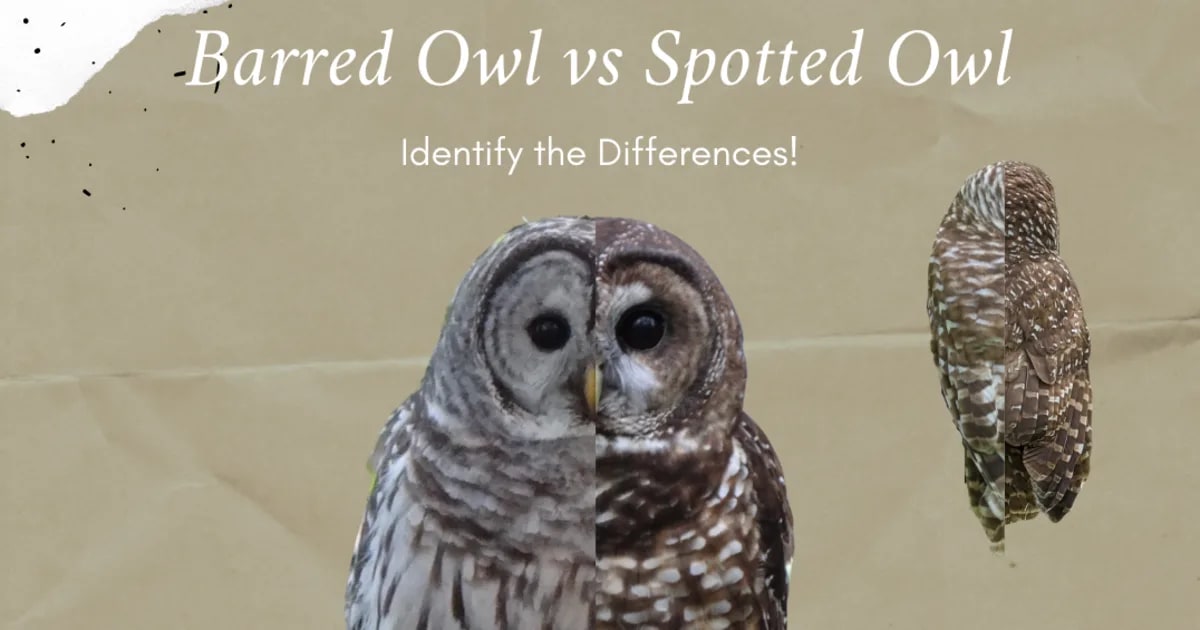
The Pacific Northwest’s ancient forests are not merely a tapestry of towering conifers and moss-draped maples—they are a battleground, a silent war waged in the emerald shadows where two owls, each a sovereign of their domain, clash over the fate of an ecosystem. The Barred Owl, a brazen interloper with a voice like a rasping chuckle echoing through the trees, and the Spotted Owl, a reclusive aristocrat draped in dappled plumage, embody a deeper struggle: one of displacement, adaptation, and the unyielding march of change. This is not just a tale of predator and prey, but of two species locked in a dance as old as the forests themselves, where the survival of one may spell the undoing of the other.
The Titans of the Twilight Realm: Barred Owls as Ecological Usurpers
The Barred Owl, *Strix varia*, is a paradox—a creature of contradictions. With its bold, vertical streaks and a voice that sounds like a maniacal laugh cut short, it has carved a niche in the Pacific Northwest not through ancient lineage, but through sheer audacity. Native to the eastern United States, this owl is a master of adaptation, thriving in habitats as varied as swamps and suburban woodlands. Its arrival in the West was not an act of migration, but an invasion, facilitated by human-altered landscapes and the relentless expansion of its range.
Where the Spotted Owl, *Strix occidentalis*, once reigned supreme, the Barred Owl has arrived like an uninvited guest who overstays their welcome. Its diet is voracious and indiscriminate, feasting on everything from voles to woodpeckers, and even the occasional fledgling Spotted Owl. The Barred Owl’s adaptability is its greatest weapon, allowing it to exploit resources that the Spotted Owl, with its narrower ecological preferences, cannot. In the language of ecology, the Barred Owl is a generalist—a jack of all trades, master of none, yet triumphant in its flexibility.
The Spotted Owl: The Ghost of the Old-Growth Cathedral
The Spotted Owl is the embodiment of the Pacific Northwest’s vanishing grandeur. Its soft, rounded facial disc and intricate brown-and-white mottling are not merely camouflage; they are a whisper of the ancient forests it calls home. This owl is a creature of habit, bound to the old-growth woodlands where the canopy is so dense that sunlight barely pierces the gloom. Its survival depends on the intricate web of lichens, epiphytes, and towering Douglas firs—a habitat that has been systematically dismantled by logging, urban sprawl, and climate change.
Unlike its bold cousin, the Spotted Owl is a specialist, its fate intertwined with the health of its ecosystem. It nests in the hollows of ancient trees, hunts in the understory’s dense undergrowth, and depends on a delicate balance of prey species. The Spotted Owl’s decline is not just a biological tragedy; it is a cultural one, a symbol of the forests that once stretched unbroken from the Pacific to the Rockies, now reduced to fragmented relics. To see a Spotted Owl is to glimpse a ghost—a reminder of what has been lost, and what may yet be saved.
The Silent War: Competition and the Battle for Territory
The conflict between these two owls is not one of direct aggression, but of silent competition, a war of attrition waged in the shadows of the forest. The Barred Owl, with its larger size and more aggressive nature, often displaces the Spotted Owl from its territory. Studies have shown that where Barred Owls establish a foothold, Spotted Owls either retreat or vanish entirely. This is not a battle of claws and talons, but of ecological dominance—a contest where the generalist outmaneuvers the specialist.
The Spotted Owl’s plight is exacerbated by its slow reproductive rate. A pair may raise only one or two chicks per year, while the Barred Owl, with its broader diet and adaptability, can produce more offspring in less time. The result is a demographic hemorrhage, where the Spotted Owl’s numbers dwindle not through predation alone, but through the slow, inexorable pressure of competition. The forest, once a sanctuary, becomes a contested land, where the Spotted Owl’s survival hinges on its ability to hold ground against an invader it was never meant to face.
Human Hands in the Feathers of Fate
This ecological drama is not a natural phenomenon, but a human-made tragedy. The Barred Owl’s expansion into the Pacific Northwest is directly linked to human activity—deforestation in its eastern range pushed it westward, while climate change and habitat fragmentation in the West created an opening for its invasion. The Spotted Owl’s decline, meanwhile, is a direct consequence of industrial logging and urban encroachment, which have reduced its old-growth habitat to a fraction of its former glory.
Conservation efforts have attempted to mitigate this conflict, with some advocating for the culling of Barred Owls to protect the Spotted Owl. Yet such measures are fraught with ethical dilemmas. Is it just to sacrifice one species to save another? Or is the true solution to restore the forests that both owls depend on, allowing them to coexist in a landscape that is whole, rather than fragmented? The answer lies not in playing arbiter between two species, but in healing the land that has been wounded by human hands.
The Forest’s Pulse: A Call to Ecological Reckoning
The battle between the Barred Owl and the Spotted Owl is more than a biological curiosity—it is a mirror held up to humanity’s relationship with the natural world. It forces us to confront uncomfortable truths: that our actions have consequences far beyond our immediate intentions, and that the ecosystems we disrupt do not forgive, they only adapt. The Spotted Owl’s decline is a warning, a symptom of a larger illness afflicting the planet’s forests.
To save the Spotted Owl is to save the old-growth forests, and with them, the countless species that depend on them. It is to acknowledge that the Pacific Northwest is not just a resource to be exploited, but a living, breathing entity that demands respect. The Barred Owl, too, is a reminder of nature’s resilience—a testament to the adaptability of life in the face of change. But adaptation is not always benign. Sometimes, it is a sign of imbalance, a symptom of a world out of sync.
The question is not whether one owl must triumph over the other, but whether we, as stewards of the land, can restore the balance that has been lost. The forest is not a battleground, but a sanctuary. It is time we treated it as such.