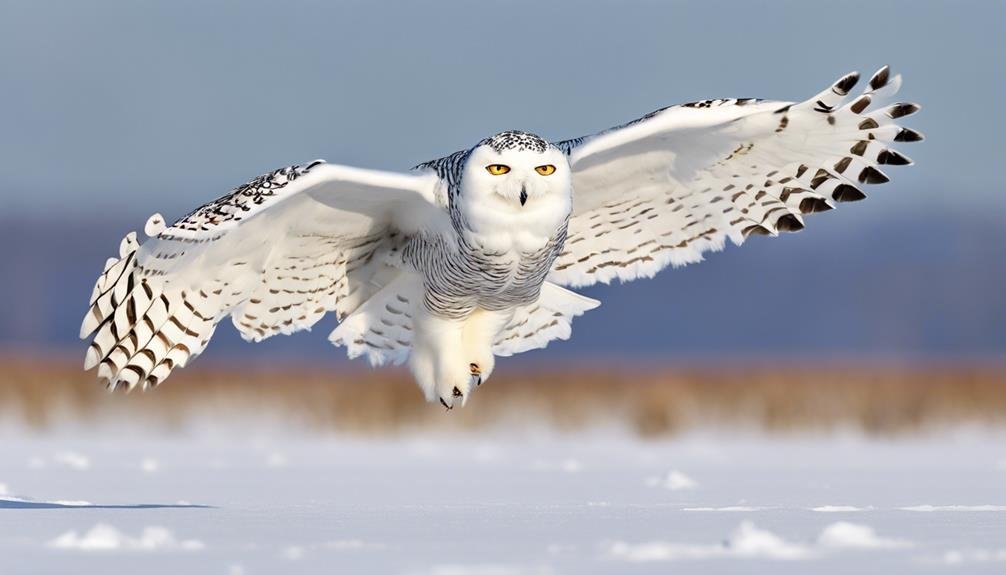
The Arctic, a vast and seemingly untouched wilderness, is undergoing a transformation as military activities surge across its icy expanse. Beneath the shimmering auroras and the silent dance of the northern lights, a silent predator faces an unprecedented threat: the snowy owl. Once the undisputed sovereign of the Arctic tundra, this majestic bird now finds itself in the crosshairs of human ambition. What happens when the relentless march of military progress collides with the delicate balance of Arctic ecosystems? The answer is as chilling as the Arctic winds themselves.
The Arctic’s Unseen Battles: A New Frontier for Military Expansion
The Arctic is no longer a distant, frozen backwater. With melting ice opening new trade routes and vast untapped resources lying beneath its surface, nations are scrambling to assert dominance. Military bases, radar installations, and training exercises are proliferating at an alarming rate. The once-pristine landscapes, where snowy owls once reigned supreme, are now scarred by the footprints of progress. But what does this mean for the owls? Their habitat, already fragile, is being carved up by roads, runways, and the relentless hum of machinery. The Arctic is no longer a sanctuary—it’s a battleground.
Snowy Owls: The Arctic’s Silent Guardians Under Siege
Snowy owls are not just birds; they are the Arctic’s sentinels, adapted to survive in one of the harshest environments on Earth. Their white plumage, a masterpiece of evolutionary brilliance, camouflages them against the snow, while their keen eyesight and silent flight make them the ultimate hunters. But survival in the Arctic demands more than just physical prowess—it requires undisturbed space. Military activities disrupt their hunting grounds, displace their prey, and fragment their territories. The owls, forced to adapt or perish, are caught in a deadly game of survival where the odds are stacked against them.
Noise Pollution: The Invisible Menace Silencing the Arctic
Imagine a world where the only sounds are the howling wind and the crackling ice. Now, picture that world shattered by the roar of helicopters, the thunder of tanks, and the blare of sonar. Noise pollution is one of the most insidious threats to snowy owls. Their acute hearing, honed for detecting the faintest rustle of a lemming beneath the snow, is overwhelmed by the cacophony of military operations. Studies show that prolonged exposure to such noise can impair their ability to hunt, communicate, and even breed. The Arctic’s symphony of silence is being replaced by a cacophony of destruction.
Habitat Fragmentation: When the Tundra Becomes a Puzzle
The Arctic tundra is a vast, interconnected web of life, where every creature plays a role. But military infrastructure—bases, roads, and training grounds—is slicing through this delicate web, leaving behind isolated pockets of habitat. Snowy owls, which rely on large territories to sustain themselves, are forced into smaller, less productive areas. The result? Starvation, reduced breeding success, and a slow but inevitable decline in their populations. The tundra, once a seamless expanse, is now a fragmented puzzle, and the snowy owl is losing its place in it.
Chemical Contamination: The Arctic’s Silent Poison
Military activities don’t just leave physical scars—they also leave behind a toxic legacy. Fuel spills, heavy metals, and other pollutants seep into the soil and water, poisoning the Arctic’s delicate ecosystems. Snowy owls, at the top of the food chain, are particularly vulnerable to bioaccumulation—the process where toxins build up in their bodies over time. A single contaminated meal can have devastating effects, weakening their immune systems and reducing their ability to reproduce. The Arctic’s pristine beauty is being tarnished by an invisible tide of poison.
What happens when the Arctic’s apex predator becomes its most vulnerable victim? The answer lies in the slow, creeping horror of chemical contamination.
Climate Change and Military Activities: A Deadly Synergy
The Arctic is warming at an unprecedented rate, and military activities are accelerating this crisis. The carbon footprint of military operations—from fuel consumption to the construction of infrastructure—is staggering. But the real damage lies in the feedback loop: as the ice melts, military access increases, leading to even more activity, which in turn accelerates the melting. Snowy owls, already struggling to adapt to a rapidly changing environment, are caught in this vicious cycle. Their hunting grounds vanish as the ice retreats, and their prey becomes scarce. The Arctic is not just warming—it’s being pushed to the brink by human greed.
Conservation in the Crosshairs: Can We Save the Snowy Owl?
The snowy owl’s plight is a stark reminder of the cost of unchecked military expansion. But is there hope? Conservationists are fighting back, advocating for protected zones where military activities are restricted. Indigenous communities, who have coexisted with these birds for generations, are also stepping up, sharing their traditional knowledge to safeguard the Arctic’s wildlife. Yet, the battle is uphill. The military-industrial complex is a formidable foe, and the Arctic’s future hangs in the balance. Can we strike a balance between security and conservation, or will the snowy owl become another casualty of progress?
The Final Flight: A Call to Action
The Arctic’s snowy owls are not just birds—they are a symbol of resilience, adaptability, and the untamed spirit of the wild. Their decline is a warning, a harbinger of what happens when human ambition tramples the natural world. The question is no longer whether we can save them, but whether we will. The Arctic’s fate—and the fate of its silent guardians—lies in our hands. Will we choose destruction, or will we choose to preserve the last untouched wilderness on Earth?