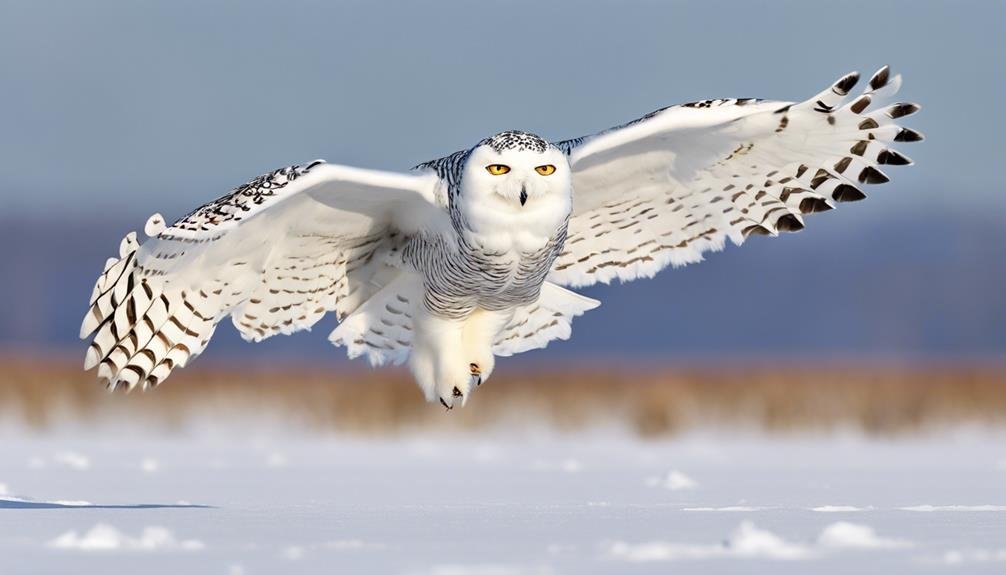
The Arctic tundra, a vast and seemingly barren expanse, is undergoing a silent transformation beneath its icy veneer. As temperatures rise and seasons blur, the vegetation that once defined this stark landscape is shifting—sprouting, retreating, or morphing into something unrecognizable. For the snowy owl, a creature of paradox—both a symbol of resilience and a harbinger of change—these alterations in plant life are not mere background noise. They are a symphony of challenge and adaptation, a test of survival that demands ingenuity, flexibility, and an almost poetic understanding of an ecosystem in flux. This is the story of how one of the Arctic’s most iconic predators is rewriting its own rulebook in response to the greening of the North.
The Thawing Canvas: How Melting Permafrost Reshapes the Owl’s Hunting Grounds
The Arctic’s permafrost, that ancient and unyielding foundation of the tundra, is thawing at an unprecedented rate. As it softens, the ground collapses in places, creating undulating hummocks and waterlogged depressions where once there was solid earth. This disruption is more than a geological curiosity—it’s a botanical upheaval. Shrubs, once stunted by the cold, now stretch their limbs skyward, while mosses and lichens, the tundra’s traditional carpet, find themselves smothered or outcompeted. For the snowy owl, whose hunting strategy relies on a clear vantage point and unobstructed sightlines, this vegetal encroachment is a double-edged blade. On one hand, taller shrubs offer new perches, allowing the owl to survey its domain from an elevated perspective. On the other, dense thickets obscure the movements of lemmings and voles, the owl’s primary prey, turning once-reliable hunting grounds into labyrinths of ambush and evasion. The owl, however, is no passive victim of circumstance. It has begun to exploit these changes, favoring areas where shrubs are sparse but strategically placed, using them as lookout posts while keeping the undergrowth sparse enough to spot its quarry. It’s a delicate dance—one that requires an almost intuitive grasp of the land’s shifting rhythms.
From Tundra to Taiga: The Owl’s Migration into Forested Frontiers
As the Arctic warms, the treeline creeps northward, blurring the boundary between tundra and boreal forest. This encroachment of trees—pine, spruce, and birch—is not just a change in scenery; it’s a fundamental shift in the owl’s ecological theater. Traditionally, snowy owls are creatures of the open expanse, their white plumage a camouflage against the snow and their hunting style adapted to wide, unobstructed spaces. Yet, as the forest advances, some owls are venturing into these new wooded realms, their behavior evolving in response. They’ve been observed perching on low branches, their keen eyes scanning the forest floor for prey that has also adapted to this greener world. The shift is not without risk. Trees can obscure prey, and the dense canopy reduces the owl’s mobility. Yet, the rewards are enticing: a new abundance of small mammals that thrive in the underbrush, and a respite from the relentless winds that once defined the Arctic winter. This migration into forested territories is not a retreat but a reinvention—a testament to the owl’s ability to turn adversity into opportunity.
The owls that embrace this transition are not merely surviving; they are pioneering. Their presence in these transitional zones is creating a ripple effect, influencing the behavior of other predators and even the vegetation itself. Where owls nest, small mammals may alter their foraging patterns, inadvertently pruning shrubs and allowing sunlight to reach the forest floor. It’s a feedback loop of adaptation, one that underscores the interconnectedness of Arctic life. The snowy owl, once a symbol of the open tundra, is now becoming a bridge between two worlds—one fading, the other emerging.
The Greening of the North: How Shrub Expansion Alters the Owl’s Dietary Landscape
The Arctic is greening, and with it, the dietary landscape of the snowy owl is undergoing a subtle but profound transformation. As shrubs like willow and birch expand their range, they bring with them a cascade of ecological changes. These woody plants provide shelter for lemmings and voles, their roots stabilizing the soil and their branches offering protection from predators. For the owl, this means a shift in prey availability. While lemmings remain a staple, the owl is increasingly targeting species that thrive in shrubby habitats—mice, shrews, and even young hares. The diet is diversifying, a necessary adaptation in a world where the old certainties are crumbling.
Yet, this greening also introduces new challenges. Shrubs can harbor predators like foxes and weasels, forcing the owl to compete for resources in a more crowded landscape. The owl’s response? A diversification of hunting techniques. Where once it relied solely on its keen eyesight and silent flight, it now employs a more opportunistic strategy, scavenging carrion when prey is scarce and even venturing into diurnal hunting during the long Arctic summer. The owl is not just adapting to the changing vegetation; it is becoming a more versatile predator, capable of thriving in a world that no longer adheres to the rules of the past.
The Silent Communicators: How Vegetation Changes Affect Owl Communication and Mating
In the Arctic, communication is survival. The snowy owl’s haunting calls echo across the tundra, a language of territory and courtship that has evolved over millennia. But as the vegetation shifts, so too does the acoustic landscape. Taller shrubs and denser forests absorb and scatter sound waves, muting the clarity of the owl’s calls. This isn’t just a matter of romance; it’s a matter of territory. A male owl’s booming hoots, once carried unobstructed across the open plain, may now be lost in the rustle of leaves, leaving rivals unaware of his presence or females unable to locate him. The owl has responded with a shift in strategy. Where once it relied on vocalizations, it now incorporates visual displays—flapping its wings in slow, deliberate arcs or puffing up its chest to assert dominance. The courtship dance is becoming a silent ballet, a testament to the owl’s ability to adapt its language to a changing world.
Even the timing of mating is shifting. As the Arctic spring arrives earlier, the owl’s breeding season is beginning sooner, a response to the earlier emergence of prey. The vegetation’s greening is not just altering the owl’s diet; it’s rewriting its calendar, forcing it to synchronize its life cycle with a world that no longer moves to the beat of the old drum.
The Unseen Guardians: How Owls Influence Arctic Vegetation Dynamics
The snowy owl is not merely a passive observer of the Arctic’s vegetal transformation; it is an active participant, a silent guardian of the land’s delicate balance. By preying on small mammals, the owl regulates populations that, if left unchecked, could overgraze the tundra, stunting plant growth and altering soil composition. In areas where owls are abundant, the vegetation remains lush and diverse, a testament to the owl’s role as an ecological engineer. Where owls are scarce, shrubs can overrun the landscape, choking out traditional tundra species and creating a monoculture that offers little sustenance to the owl or its prey.
This dynamic is particularly evident in the owl’s nesting habits. Snowy owls often nest in low-lying areas where vegetation is sparse, a preference that inadvertently creates pockets of open ground. These clearings allow sunlight to reach the soil, fostering the growth of grasses and sedges that stabilize the earth and prevent erosion. In this way, the owl’s presence shapes the very landscape it inhabits, a paradoxical role as both predator and protector. The greening of the Arctic is not just a story of loss; it’s a story of co-evolution, where every shift in the vegetation is met with a corresponding shift in the owl’s behavior, creating a dance of adaptation that ensures the survival of both.
The Future Unwritten: What Lies Ahead for the Snowy Owl and the Arctic
The Arctic of the future will not be the Arctic of the past. The vegetation will continue to change, the permafrost will continue to thaw, and the snowy owl will continue to adapt. But what does this future hold? Will the owl become a creature of the forest, its white plumage a relic of a bygone era? Or will it carve out a new identity, a hybrid of tundra and taiga, a survivor in a world that no longer recognizes the old boundaries? One thing is certain: the snowy owl’s story is far from over. It is a story of resilience, of ingenuity, and of an unyielding will to thrive in a world that is constantly in motion.
The Arctic is not just warming; it is awakening. And as it does, the snowy owl stands at the forefront of this transformation, a silent sentinel in a world that is learning to change. The vegetation may shift, the seasons may blur, but the owl’s spirit remains unbroken—a testament to the power of adaptation in the face of the unknown.