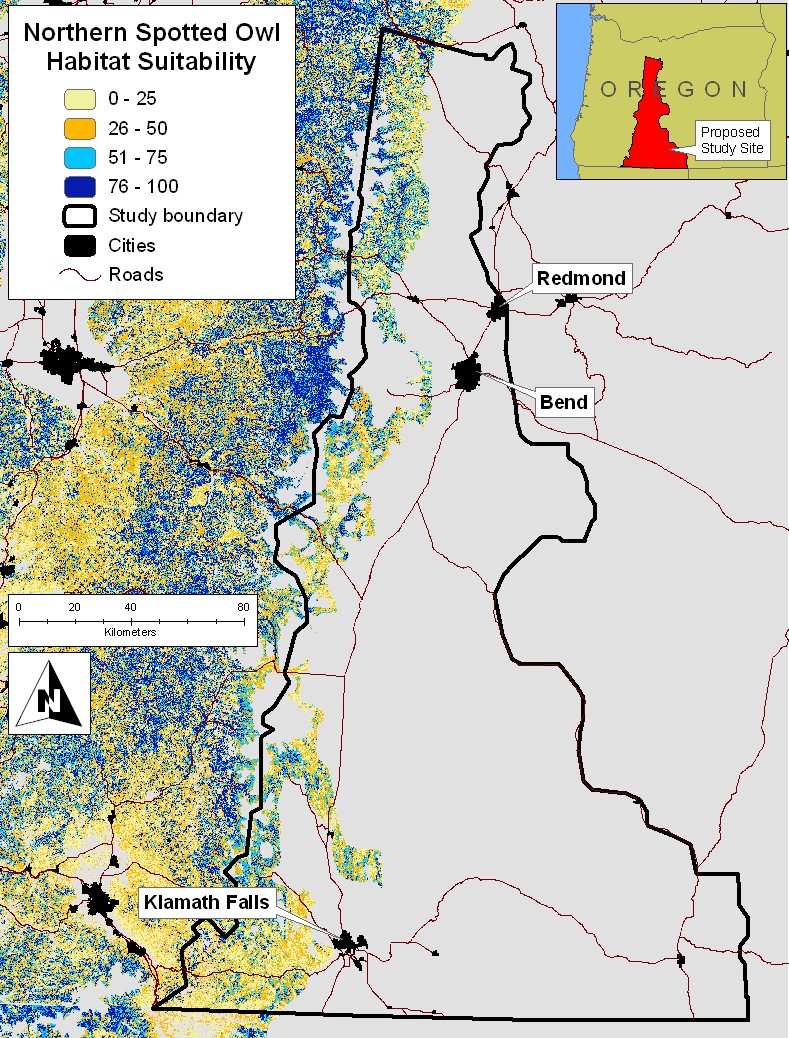
In the emerald canopies of the Pacific Northwest, where the air hums with the whispers of ancient conifers and the underbrush teems with unseen life, two owls reign as silent sovereigns of the night. The barred owl, an interloper from the east, and the spotted owl, a relic of the old-growth forests, have long been locked in a struggle for survival. But now, a new force is reshaping this battle: climate data. No longer are these birds mere subjects of ecological study; they are becoming the harbingers of a paradigm shift, their habitats mapped not just by footprints in the soil, but by the invisible threads of climate patterns. This is the story of how data is rewriting the rules of coexistence, and why the future of these owls may well hinge on our ability to listen to the whispers of the wind and the sighs of the trees.
The Silent Revolution: How Climate Data is Rewriting Habitat Models
For decades, conservationists have relied on static maps—snapshots of territory that freeze ecosystems in time. But ecosystems are not static. They breathe, they shift, they respond to the invisible forces of temperature, precipitation, and seasonal rhythms. Enter climate data: a dynamic, ever-evolving tapestry that paints a living portrait of the land. By integrating variables like rising temperatures, altered precipitation patterns, and shifting fire regimes, scientists are no longer predicting habitat suitability based on yesterday’s conditions, but on tomorrow’s possibilities. The barred owl, once a stranger to these forests, now finds its range expanding as warmer winters weaken the spotted owl’s hold on its ancestral territories. Meanwhile, the spotted owl’s retreat into higher elevations—once a desperate gamble—is now a calculated retreat, its survival hinging on the accuracy of these climate-informed models. This is not just data; it’s a revolution in how we perceive the natural world.
From Pixels to Predators: The Alchemy of Data and Ecology
Imagine a world where every rustle in the leaves, every shift in the wind, is translated into a language of numbers. That world exists. Remote sensing, satellite imagery, and ground-based sensors are converging to create hyper-detailed models of owl habitats. LiDAR scans reveal the three-dimensional architecture of forests, while climate models predict how droughts will thin the canopy or how heatwaves will stress the understory. The barred owl, with its adaptable diet and aggressive nature, thrives in fragmented landscapes where the spotted owl falters. But climate data is revealing something more: the barred owl’s advantage may be temporary. As temperatures rise, even its hardy constitution may wilt under the strain of prolonged heat or erratic food sources. Meanwhile, the spotted owl’s reliance on old-growth forests—once a weakness—could become its salvation if climate models are correct in predicting that these refugia will remain cooler and more stable. The alchemy of data and ecology is transforming our understanding of these birds from static icons into dynamic players in a climate-changed world.
The Fire Paradox: How Wildfires Are Reshaping Owl Territories
Wildfire is the great disruptor, the force that can erase centuries of ecological history in a single afternoon. But for owls, fire is also a paradox—a destructive force that can, paradoxically, create opportunity. Climate data is now exposing this duality in stark relief. In the dry, fire-prone landscapes of the Pacific Southwest, barred owls are capitalizing on the aftermath of megafires, colonizing areas where the spotted owl’s preferred old-growth has been scorched. Yet, in the wetter, cooler forests of the Northwest, the same fires may be clearing out dense understories, creating openings that allow spotted owls to reclaim territory they had lost to barred owls. The key lies in the timing and intensity of these fires. Climate models are predicting more frequent, more severe burns in some regions, while others may see a shift toward cooler, wetter conditions that favor the spotted owl’s survival. The question is no longer whether fire will shape owl habitats, but how we can use climate data to predict which owls will thrive in the ashes—and which will perish in the smoke.
The Invisible Hand: How Climate Shifts Are Redefining Competition
Competition between barred and spotted owls is not just a matter of aggression or territory; it is a dance choreographed by the invisible hand of climate. As winters grow milder, barred owls push farther west, encroaching on spotted owl strongholds. But climate data is revealing that this invasion is not uniform. In some regions, the barred owl’s expansion is accelerating, while in others, the spotted owl is holding its ground—or even staging a comeback. The reason? Microclimates. The spotted owl’s survival may depend on the cool, moist pockets of old-growth forests that remain resilient even as the broader landscape warms. Meanwhile, the barred owl’s generalist nature allows it to exploit a wider range of conditions, but its success is not guaranteed. Climate data is exposing the fragility of this advantage. As heatwaves become more frequent, even the barred owl’s adaptability may reach its limits. The invisible hand of climate is not just reshaping habitats; it is redefining the very nature of competition between these two species.
Beyond the Binary: The Future of Owl Coexistence
The narrative of barred vs. spotted owls has long been framed as a zero-sum game—a battle for dominance in a finite world. But climate data is forcing us to reconsider this binary. What if coexistence is not just possible, but inevitable? The barred owl’s aggression may be a short-term advantage, but the spotted owl’s resilience in old-growth forests could be the key to long-term survival. Climate models are predicting that some regions will become too hot or too dry for either species, while others may become refugia where both can coexist. The future of these owls may lie not in competition, but in adaptation. By using climate data to identify these refugia and manage them proactively, we can create landscapes where both species not only survive, but thrive. This is not just a shift in perspective; it is a call to action. The owls are telling us something, and it’s time we listened.
The Unseen Threads: How Climate Data Connects Us to the Wild
There is a profound irony in the fact that the most advanced technology—climate data—is what connects us most deeply to the wild. In a world where human activity has reshaped every corner of the planet, these numbers are a reminder that we are not separate from nature, but a part of it. The barred and spotted owls are not just subjects of study; they are messengers, carrying warnings and hopes in their silent wings. Climate data is the lens through which we can see these messages more clearly. It is not just about predicting the future; it is about understanding our place in it. As we stand on the precipice of a climate-changed world, the owls are our guides, and the data is our compass. The question is not whether we will heed their warnings, but whether we are willing to change the story before it’s too late.