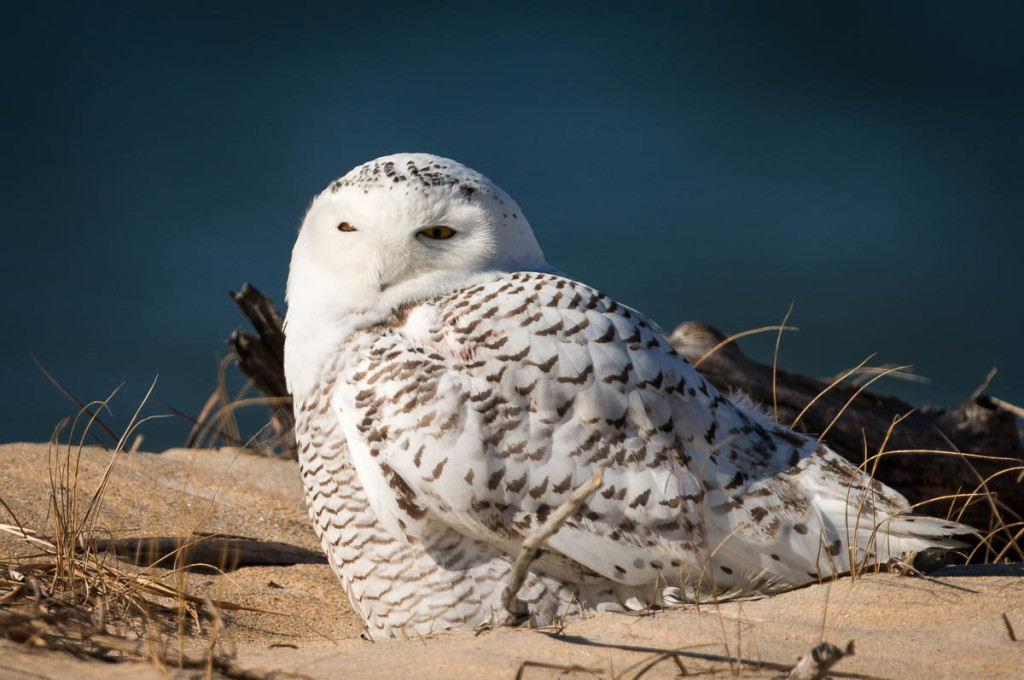
The Arctic winds have whispered a secret across the tundra, a harbinger of change that has swept southward in a dazzling, feathered exodus. The snowy owl irruption phenomenon—an ecological spectacle where these regal birds descend upon southern latitudes in unprecedented numbers—is not merely a natural curiosity. It is a clarion call from the planet itself, a stark reminder that the threads of life are being rewoven by the invisible hands of climate change. These birds, clad in the alabaster armor of winter, are not wanderers by choice but refugees fleeing a homeland that is vanishing beneath their talons.
The Arctic’s Vanishing Canvas: A Habitat in Flux
The snowy owl, *Bubo scandiacus*, is a creature of the circumpolar expanse, a master of the frozen world where the sun dips below the horizon for months and the land is a monochrome of ice and snow. Yet, the Arctic is no longer the immutable fortress it once was. The permafrost thaws, the sea ice fractures, and the tundra blooms with greens it has not known for millennia. For the snowy owl, this is not a gradual shift but a cataclysmic unraveling. Their hunting grounds, once a seamless expanse of lemming-rich snow, now fragment into patchworks of shrub and wetland, where prey burrows deeper, hides better, and becomes harder to catch.
Imagine a painter whose canvas is melting beneath their brush. The snowy owl, too, is an artist—of the hunt, of survival—but the medium is no longer stable. The lemmings, their primary sustenance, are vanishing into the thawing earth, their populations oscillating wildly in response to a climate that has lost its rhythm. Without enough food, the owls are forced into a desperate migration, their wings carrying them southward in search of sustenance. This is not a migration of abundance but of necessity, a flight from a homeland that can no longer sustain them.
The Irruption: A Feathered Exodus of Unprecedented Scale
An irruption is not a gentle migration. It is a sudden, overwhelming surge, a biological storm that leaves ecologists and birdwatchers alike gasping in awe. In years past, snowy owl sightings in the lower 48 states of the U.S. were rare, almost mythical. But in the wake of climate shifts, these sightings have become more frequent, more widespread, and more dramatic. The owls appear like specters in fields of goldenrod, perched atop fence posts like sentinels of a dying world, or gliding over highways with the silent grace of a world that no longer belongs to them.
What makes this irruption so intriguing is its unpredictability. Unlike the seasonal migrations of songbirds or waterfowl, the snowy owl’s movements are erratic, dictated not by the sun’s position but by the whims of a climate in turmoil. Some years see only a handful of sightings; others bring hundreds, even thousands, of owls descending upon landscapes they have not inhabited for generations. This is not a celebration of abundance but a symptom of distress—a sign that the Arctic’s bounty has been replaced by scarcity.
The Owl as Omens: Symbolism in a Changing World
Throughout human history, owls have been draped in myth and metaphor. To the Inuit, they are *Ukaliq*, the spirit of the snow, a guide between worlds. To the ancient Greeks, they were the companions of Athena, symbols of wisdom and foresight. But in the context of climate change, the snowy owl takes on a new role: that of an unwilling oracle. Their irruptions are not just ecological events; they are cultural tremors, reminders that the natural world is sending us signals we ignore at our peril.
Consider the owl’s appearance in a farmer’s field, its golden eyes scanning the horizon for prey. To some, it is a marvel—a chance to witness one of nature’s most elusive creatures. To others, it is a warning. The owl, after all, is a predator at the top of its food chain, a creature that thrives only when the web of life beneath it is intact. Its presence in unfamiliar lands suggests that the threads of that web are fraying, that the balance of the Arctic—and by extension, the planet—is tipping toward chaos.
The Southern Encounter: A Clash of Worlds
When a snowy owl lands in the cornfields of Iowa or the marshes of Massachusetts, it is not just a bird arriving; it is a collision of two worlds. The Arctic’s frozen expanse and the temperate grasslands of the south are as different as fire and ice. Yet, the owl adapts—or attempts to. It hunts meadow voles instead of lemmings, perches on telephone poles instead of ice floes, and endures temperatures that would freeze its southern cousins solid. But adaptation has its limits. The southern landscapes, though rich in prey, lack the owl’s natural habitat. The owls are strangers in a strange land, their presence a temporary aberration in an ecosystem that was never meant to host them.
This clash is not without its ironies. The snowy owl, a creature of the far north, becomes a symbol of resilience in the face of adversity. It survives, even thrives, in these foreign lands—for a time. But its presence is a reminder that resilience has a cost. The owls that linger too long may find themselves trapped by unseasonable warmth, their white plumage standing out against the greening fields like a ghost haunting a world that no longer recognizes them.
The Human Response: Wonder, Fear, and the Ethics of Observation
For humans, the sight of a snowy owl is a gift—a fleeting, almost sacred moment where the wild and the civilized briefly intersect. Birdwatchers flock to fields with binoculars and cameras, their breath visible in the crisp air as they track the owl’s movements. Farmers pause in their work to watch the regal bird survey their land. Children point and gasp, their imaginations ignited by the sight of a creature so alien, so beautiful, so out of place.
But with wonder comes responsibility. The owl’s irruption is not a spectacle to be gawked at but a crisis to be acknowledged. Well-meaning observers may inadvertently disrupt the bird’s fragile existence, driving it from its hunting grounds or leaving behind trails of human scent that could deter prey. The ethical observer must remember that this is not a zoo visit but a moment of witness to a species in distress. The owl is not here for our entertainment; it is here because the world it knew is gone.
The Future: A World Without Snowy Owls?
The snowy owl irruption is a temporary phenomenon, a bandage on a wound that grows deeper with each passing year. As the Arctic continues to warm, the owls’ southern excursions may become more frequent, but their long-term survival is far from guaranteed. The lemmings may vanish entirely. The sea ice may melt beyond recovery. The tundra may bloom into a forest, leaving the owl with nowhere to call home.
Yet, in their irruptions, the snowy owls leave behind more than just memories. They leave a question: What will we do when the last Arctic ice melts, when the last lemming burrows into the thawing earth, when the snowy owl is no longer a wanderer but a relic? The answer lies not in the frozen north but in the choices we make today. Will we heed the owl’s warning, or will we let the Arctic’s silence become the final, irreversible note in the symphony of life?