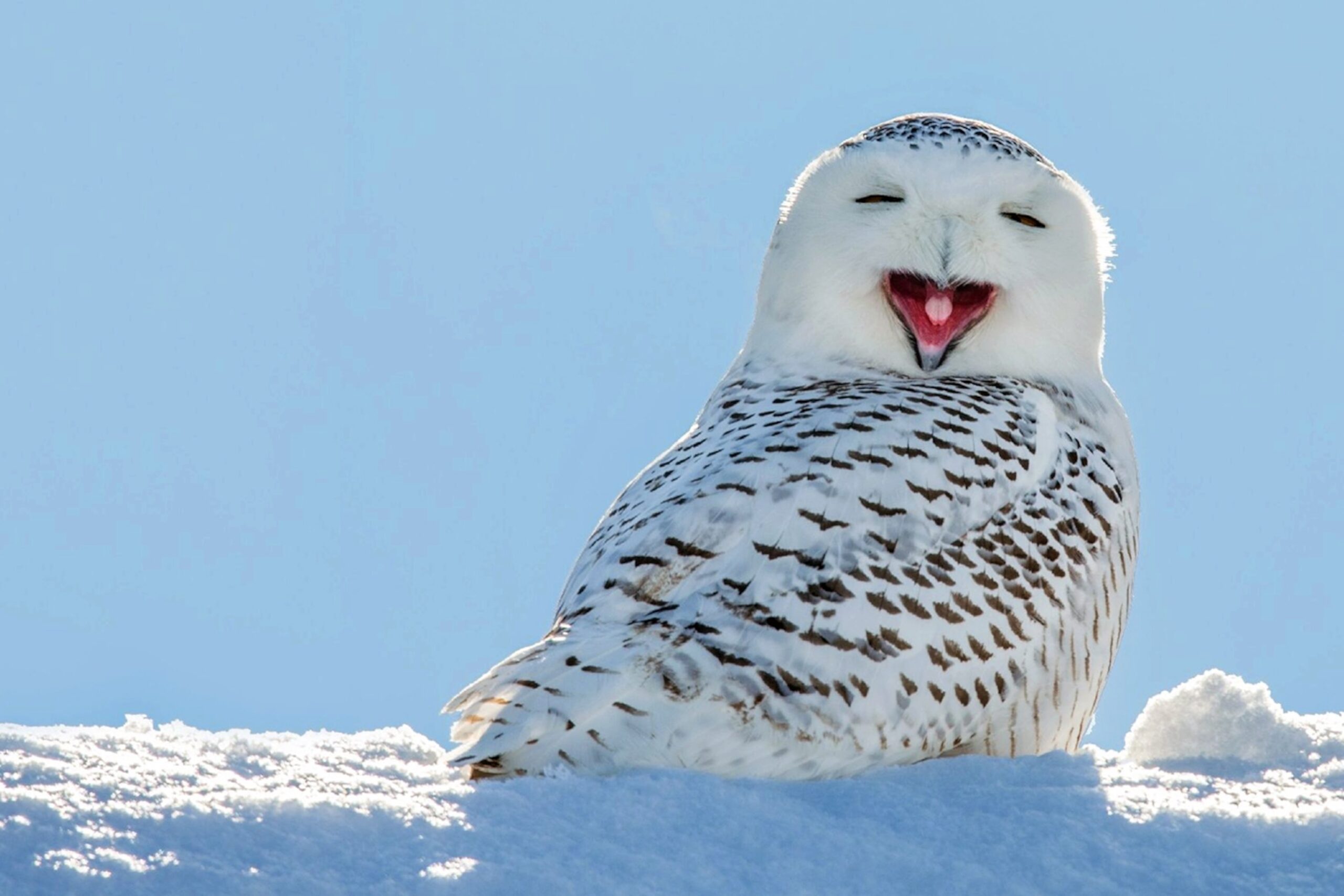
The Arctic tundra, a vast and seemingly desolate expanse, is a battleground of survival. Here, the snowy owl, a regal apex predator, reigns supreme—until now. Once a symbol of unyielding resilience, this majestic bird now faces an existential crisis. Climate change, the silent architect of habitat loss, is eroding the fragile ecosystems that sustain it. The snowy owl’s story is not just one of ecological decline; it is a narrative of human-induced disruption, where every melting ice sheet and shifting snowline chips away at the foundations of its existence. This is not merely an environmental concern—it is a feminist issue, a matter of intergenerational justice, and a stark reminder of our collective failure to protect the vulnerable. The snowy owl’s plight is a mirror held up to humanity, reflecting the consequences of unchecked greed and shortsightedness.
The Arctic’s Vanishing Canvas: How Warming Temperatures Rewrite the Landscape
The Arctic is warming at a rate three times faster than the global average, a phenomenon known as Arctic amplification. This relentless heat is not merely a statistical anomaly—it is a cataclysmic force reshaping the very fabric of the snowy owl’s world. The tundra, once a frozen desert of perpetual winter, is now a patchwork of thawing permafrost, retreating glaciers, and unpredictable weather patterns. For the snowy owl, whose survival depends on the predictability of its habitat, this instability is catastrophic.
Consider the irony: the owl, a creature of the deep cold, is being starved by the very warmth it was evolutionarily designed to endure. Snow cover, once a reliable blanket insulating the ground and preserving prey populations, now melts unpredictably, leaving the landscape barren and desolate. The lemmings and voles, the owl’s primary sustenance, vanish into the thawing earth or migrate to higher, more stable grounds. Without prey, the owl’s survival becomes a desperate gamble against starvation. This is not just a loss of habitat—it is a collapse of an entire food web, a domino effect of climate-driven disintegration.
The Permafrost Paradox: When the Ground Itself Turns Against Its Inhabitants
Permafrost, the frozen ground that has held the Arctic in a death grip for millennia, is now thawing at an alarming rate. This is not a gradual process—it is a violent unraveling. As the permafrost melts, it releases not just carbon dioxide, but also methane, a greenhouse gas 25 times more potent than CO₂. The ground beneath the snowy owl’s talons is no longer a stable platform; it is a shifting, unstable quagmire. Burrows collapse. Nesting sites crumble. The very earth that once provided sanctuary now becomes a death trap.
For the snowy owl, which relies on elevated vantage points to hunt and nest, the thawing permafrost erodes the physical structures it depends on. The owl’s traditional nesting grounds, often situated on elevated mounds or ridges, are now at risk of erosion and flooding. The loss of these microhabitats is not just a logistical challenge—it is a psychological one. The owl, a creature of habit and territory, is forced into a nomadic existence, wandering endlessly in search of a place that no longer exists. This is the tyranny of displacement: a forced migration with no destination, where every step is a gamble against extinction.
Prey Scarcity: The Silent Starvation of a Predator
The snowy owl’s diet is a delicate balance of lemmings, voles, and other small mammals. These prey species, in turn, depend on the Arctic’s plant life, which is equally vulnerable to climate change. As temperatures rise, the timing of plant growth and reproduction shifts, creating a mismatch known as trophic asynchrony. The lemmings’ breeding cycles, once perfectly synchronized with the availability of fresh vegetation, now fall out of sync. The result? A precipitous decline in prey populations.
For the snowy owl, this is not just a matter of hunger—it is a matter of life and death. A starving owl is a vulnerable owl, forced to expend precious energy searching for food in an increasingly barren landscape. The owl’s reproductive success plummets, as malnourished females struggle to lay eggs or care for their young. The chicks, born into a world of scarcity, face a brutal fight for survival. This is the cruel calculus of climate change: a predator, once at the top of the food chain, reduced to a scavenger, picking at the scraps of a dying ecosystem.
Human Encroachment: The Unseen Hand of Destruction
Climate change is not the only threat to the snowy owl’s survival—it is merely the most insidious. Human activity, from industrial expansion to resource extraction, is carving up the Arctic like a butcher’s knife. Oil drilling, mining, and shipping routes fragment the owl’s habitat, creating barriers that were once unimaginable. The once-pristine wilderness is now crisscrossed by roads, pipelines, and seismic lines, each one a wound in the landscape.
For the snowy owl, these disruptions are more than just physical obstacles—they are psychological traumas. The owl, a creature of solitude and vast open spaces, is now forced to navigate a maze of human-made structures. The noise, the pollution, the constant hum of machinery—all of these stressors chip away at the owl’s ability to thrive. This is the paradox of progress: a species pushed to the brink by the very activities that claim to drive human advancement. The snowy owl is not just losing its home; it is losing its sense of place in a world that no longer values its existence.
Conservation in Crisis: Can We Save the Snowy Owl Before It’s Too Late?
The snowy owl’s plight is a call to action, a demand for accountability. Conservation efforts must go beyond band-aid solutions and address the root causes of habitat loss. This means not only protecting the owl’s remaining habitats but also tackling the global emissions that drive climate change. It means advocating for policies that prioritize ecological integrity over short-term economic gain. It means recognizing that the snowy owl is not just a symbol of the Arctic’s beauty—it is a keystone species, whose survival is intertwined with the health of the entire ecosystem.
Yet, conservation is not a one-size-fits-all endeavor. The snowy owl’s migratory patterns span continents, from the Arctic tundra to the grasslands of North America and Eurasia. This means that international cooperation is not just desirable—it is essential. Governments, scientists, and communities must work together to create transboundary conservation strategies that protect the owl at every stage of its life cycle. This is not just about saving a species; it is about preserving the intricate web of life that sustains us all.
The snowy owl’s story is a warning, a testament to the fragility of our planet, and a challenge to our collective conscience. Will we heed the call, or will we let another majestic creature slip into the annals of extinction? The choice is ours—and the time to act is now.