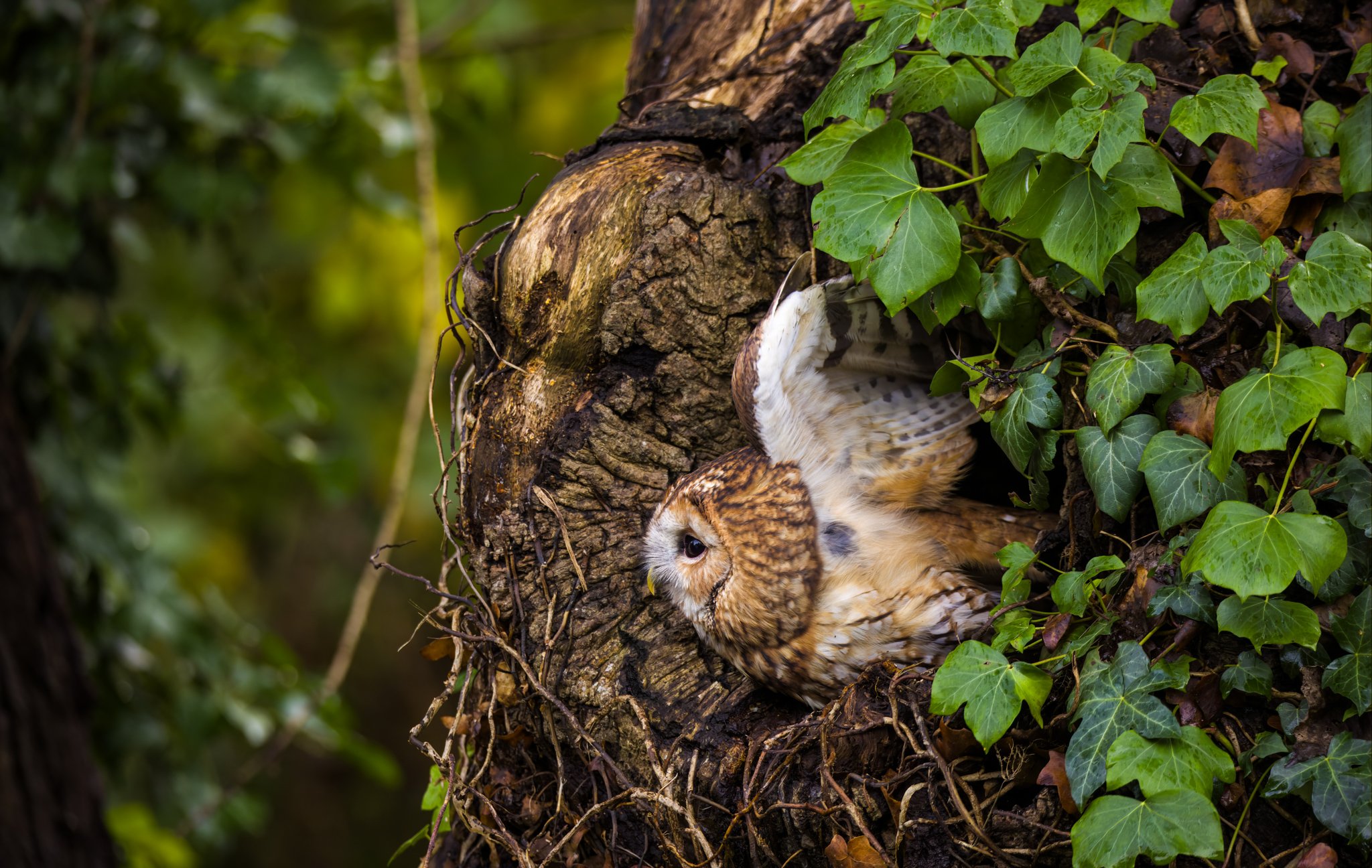
In the hushed twilight of European woodlands, where the air hums with the whispers of nocturnal creatures, owls reign as silent sentinels of the night. These enigmatic birds, with their piercing gaze and feathered grace, have long captivated human imagination—yet their survival is increasingly under siege. Europe’s owl populations face a precarious future, threatened by habitat fragmentation, pesticide poisoning, and the relentless march of urbanization. But amid these challenges, a quiet revolution is unfolding. Conservationists, scientists, and communities across the continent are rallying to rewrite the fate of these feathered phantoms. From the tawny owl’s haunting calls in British hedgerows to the eagle owl’s regal presence in the Carpathian Mountains, Europe’s owls are not merely survivors—they are symbols of resilience in an era of ecological upheaval. This is the story of their struggles, their triumphs, and the fragile balance between human progress and wildlife preservation.
The Vanishing Shadows: Why Europe’s Owls Are in Peril
The first chill of autumn sends a shiver through the European landscape, and with it comes the urgent question: where have all the owls gone? Once ubiquitous, many species now teeter on the brink, their numbers dwindling at an alarming rate. The culprits are manifold, but none more insidious than habitat loss. Intensive agriculture, deforestation, and the sprawl of concrete jungles have carved Europe’s once-vast wilderness into a patchwork of isolated fragments. For owls, which require vast territories to hunt and nest, this fragmentation is a death sentence. The little owl, once a common sight in Mediterranean farmlands, now clings to existence in a shrinking web of olive groves and vineyards, its survival dependent on the whims of human land use.
Pesticides and rodenticides cast a more insidious shadow. Barn owls, those ghostly gliders of the night, are particularly vulnerable to second-generation anticoagulants, which accumulate in their prey and poison them from within. A single meal can be lethal. Meanwhile, the relentless glow of artificial lights disrupts their hunting patterns, disorienting them as they navigate the night. Climate change further complicates their plight, altering prey availability and pushing species like the boreal owl northward in search of colder climes. The result is a silent crisis—one that unfolds not in dramatic die-offs, but in the slow, steady erosion of populations that once seemed eternal.
Conservation in Action: Small Steps, Giant Leaps
Yet for every tale of decline, there is a counter-narrative of hope. Across Europe, conservationists are waging a quiet war against the forces that threaten owls, deploying strategies as varied as the species they seek to protect. Nest box programs have become a cornerstone of these efforts, offering artificial homes to cavity-nesting species like the tawny owl and the scops owl. In the Netherlands, volunteers have installed thousands of boxes, transforming farmland into a haven for these birds. The results are staggering: in some regions, nest box occupancy rates exceed 80%, a testament to the power of human intervention when wielded with care.
Habitat restoration is another vital tool. In the UK, the reintroduction of traditional hedgerows and the creation of wildflower strips have breathed new life into farmland ecosystems, providing owls with both shelter and sustenance. Meanwhile, in Eastern Europe, the protection of old-growth forests has allowed eagle owls to reclaim territories they once dominated. These efforts are not merely about saving individual species; they are about rewilding the European landscape, stitching together fragmented habitats into corridors that owls—and countless other creatures—can traverse with ease.
Technology, too, has entered the fray. Camera traps and GPS tracking have revolutionized our understanding of owl behavior, revealing hidden migration routes and hunting grounds. In Finland, researchers have used satellite tags to follow the journeys of Ural owls, uncovering the staggering distances these birds travel in search of food. Such insights are invaluable, allowing conservationists to pinpoint critical habitats and advocate for their protection with data-driven precision.
The Human Factor: Why Owls Matter to Us
To speak of owl conservation is to confront a fundamental truth: these birds are not just ecological actors; they are cultural touchstones. For centuries, owls have been woven into the fabric of European folklore, revered as symbols of wisdom or reviled as omens of doom. Yet their significance runs deeper than myth. As apex predators, owls are sentinels of ecosystem health, their presence or absence a barometer of environmental well-being. A landscape teeming with owls is one in balance, where prey populations are kept in check and biodiversity thrives. Conversely, their decline signals a system under strain—one that demands our attention.
There is also an ethical imperative at play. Europe’s owls are not mere decorations of the natural world; they are sentient beings, each with its own role to play in the grand tapestry of life. To stand idly by as they vanish is to betray a moral responsibility—a failure to recognize that our fate is intertwined with theirs. Conservation, then, is not just about saving species; it is about reclaiming our place as stewards of the Earth, as participants in a shared story rather than its domineering authors.
Challenges on the Horizon: What Lies Ahead
The road ahead is fraught with obstacles, some visible, others lurking in the shadows. One of the most pressing is the rise of wind turbines, which pose a deadly threat to migrating owls. In Spain, for instance, the installation of wind farms in key flyways has led to a surge in collisions, particularly among short-eared owls. Balancing renewable energy with wildlife protection will require innovative solutions—perhaps even the development of owl-friendly turbine designs that minimize risk without sacrificing efficiency.
Another looming challenge is the spread of invasive species. In parts of Europe, the American mink has decimated ground-nesting birds, including some owl species. Eradicating such invaders is a Herculean task, but one that conservationists are tackling with determination. Meanwhile, the illegal wildlife trade remains a persistent threat, with owls sometimes snatched from the wild for the exotic pet trade or to fuel superstitious beliefs. Strengthening enforcement and raising public awareness are critical steps in stemming this tide.
Perhaps the greatest challenge, however, is apathy. In a world where human concerns often eclipse those of other species, owls struggle to command the attention they deserve. Yet history has shown that when people choose to care, change is possible. The comeback of the white stork in Western Europe, once nearly extinct, stands as a testament to what collective action can achieve. Could the same be true for owls?
A Call to the Night: How You Can Help
The fate of Europe’s owls is not a spectator sport. It demands action—from policymakers, scientists, and ordinary citizens alike. For those who wish to make a difference, the avenues are as diverse as the species themselves. Supporting local conservation groups, volunteering for nest box monitoring, or simply reducing pesticide use in home gardens can all contribute to the cause. Even something as simple as turning off outdoor lights at night can make a difference, allowing owls to hunt undisturbed in the darkness.
Education is another powerful tool. By sharing the stories of owls—their struggles, their triumphs, and their irreplaceable role in the ecosystem—we can shift the narrative from one of neglect to one of reverence. Schools, nature reserves, and social media platforms can all serve as platforms for this vital work, inspiring the next generation of owl advocates.
Ultimately, the story of owl conservation in Europe is a microcosm of a larger struggle—one that pits the relentless expansion of human civilization against the fragile beauty of the natural world. But it is also a story of resilience, of communities coming together to protect what they love. The owls are watching. The question is: will we rise to the challenge?