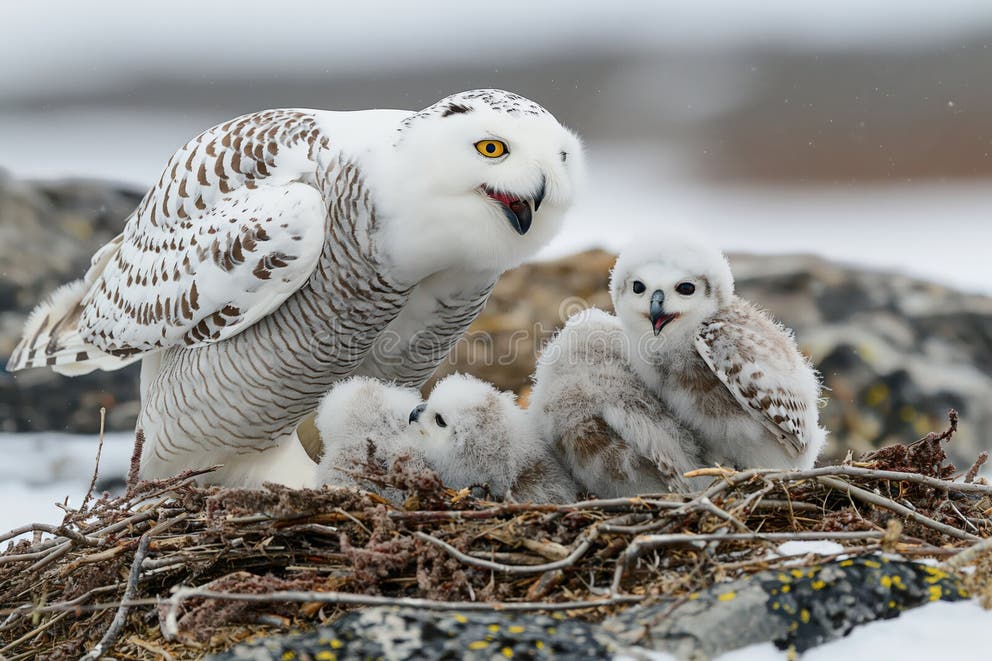
The snowy owl, with its ethereal white plumage and piercing yellow eyes, is not only a captivating creature of the Arctic tundra but also a symbol of devoted parenting in the avian world. These majestic raptors exhibit an extraordinary partnership between male and female, collaborating harmoniously to ensure the survival and flourishing of their offspring amidst the unforgiving harshness of winter. The intricacies of snowy owl parenting reveal a blend of instinct, adaptability, and tireless commitment that elevates their role from mere guardians to consummate caretakers in the wild.
The Arctic Stage: Setting the Scene for Snowy Owl Parenting
To truly grasp the depth of snowy owl parenting, one must first understand the formidable environment in which these birds rear their young. The Arctic tundra, characterized by its extreme cold, sparse vegetation, and prolonged daylight during breeding season, poses unique challenges. Predators lurk, temperatures plummet, and food availability fluctuates dramatically. This backdrop necessitates a highly synchronized and robust parenting strategy that maximizes the survival rate of their delicate owlets. The snowy owl’s breeding territory is typically expansive, granting access to ample hunting grounds but also demanding vigilance and stamina from both parents throughout the nesting period.
Shared Responsibilities: An Equitable Partnership
Unlike many raptor species where the female predominantly undertakes nesting duties, snowy owls exhibit a remarkable balance of parental investment. From the moment the female lays eggs in a shallow scrape on the tundra, both parents engage in a coordinated ballet of nurturing and protection. The female primarily incubates the clutch, a feat requiring unwavering warmth in the face of frigid winds, while the male ventures across the tundra to procure a steady supply of sustenance. This division of labor is not rigid; roles can interchange depending on environmental demands, illustrating the flexibility embedded in their parenting dynamic. Such equitable participation underscores the species’ evolutionary adaptation to demanding conditions.
Incubation: The Crucible of Survival
Incubation is an exacting phase in the snowy owl parenting saga. The female is encased in a cocoon of care, her feathers fluffed to trap scant body heat, maintaining the delicate microclimate necessary for embryo development. She rarely deserts the nest, enduring hunger pangs and exposure, while the male delivers prey with relentless precision. This period can last about a month, where timing and persistence are pivotal. The unbroken vigilance ensures that eggs emerge from their translucent shells unscathed, ready to face the world. The synchronization between the pair during this delicate stage exemplifies their interdependence and mutual dedication to success.
Feeding the Owlets: A Continual Vigil
Once hatched, the owlets depend entirely on their parents’ tireless efforts. Feeding becomes an incessant task, as the rapid growth of the chicks demands constant nourishment. Both the male and female partake in hunting voyages, capturing lemmings, voles, and other small mammals that provide vital protein and energy. The male often leads these expeditions, showcasing remarkable hunting prowess, while the female remains close to the nest, preparing the prey and directly feeding the hatchlings. The dynamic interplay ensures that each chick receives adequate nutrition to develop strength and agility. This phase can be fraught with tension, as unpredictable weather and prey scarcity test the endurance and resourcefulness of the parents.
Protection and Teaching: Beyond Basic Care
Vigilance extends beyond feeding and warmth. Both parents are fiercely protective, warding off potential predators like foxes or rival owls using intimidating displays and aggressive posturing. Their pristine white plumage blends seamlessly with the snow, enabling strategic camouflage while simultaneously signaling territorial dominance. As the owlets mature, the parents gradually introduce them to the essentials of survival—flight, hunting techniques, and environmental awareness. These lessons are vital for fledglings preparing to navigate the wild independently. This mentorship epitomizes the transition from dependency to self-sufficiency, underscoring the spectrum of parental care ranging from nurture to empowerment.
Adaptations Influencing Parenting Success
Snowy owl parenting is shaped profoundly by evolutionary adaptations honed over millennia. Their ability to thrive in a landscape marked by stark contrasts is facilitated by physiological and behavioral traits. For instance, the parents’ acute auditory and visual senses enhance hunting efficiency, while their dense, insulating plumage safeguards them against severe cold. Moreover, their breeding timing is intricately linked to prey abundance cycles, ensuring that offspring are raised during periods of relative abundance. This synchronization minimizes risks associated with food scarcity, reflecting a sophisticated ecological attunement that bolsters parenting success in an unforgiving biome.
Environmental Challenges and Parental Resilience
In recent decades, fluctuating climatic conditions have imposed novel challenges on snowy owl parents. Shifts in snow cover, temperature anomalies, and prey population dynamics disrupt the finely balanced parenting equation. Yet, these owls demonstrate remarkable resilience, adjusting nesting sites, breeding timing, and hunting strategies to new realities. This adaptability is emblematic of their enduring commitment to progeny survival, highlighting a tenacious spirit in the face of environmental uncertainty. Their efforts reveal a poignant narrative of survival—the delicate dance between parent and environment, where each act of care carries profound significance.
The Legacy of Snowy Owl Parenting
Ultimately, the tale of snowy owl parenting is one of profound dedication etched against the brutal canvas of the Arctic wild. Through shared responsibilities, unyielding protection, and nuanced teaching, they sculpt the future generation of these regal birds. Their parenting style weaves together instinct, cooperation, and adaptability, painting an eloquent portrait of nature’s relentless drive to persist. For those who glimpse this snowy owl family nestled amid icy branches, the image transcends aesthetics—it embodies the essence of devotion, resilience, and the enduring power of parental love.