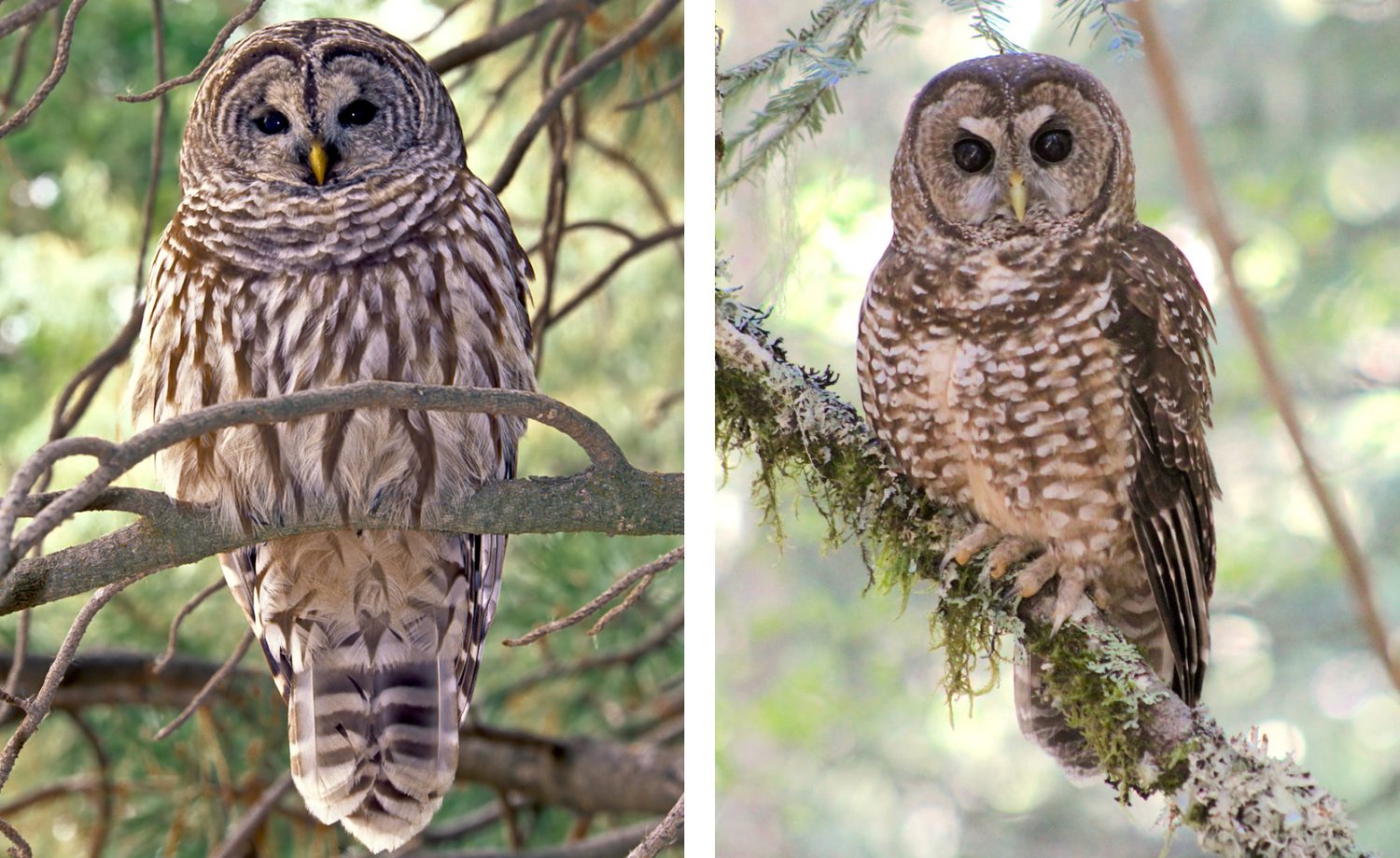
The ancient forests of the Pacific Northwest hum with an unseen drama. Beneath the emerald canopy, two apex predators circle each other—one native, the other an interloper. The Spotted Owl, a relic of old-growth ecosystems, faces a relentless rival: the Barred Owl. Once confined to eastern woodlands, this invader has surged westward, reshaping the balance of power. How does the Barred Owl outcompete its beleaguered cousin? The answer lies not in brute force alone, but in a trifecta of evolutionary cunning: aggression, adaptability, and dietary versatility. To understand this ecological upheaval, we must dissect each of these facets, peeling back the layers of behavior, biology, and environment that have tilted the scales in favor of the Barred Owl.
The Art of Aggression: When Silence Becomes a Weapon
Spotted Owls are the epitome of stealth. Their mottled plumage blends seamlessly with the dappled light of ancient forests, and their hunting style is a masterclass in patience. They wait. They watch. Then, with surgical precision, they strike. But the Barred Owl? It doesn’t wait. It doesn’t whisper. It asserts dominance through sheer audacity.
Barred Owls are vocal—loud, even. Their eerie, rhythmic calls—”Who cooks for you? Who cooks for you-all?”—echo through the woods, a sonic declaration of territory. This isn’t mere communication; it’s psychological warfare. Spotted Owls, already stressed by habitat loss, find their tranquility shattered. The Barred Owl’s presence alone can trigger a cascade of stress hormones, weakening the Spotted Owl’s already precarious hold on its domain.
But the aggression doesn’t stop at noise. Barred Owls are known to physically displace Spotted Owls from nesting sites, engaging in direct confrontations that leave the native species reeling. Studies have documented Barred Owls usurping Spotted Owl territories, even killing their young. It’s not just competition—it’s annihilation by attrition. The Spotted Owl, evolved for a quieter world, is ill-equipped to counter this relentless onslaught.
Adaptability: The Invasive Edge of Generalists
Evolution is a story of specialization, but the Barred Owl is a story of opportunism. Where the Spotted Owl is a connoisseur of old-growth forests, the Barred Owl thrives in a smorgasbord of habitats—mature forests, fragmented woodlands, even urban edges. This adaptability is its greatest weapon.
Climate change has further tilted the playing field. Warmer winters and shifting precipitation patterns have expanded the Barred Owl’s range northward and westward, encroaching on the Spotted Owl’s last strongholds. The Barred Owl’s ability to exploit new environments—whether through nesting in non-traditional cavities or tolerating human-altered landscapes—gives it a resilience the Spotted Owl simply cannot match.
Consider the Spotted Owl’s dependence on old-growth forests. These ecosystems are slow to regenerate, and their loss is irreversible on human timescales. The Barred Owl, by contrast, can pivot. It nests in tree cavities, but it’s also been documented using abandoned buildings, nest boxes, and even artificial structures. This flexibility means it can colonize areas where the Spotted Owl’s habitat has been degraded, further squeezing its competitor out of the picture.
Dietary Dominance: The Omnivorous Advantage
A predator’s success hinges on its menu. The Spotted Owl’s diet is a carefully curated selection of small mammals—flying squirrels, woodrats, and the occasional bird—reflecting the narrow ecological niche it occupies. The Barred Owl, however, is a culinary anarchist. Its diet is a sprawling buffet: rodents, amphibians, reptiles, insects, and even other birds. This omnivorous gluttony is a game-changer.
In times of scarcity, the Spotted Owl’s specialized diet becomes a liability. A decline in flying squirrels, for instance, can spell disaster. The Barred Owl, meanwhile, can switch to alternative prey—mice, voles, or even crayfish—without missing a beat. This dietary breadth ensures it can survive and reproduce even when resources are scarce, giving it a demographic edge.
But the Barred Owl’s dietary prowess extends beyond mere survival. It can exploit food sources that the Spotted Owl cannot. For example, Barred Owls are known to hunt during the day, a behavior almost unheard of in Spotted Owls. This temporal flexibility allows them to capitalize on diurnal prey, further reducing competition. In some cases, Barred Owls have been observed stealing prey from Spotted Owls, a final insult to injury.
Reproductive Rampancy: The Numbers Game
Evolutionary success isn’t just about survival—it’s about reproduction. The Barred Owl’s aggressive tendencies extend to its breeding habits. It lays larger clutches of eggs and can breed at younger ages than the Spotted Owl. This means populations can rebound quickly, even after setbacks.
The Spotted Owl, by contrast, has a slower reproductive rate. Females typically lay only one or two eggs per year, and they require mature forests for nesting. The Barred Owl’s ability to reproduce rapidly and in a variety of habitats gives it a numbers advantage that’s nearly impossible for the Spotted Owl to overcome. It’s a classic case of an invasive species outpacing a native one through sheer fecundity.
This reproductive rampancy is compounded by the Barred Owl’s longer lifespan. While Spotted Owls can live up to 15 years in the wild, Barred Owls often exceed 20 years. This extended longevity means individual Barred Owls can dominate territories for decades, continuously outcompeting Spotted Owls and their offspring.
The Domino Effect: Cascading Consequences for Ecosystems
The Barred Owl’s rise isn’t just a story about two owl species. It’s a ripple effect that reshapes entire ecosystems. Spotted Owls play a crucial role in their habitats, preying on species that, if left unchecked, could overpopulate and degrade the forest. Their decline could lead to cascading changes—overabundant prey species, altered plant communities, and even shifts in predator-prey dynamics.
Moreover, the Barred Owl’s dominance could disrupt the delicate balance of old-growth forests. These ecosystems rely on a web of interactions, from fungi that decompose fallen trees to birds that disperse seeds. The Spotted Owl’s decline might signal broader ecological imbalances, hinting at a future where the Pacific Northwest’s forests are less diverse, less resilient—and far less wild.
Conservationists face a grim dilemma. Do they intervene to protect the Spotted Owl, even if it means culling Barred Owls? Or do they accept that nature’s course is irreversible, and focus on preserving what fragments of old-growth forest remain? The answers are complex, but the underlying truth is undeniable: the Barred Owl’s ascendancy is a testament to the power of adaptability in an era of rapid change.
Lessons from the Shadows: What This Conflict Teaches Us
The battle between Barred and Spotted Owls is more than a wildlife drama. It’s a mirror held up to our own world—a world where specialists are increasingly outcompeted by generalists, where the quiet and the patient are overshadowed by the loud and the bold. It’s a story of resilience, but also of loss.
For those who study these owls, the conflict offers a stark warning. Invasive species are not just ecological footnotes; they are agents of transformation, reshaping landscapes in ways we’re only beginning to understand. The Barred Owl’s success is a reminder that nature abhors a vacuum—and that when one species falters, another is always waiting to take its place.
Yet, there’s a sliver of hope. The Spotted Owl’s struggle has galvanized conservation efforts, from habitat restoration to captive breeding programs. If we act swiftly, we might yet preserve the last remnants of the old-growth forests that once echoed with the calls of Spotted Owls alone. The question is whether we’ll choose to listen before it’s too late.