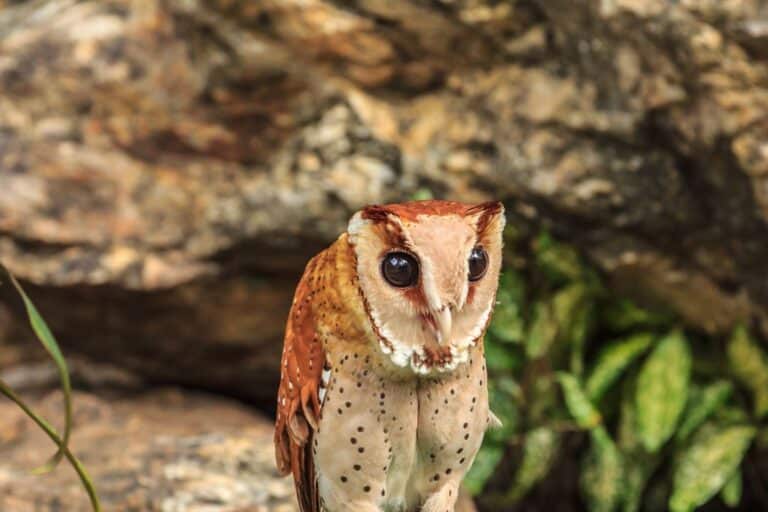
The silent wings of an owl cutting through the night sky are a marvel of nature’s design—effortless, precise, and cloaked in mystery. Yet, beneath this serene facade lies a precarious reality. Across the globe, these enigmatic birds face existential threats, their survival hanging by a thread woven from habitat loss, climate upheaval, and human encroachment. Enter the International Union for Conservation of Nature (IUCN), the silent sentinel that casts light on their plight through the Red List of Threatened Species. This isn’t merely a catalog of life on the brink; it is a clarion call to action, a compass guiding conservationists through the fog of ecological uncertainty. To understand the IUCN’s role is to peer into the very machinery of planetary preservation—and to recognize how a single organization can shift the trajectory of entire species.
The IUCN: The Architect of Conservation’s Grand Design
Founded in 1948, the IUCN stands as the world’s oldest and largest environmental network, a global consortium of governments, NGOs, scientists, and indigenous communities united by a singular mission: to halt and reverse biodiversity loss. Unlike fleeting policy initiatives or partisan debates, the IUCN operates on the bedrock of empirical science, its assessments distilled from decades of field research, satellite imagery, and peer-reviewed data. Its most visible achievement—the Red List—is no mere spreadsheet. It is a living, breathing taxonomy of life’s fragility, assigning species to categories like “Critically Endangered,” “Endangered,” or “Vulnerable” based on rigorous criteria such as population decline, geographic range, and extinction risk.
For owls, a family of birds whose existence is often overshadowed by their mythological allure, the Red List is a lifeline. It transforms anecdotal concern into quantifiable urgency. Consider the Blakiston’s fish owl, a behemoth of the avian world with a wingspan nearing six feet. Once widespread across northeast Asia, its numbers have dwindled to fewer than 1,000 individuals, its habitat fragmented by deforestation and dam construction. The IUCN’s designation of “Endangered” doesn’t just sound an alarm—it arms conservationists with the data needed to lobby for protected corridors, restore riparian forests, and mitigate human-wildlife conflict. Without this classification, the owl’s plight might remain a whisper in the wind, drowned out by louder crises.
From Data to Action: How the Red List Shapes Policy
The IUCN’s classifications are not passive labels; they are catalysts for transformation. Governments and international bodies wield the Red List like a scalpel, carving out legal protections for species teetering on the edge. The European Union’s Habitats Directive, for instance, draws directly from IUCN assessments to designate Special Protection Areas for birds like the eagle owl, ensuring that critical nesting sites remain inviolate. Meanwhile, the Convention on International Trade in Endangered Species (CITES) uses IUCN data to regulate the global trade of owl specimens, from feathers to live birds, curbing exploitation that exacerbates their decline.
But the Red List’s influence extends beyond legislation. It shapes corporate behavior, too. Mining companies, logging conglomerates, and renewable energy developers increasingly consult IUCN assessments before breaking ground. A wind farm proposed in the migratory path of the boreal owl might be rerouted to spare critical stopover sites. A palm oil plantation slated for a lowland rainforest in Southeast Asia could be redesigned to preserve the habitat of the Sunda scops owl. The IUCN doesn’t just identify problems—it provides the roadmap for avoiding them, turning potential ecological disasters into opportunities for coexistence.
The Owl Paradox: Charisma in the Face of Obscurity
Owls occupy a peculiar niche in the public imagination. They are the stuff of folklore, harbingers of wisdom or omens of doom, yet their ecological roles are often overlooked. As apex predators, they regulate rodent populations, curbing the spread of disease and maintaining the balance of ecosystems. Their nocturnal habits and cryptic plumage make them elusive, but their presence is a barometer of environmental health. A decline in owl numbers often signals a collapse in biodiversity long before it becomes visible to the naked eye.
Herein lies a paradox: owls are both iconic and invisible. The IUCN’s work forces us to confront this duality. By classifying species like the northern spotted owl or the Madagascar red owl as “Endangered,” the IUCN doesn’t just highlight their vulnerability—it challenges our perception of what deserves protection. Why do we rally for tigers and pandas but turn a blind eye to owls? The answer lies not in biology, but in human psychology. The IUCN’s Red List compels us to ask uncomfortable questions: What does it say about our values when a bird as ancient as the barn owl is pushed to the brink? And what will we lose if we let their silent wings fall still?
The Global Web: How the IUCN Connects Dots Across Continents
The IUCN’s reach is as vast as the habitats it seeks to protect. Its network of specialists spans 160 countries, each contributing data that paints a global portrait of biodiversity. For owls, this interconnected web is vital. The snowy owl, a nomad of the Arctic tundra, faces threats that transcend borders—melting sea ice in the north, pesticide-laden prey in the south, and collisions with wind turbines along its migratory routes. The IUCN’s regional assessments ensure that conservation strategies are not siloed by geography but woven into a cohesive tapestry of action.
Consider the case of the burrowing owl in the Americas. Once widespread from Canada to Argentina, its populations have plummeted due to urban sprawl and agricultural intensification. The IUCN’s regional office in Latin America has coordinated efforts to protect nesting sites in the Pampas, while its North American counterparts have pushed for urban planning that incorporates artificial burrows. This transcontinental collaboration is only possible because the IUCN treats biodiversity as a global commons, not a series of isolated problems. For owls, this means that a conservation win in Patagonia can reverberate all the way to the Canadian prairies.
The Future: Can the IUCN Keep Pace with a Changing World?
The IUCN’s greatest challenge—and its most compelling promise—lies in its ability to adapt. Climate change is rewriting the rules of survival, and species once considered stable are now teetering on the edge. The IUCN’s recent shift toward dynamic, real-time assessments reflects this urgency. Traditional Red List evaluations, conducted every few years, are giving way to more agile systems that incorporate climate projections, disease outbreaks, and land-use changes. For owls, this means that a species like the tawny owl, currently listed as “Least Concern,” could face a reclassification as “Vulnerable” within a decade if its European strongholds succumb to heatwaves and habitat fragmentation.
Yet adaptation requires more than data—it demands political will and public engagement. The IUCN’s role is not just to classify, but to catalyze. It must bridge the gap between scientists and storytellers, ensuring that the plight of owls is not confined to academic journals but seared into the public consciousness. Campaigns like the IUCN’s “Save Our Species” initiative leverage the power of storytelling to humanize these birds, from the ghostly spectacled owl of Central America to the diminutive scops owl of the Mediterranean. By framing conservation as a narrative of hope rather than despair, the IUCN invites us to see owls not as relics of a vanishing world, but as emissaries of a future we can still choose to protect.
The IUCN’s work is a reminder that conservation is not a spectator sport. It is a call to action, a challenge to rethink our relationship with the natural world. For owls, the stakes could not be higher. Their silent wings may carry the whispers of ecosystems on the brink, but they also hold the promise of resilience—if we choose to listen. The Red List is our guide, our compass, and our challenge. The question is no longer whether we can save these birds, but whether we will.