What if I told you that a single bird, no larger than a dinner plate, could be the linchpin of an entire ecosystem? Meet the Northern Spotted Owl—*Strix occidentalis caurina*—a creature of dappled twilight and ancient forests, whose very existence whispers secrets about the health of our planet’s most vital woodlands. This owl, with its chocolate-brown plumage and soulful eyes, is not just another feathered resident of the old-growth forests; it is a living barometer of biodiversity, a guardian of ecological balance, and, perhaps most intriguingly, a symbol of the fierce resilience required to protect what remains of Earth’s wild heart.
The Spotted Owl as an Umbrella Species: Why One Bird Holds the Fate of Many
The concept of an “umbrella species” might sound like something from a nature documentary voiceover, but it’s a term that carries profound weight. An umbrella species is one whose conservation automatically protects a wide array of other organisms sharing its habitat. The Northern Spotted Owl is the poster child for this ecological phenomenon. By safeguarding its old-growth forest home—those towering, moss-draped cathedrals of fir, cedar, and hemlock—we inadvertently shield countless other species: the marbled murrelet nesting in the canopy, the Pacific giant salamander lurking in the underbrush, even the elusive Humboldt marten, a creature so rare it was once thought extinct.
Imagine, for a moment, a forest without the Spotted Owl. The cascading effects would be catastrophic. Without its predatory prowess, rodent populations could spiral out of control, devouring seeds and saplings at an unsustainable rate. The forest floor, once a tapestry of life, would grow barren. The owl’s presence is not just a luxury; it is a necessity, a keystone that keeps the arch of biodiversity from collapsing. Yet, this delicate balance hangs by a thread, threatened by logging, climate change, and the relentless march of human development. The owl’s survival is not just about saving one species—it’s about preserving the very fabric of an ecosystem.
The Dance of Light and Shadow: How Old-Growth Forests Shape the Owl’s Existence
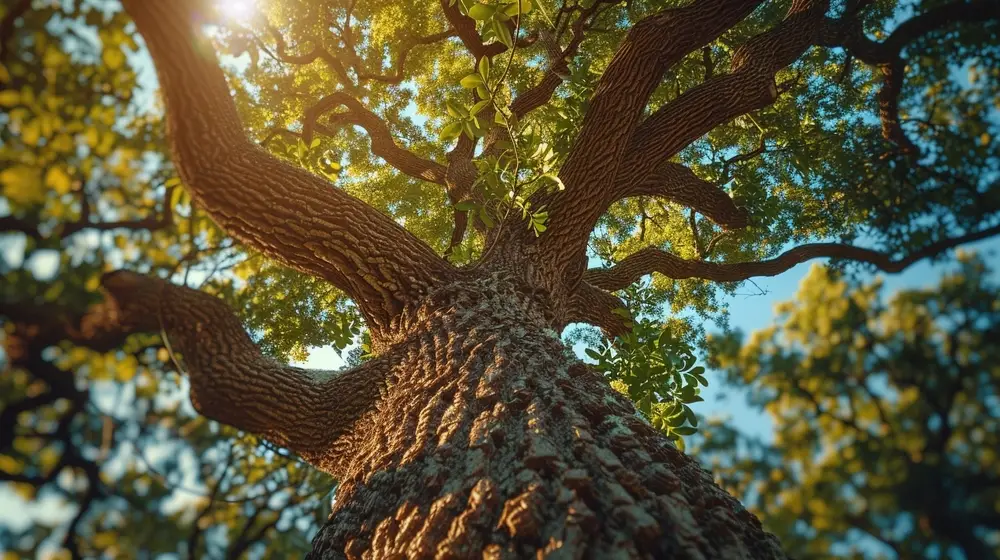
Old-growth forests are not merely collections of trees; they are living, breathing organisms with their own rhythms and cycles. These forests are multi-layered, a vertical symphony where sunlight filters through a canopy of ancient giants, casting dappled shadows on the forest floor below. The Northern Spotted Owl thrives in this complex environment, where the interplay of light and shadow creates the perfect hunting grounds. Its diet—primarily flying squirrels, woodrats, and other small mammals—relies on the dense, multi-story structure of old-growth forests, where prey can hide but not escape.
But here’s the rub: old-growth forests are vanishing at an alarming rate. In the Pacific Northwest, where the Spotted Owl once ruled supreme, clear-cutting and selective logging have carved gaping wounds into the landscape. The owl’s habitat is being whittled away, leaving it with fewer and fewer places to call home. The irony? These forests take centuries to mature. A 500-year-old Douglas fir cannot be replaced by a sapling planted yesterday. The owl’s dependence on such ancient landscapes makes it a canary in the coal mine—a harbinger of what happens when we prioritize short-term gains over long-term ecological integrity.
What’s more, the owl’s role in this ecosystem is not passive. It is an active participant in the forest’s health. By preying on rodents, it helps control populations that might otherwise overgraze on seedlings, stunting the forest’s ability to regenerate. The owl’s presence is a sign that the forest is functioning as it should—a self-sustaining, biodiverse haven. Lose the owl, and you lose the forest’s ability to heal itself.
The Silent Threats: Climate Change and the Owl’s Precarious Perch
If habitat loss weren’t enough, the Northern Spotted Owl now faces an even more insidious enemy: climate change. Rising temperatures, prolonged droughts, and shifting precipitation patterns are altering the forests it depends on. In some regions, the owl’s primary prey—the flying squirrel—is declining due to these changes, leaving the owl with less food. Meanwhile, invasive species like the barred owl, a more aggressive cousin of the Spotted Owl, are encroaching on its territory, outcompeting it for resources and even preying on its young.
The barred owl’s arrival is a direct consequence of human activity. As old-growth forests shrink, the barred owl, which thrives in younger, more fragmented landscapes, moves in, pushing the Spotted Owl to the brink. Conservationists are now faced with a heart-wrenching dilemma: should they cull barred owls to save the Spotted Owl, or is there a way to restore the old-growth forests so thoroughly that the Spotted Owl can reclaim its territory? The answer is not simple, but one thing is clear—the owl’s survival is inextricably linked to the health of the planet as a whole.
Climate change doesn’t just threaten the owl’s food supply; it also exacerbates the risk of wildfires, which can incinerate entire swaths of forest in a matter of hours. These megafires, fueled by decades of fire suppression and rising temperatures, are rewriting the rules of forest ecology. The Spotted Owl, already struggling to adapt, now finds itself in a landscape that is increasingly hostile. The question we must ask ourselves is this: Are we willing to act decisively to protect the old-growth forests that remain, or will we stand by as the owl’s haunting calls fade into silence?
Conservation in Action: Can We Save the Spotted Owl Before It’s Too Late?
The fight to save the Northern Spotted Owl is a testament to the power of human intervention—or, more accurately, the power of human restraint. In the 1990s, the owl’s plight became a rallying cry for environmentalists, leading to the designation of millions of acres of forest as protected critical habitat under the Endangered Species Act. Logging was curtailed, and conservation efforts ramped up. Yet, despite these measures, the owl’s population continues to decline. Why? Because conservation is not just about setting aside land; it’s about ensuring that the land remains ecologically intact.
One promising approach is the restoration of degraded forests. By thinning dense, young stands and reintroducing fire as a natural management tool, conservationists hope to create conditions that favor the Spotted Owl. Another strategy involves translocating barred owls to areas where they won’t compete with their spotted relatives. These efforts are not without controversy—some argue that culling barred owls is unethical, while others believe it’s a necessary evil to prevent extinction. The debate rages on, but one thing is certain: passive conservation is no longer enough. We must be proactive, innovative, and, above all, bold in our efforts to save this iconic bird.
The Spotted Owl’s story is not just about one species; it’s about our relationship with the natural world. It challenges us to confront uncomfortable truths: that our actions have consequences, that short-term convenience often comes at a long-term cost, and that true sustainability requires more than just good intentions—it requires action. The owl’s survival depends on our willingness to rethink how we use land, how we manage resources, and how we envision a future where humans and wildlife can coexist.
A Call to the Wild: What the Owl’s Fate Teaches Us About Ourselves
There is a certain poetry in the Spotted Owl’s struggle. It is a creature of the night, a symbol of mystery and wisdom, yet its fate is being decided in the harsh light of day by forces entirely of our making. The owl’s story is a mirror, reflecting back at us the fragility of nature and the power we wield over it. It asks us a simple but profound question: Do we value wildness for its own sake, or do we see it only as a resource to be exploited?
Perhaps the most radical act of conservation is not to save the Spotted Owl, but to recognize that its survival is intertwined with our own. Old-growth forests are not just repositories of biodiversity; they are carbon sinks, climate regulators, and sources of clean water. They are the lungs of the Earth, and the Spotted Owl is one of their most eloquent spokesbirds. To lose it would be to lose a part of ourselves—a part that remembers what it means to live in harmony with the wild.
So, the next time you hear the haunting call of an owl in the night, pause for a moment. Listen closely. That sound is not just a bird’s voice; it is a plea, a warning, and a reminder. The Spotted Owl is not just a symbol of biodiversity. It is a testament to the fact that every creature, no matter how small or seemingly insignificant, plays a role in the grand tapestry of life. And if we let it vanish, we do more than lose a species—we lose a piece of the wild soul of the world.