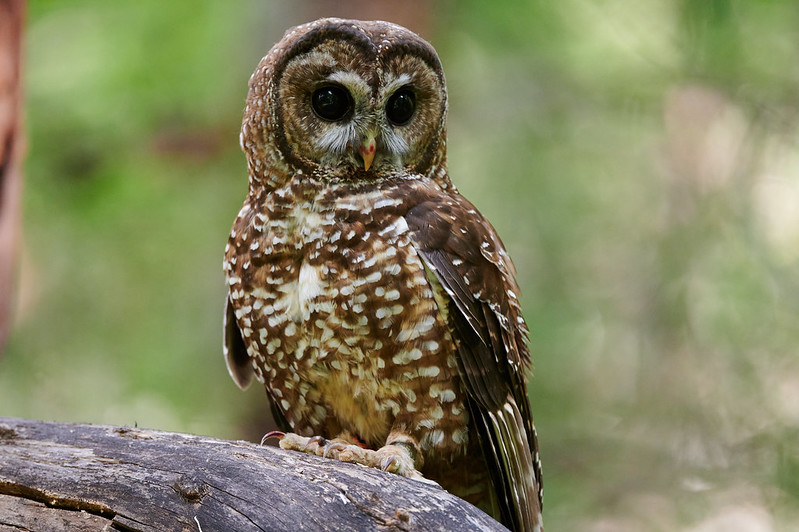
In the quiet hush of twilight, when the world slows its frenetic pace, a shadow glides through the ancient forests. The Northern Spotted Owl, a creature of mythic elegance and ecological significance, watches from the canopy with eyes like molten gold. For those who find solace in the whisper of wings and the mystery of the wild, spotted owl watching is more than a pastime—it is an act of devotion, a silent vow to protect the vanishing sanctuaries of biodiversity. But beyond the thrill of the sighting lies a deeper calling: your hobby can become a lifeline for science, a bridge between wonder and conservation. This is how the simple joy of observing these enigmatic birds can ripple outward, shaping policies, guiding research, and safeguarding ecosystems for generations to come.
The Art of Spotted Owl Watching: A Portal to Presence
To watch a Spotted Owl is to enter a realm where time dilates and the ordinary dissolves into the extraordinary. These birds are not mere subjects of study; they are sovereigns of the old-growth canopy, their presence a testament to the resilience of nature in the face of relentless encroachment. The art of owl watching begins with patience—a virtue as rare as the owl itself. It demands silence, stillness, and an attunement to the subtle language of the forest: the rustle of leaves, the distant call of a woodpecker, the sudden hush when a predator nears.
For the uninitiated, the Spotted Owl’s haunts are not easily found. Their territories span the mist-laden forests of the Pacific Northwest, where Douglas firs and redwoods stand sentinel over centuries of growth. But with the right guidance—whether from local birding groups, conservation organizations, or seasoned guides—even novices can learn to read the signs: the telltale whitewash beneath roosting spots, the regurgitated pellets littering the forest floor, the eerie, descending whistle of their four-note call. Each sighting is a privilege, a fleeting glimpse into a life lived entirely on its own terms.
Citizen Science: How Birders Become Guardians of Data
Every time a birder lifts their binoculars to track a Spotted Owl’s movements, they are not just indulging a passion—they are contributing to a vast, decentralized network of knowledge. Citizen science transforms hobbyists into custodians of data, their observations feeding into databases that inform critical conservation decisions. Programs like the Spotted Owl Monitoring Program rely on volunteers to document nesting sites, track population trends, and report disturbances. These contributions are not trivial; they are the raw material that shapes habitat protection laws and informs forest management policies.
But the impact of citizen science extends beyond numbers. It fosters a culture of stewardship, where birders become advocates, translating their firsthand experiences into compelling narratives that resonate with policymakers and the public. Imagine a group of birders in Oregon, their voices trembling with urgency as they present data showing a decline in owl territories due to logging. Their testimony, backed by meticulous records, becomes a catalyst for change. This is the power of collective action—where passion meets policy, and every sighting becomes a voice for the voiceless.
Photography as Advocacy: Capturing the Soul of the Owl
A photograph of a Spotted Owl is more than an image; it is a manifesto. In a world where forests are reduced to statistics and owls to endangered species listings, photography humanizes these creatures, forging an emotional connection that cold data cannot. The right image can stop scrollers in their tracks, evoke empathy, and ignite movements. For photographers, the challenge is not just to capture the owl’s striking plumage or piercing gaze, but to convey its essence—the quiet dignity of a species clinging to survival in a fragmented world.
Ethical photography is paramount. It means respecting buffer zones, minimizing disturbance, and prioritizing the owl’s well-being over the perfect shot. Some photographers use remote cameras or telephoto lenses to observe from a distance, while others collaborate with researchers to document nesting behaviors without intrusion. The goal is not exploitation, but elevation—a way to showcase the owl’s role as an indicator species, its presence signaling the health of the entire ecosystem. When shared widely, these images become tools for education, fundraising, and public awareness, turning passive observers into active allies.
Soundscapes and Bioacoustics: The Unseen Language of the Forest
To the untrained ear, the forest is a symphony of rustling leaves and distant calls. But to those who listen closely, it is a coded language, a tapestry of communication that reveals the presence, health, and behavior of its inhabitants. Spotted Owls, with their haunting four-note whistle, are masters of this auditory realm. Bioacoustics—the study of animal sounds—has emerged as a powerful tool in owl conservation, allowing researchers to monitor populations without ever laying eyes on the birds themselves.
Volunteers can participate in sound recording projects, setting up audio devices in known owl territories to capture their calls. These recordings are then analyzed using specialized software to identify individual owls, track their movements, and even detect stress responses to environmental changes. For birders, this offers a new dimension to their hobby: the thrill of eavesdropping on the secret lives of owls. It also provides a non-invasive method for scientists to gather data in remote or inaccessible areas, reducing the need for invasive fieldwork and minimizing human impact on these sensitive species.
Habitat Restoration: From Observation to Action
Watching a Spotted Owl is a privilege, but it is also a responsibility. The decline of these birds is inextricably linked to the loss of old-growth forests, where ancient trees provide the complex structure these owls need to thrive. For birders who wish to move beyond observation, habitat restoration offers a tangible way to contribute. Organizations like the Spotted Owl Recovery Program organize volunteer tree-planting events, invasive species removal, and nest box installations in areas where natural cavities are scarce.
Restoration is not a quick fix; it is a slow, deliberate act of healing. It requires patience, persistence, and a deep understanding of ecological processes. But for those who have spent hours in the forest watching owls, there is no greater fulfillment than seeing a sapling they planted grow into a future nesting site. These efforts are not just about saving a single species—they are about restoring balance, ensuring that the forests we love remain vibrant, wild, and full of life for generations to come.
Community and Advocacy: Turning Passion into Power
The most effective conservation efforts are not born in isolation; they are nurtured in community. Birding groups, conservation clubs, and online forums provide spaces for enthusiasts to share sightings, discuss threats, and organize collective action. These communities amplify individual efforts, turning a single birder’s observation into a chorus of voices demanding change. Advocacy takes many forms: writing letters to legislators, attending public hearings, or organizing fundraisers for research and habitat protection.
For those new to activism, the journey begins with education. Learning about the Spotted Owl’s ecological role—its dependence on old-growth forests, its sensitivity to climate change, its place in the food web—equips birders with the knowledge to speak persuasively. It also fosters a sense of connection to the broader ecosystem, reminding us that saving the owl is not just about one species, but about preserving the intricate web of life that sustains us all.
The Ripple Effect: How Your Hobby Shapes the Future
Every time you step into the forest with binoculars in hand, you are not just a spectator—you are a participant in a larger story. The data you collect, the images you capture, the sounds you record, and the habitats you help restore all contribute to a collective effort to safeguard the Spotted Owl and its home. This is the power of hobby-based conservation: it transforms leisure into legacy, turning moments of wonder into lasting change.
But the story does not end with the owl. The lessons learned from Spotted Owl conservation ripple outward, informing efforts to protect other endangered species, restore degraded landscapes, and combat climate change. By nurturing a culture of observation, respect, and action, we cultivate a world where humans and wildlife can coexist—not as adversaries, but as stewards of a shared planet. So the next time you hear the haunting call of a Spotted Owl echoing through the trees, remember: your hobby is not just a pastime. It is a promise. A promise to listen, to learn, and to act.