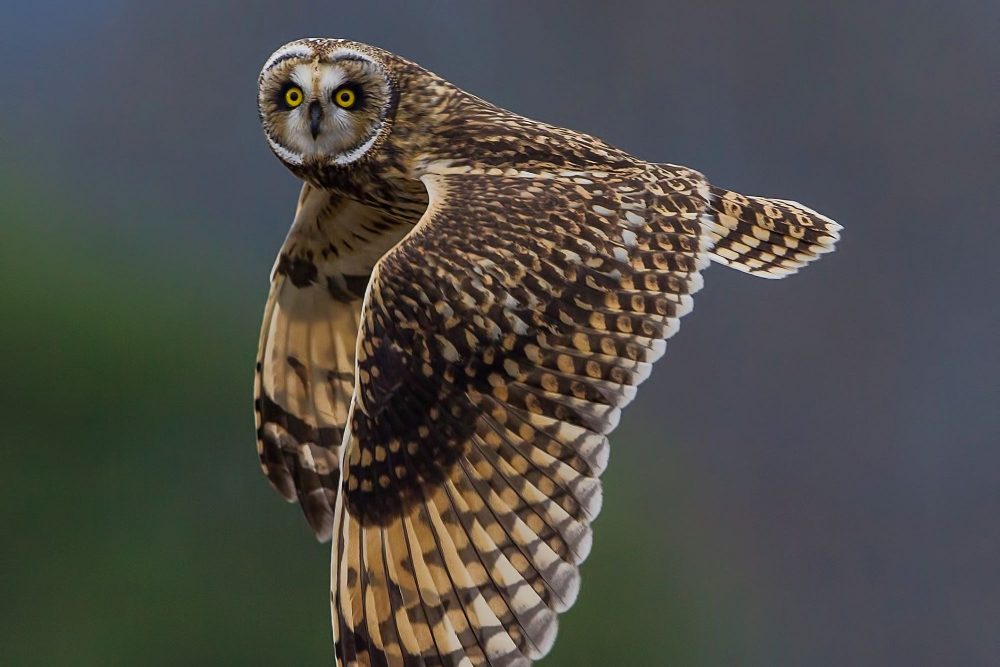
The Short-eared Owl, a nomadic wanderer of the twilight skies, has long been a creature of mystery. Its erratic migrations—dancing between the Arctic tundra and temperate grasslands—have baffled ornithologists for centuries. But in an era where technology reshapes the boundaries of human understanding, these enigmatic birds are finally revealing their secrets. No longer do we rely solely on chance sightings or fragmented anecdotes. Instead, we wield an arsenal of digital tools that illuminate the hidden pathways of their journeys. From satellite telemetry to AI-driven data crunching, technology has become the silent yet indispensable ally in unraveling the migratory symphony of the Short-eared Owl.
The Silent Wings of Discovery: How Satellite Telemetry Unlocked the Owl’s Secrets
Imagine strapping a minuscule, featherweight GPS transmitter to the back of a bird that weighs no more than a small apple. That’s precisely what modern biologists have done, transforming these owls into living data beacons. Satellite telemetry, a marvel of miniaturization and engineering, allows researchers to track the owls’ movements in real time, even as they traverse vast, uncharted expanses. These tiny devices, often no larger than a coin, beam back precise coordinates with astonishing accuracy, painting a vivid portrait of migration routes that were once shrouded in obscurity.
The Short-eared Owl’s nomadic lifestyle—bound not by season but by the ebb and flow of prey populations—makes it a particularly challenging subject. Yet, the data reveals a breathtaking pattern: these owls are not mere wanderers but strategic voyagers, following the pulse of lemmings and voles across continents. Their flights, often spanning thousands of miles, are not erratic but deliberate, guided by an ancient instinct honed over millennia. With each ping from the satellite, we inch closer to understanding how these birds navigate the labyrinth of the sky, their silent wings cutting through the night like blades of moonlight.
The Alchemy of Data: Turning Pixels into Pathways
But GPS is only the beginning. The true magic lies in the alchemy of transforming raw data into meaningful narrative. Every migration route, every stopover, every sudden detour is a thread in a larger tapestry. Enter the world of geospatial analysis and machine learning, where algorithms sift through terabytes of data to identify patterns invisible to the naked eye. These digital sleuths can predict migration hotspots, flag anomalies in flight behavior, and even anticipate how climate change might reroute these owls in the decades to come.
Consider the Short-eared Owl’s preference for open habitats—marshes, grasslands, and tundra—where its keen eyes can scan for prey. Data models now reveal how these habitats are shrinking, forcing the owls into perilous detours. Yet, the same models also highlight unexpected resilience: some owls adapt by exploiting agricultural fields or coastal dunes, proving that nature’s ingenuity often outpaces human predictions. The pixels on a screen become a living, breathing story, where each data point is a heartbeat in the owl’s relentless quest for survival.
The Symphony of the Skies: How Soundscapes Reveal the Owl’s Journey
Technology doesn’t just track movement—it listens. Bioacoustics, the science of capturing and analyzing animal sounds, has emerged as a powerful tool in studying the Short-eared Owl’s migration. These owls are not silent; their eerie, barking calls echo across the night, a haunting serenade that carries across vast distances. By deploying autonomous recording units in key habitats, researchers can eavesdrop on the owls’ nocturnal conversations, detecting their presence even when they remain hidden from view.
The beauty of bioacoustics lies in its subtlety. A single recording can confirm an owl’s presence in a region, while a chorus of calls might reveal a communal roosting site. Over time, these soundscapes build a sonic map of migration, revealing not just where the owls go, but how they interact with their environment. The Short-eared Owl’s call—a mix of yelps, whinnies, and hisses—becomes a signature, a fingerprint of its journey. In the quiet hum of a microphone, we hear the whispers of a species that has, until now, been largely silent in our records.
The Digital Nomads: Crowdsourcing and Citizen Science in the Age of Connectivity
No discussion of modern wildlife tracking would be complete without acknowledging the role of human curiosity. Crowdsourcing platforms and citizen science initiatives have democratized the process of discovery, turning birdwatchers, farmers, and even casual hikers into unwitting collaborators. Apps like eBird and iNaturalist allow anyone with a smartphone to log sightings, contributing to a global database that grows richer with each observation.
The Short-eared Owl, with its striking plumage and dramatic flight displays, is a favorite among birders. A single sighting in a remote marsh or a winter field can trigger a flurry of reports, creating a ripple effect across the digital landscape. These contributions, though seemingly small, are the building blocks of a larger narrative. They fill in the gaps between satellite pings and acoustic recordings, providing context that technology alone cannot capture. In this way, the owl’s migration becomes a shared story, one that unfolds in real time across continents, as people from all walks of life become temporary custodians of its journey.
The Future of Flight: AI, Climate, and the Owl’s Unwritten Chapters
As we stand on the precipice of a technological revolution, the future of Short-eared Owl migration tracking is brimming with possibility. Artificial intelligence is poised to revolutionize how we interpret migration data, predicting not just where the owls will go, but why. Climate models, integrated with tracking data, can forecast how rising temperatures might alter their routes, pushing them into uncharted territories or fragmenting their habitats further. Meanwhile, advancements in miniaturization could soon allow us to track not just adult owls but fledglings, revealing the secrets of their first migrations.
Yet, with every breakthrough comes a sobering reminder: technology is a tool, not a savior. The Short-eared Owl’s fate is inextricably linked to the health of the ecosystems it traverses. Grasslands are vanishing. Wetlands are drying. The silent wings of these owls may soon face a sky devoid of prey, a world where their ancient instincts no longer suffice. The data we collect is not just a curiosity—it is a call to action. It challenges us to protect the habitats that sustain these birds, to ensure that the next generation of scientists will have not just pixels and pings, but living, thriving owls to study.
The Short-eared Owl’s migration is more than a biological phenomenon; it is a testament to the resilience of nature and the power of human ingenuity. Through the lens of technology, we have glimpsed the invisible threads that bind these birds to the planet, and in doing so, we have woven ourselves into their story. The next time you see an owl take flight at dusk, listen closely—not just to the rustle of its wings, but to the hum of the devices tracking its journey. In that symphony of nature and innovation, the future of the Short-eared Owl is being written, one data point at a time.