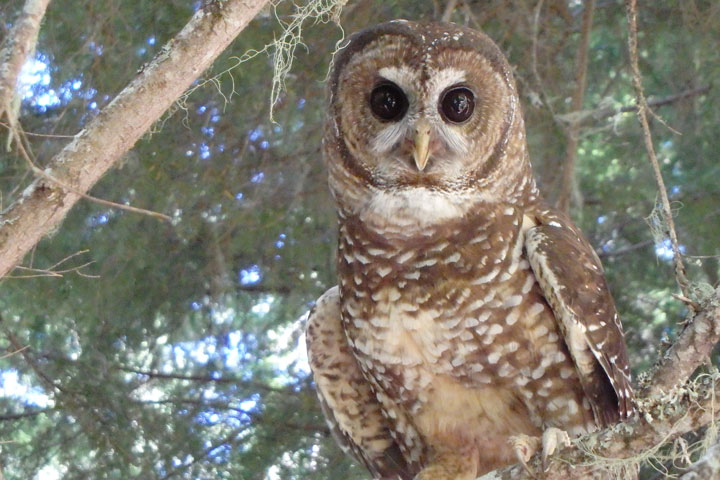
In the lush canopies of North America’s old-growth forests, the elusive spotted owl has long been emblematic of ecological fragility and conservation urgency. For decades, the decline of its populations has been attributed primarily to habitat destruction driven by human activity. Yet, as the climate crisis intensifies, a stealthier menace emerges from the ashes—wildfires. This evolving paradigm promises not only to deepen our understanding of the spotted owl’s plight but also to recalibrate the strategies we deploy to safeguard this iconic species. The role of wildfires in the spotted owl’s decline is a growing threat demanding our attention, challenging entrenched narratives, and inviting a reconsideration of forest stewardship in the Anthropocene.
Historical Context: The Spotted Owl and Its Habitat
The spotted owl, with its haunting calls echoing through misty forests, depends on the intricate architecture of old-growth woodlands. These ancient forests provide dense canopy cover, mature trees for nesting, and a complex understory that sustains prey such as small mammals and birds. Historically, logging and land conversion have been vilified as the principal drivers behind the dwindling numbers of this species. Protecting the owl’s habitat thus became a cornerstone of environmental policy, spurring regulations and conservation initiatives focused on curbing timber harvests in critical habitats.
While habitat destruction undoubtedly played a profound role, this narrative sidesteps emerging ecological realities. Forests are not static reservoirs; they are dynamic, ever-changing systems shaped by natural disturbances. Among these, wildfires stand out as both a destructive and regenerative force. Yet, their growing frequency and intensity disturb the delicate equilibrium that the spotted owl relies upon.
The Rising Influence of Wildfires in Forest Ecosystems
Wildfires have ravaged landscapes since time immemorial, sculpting forest composition and facilitating ecological succession. Traditionally, low-intensity fires created a mosaic of habitats, promoting biodiversity and maintaining forest health. However, decades of fire suppression policies coupled with climate change have precipitated unprecedented wildfire activity—megafires that consume vast swaths with unbridled ferocity.
This shift in wildfire regimes is more than a mere increase in acreage burned. The intensity, duration, and seasonality of fires have mutated, yielding consequences that trickle down the food web. Such events can obliterate nesting trees and decimate prey abundance abruptly, leaving spotted owls exposed to multiple stressors without the refuge their habitat once afforded.
Mechanisms of Impact: How Wildfires Affect Spotted Owl Populations
The direct consequences of wildfire on spotted owls are multifaceted and insidious. Habitat loss manifests not solely as the destruction of trees but as the disruption of forest structure—canopy gaps widen, understory vegetation ignites, and essential microhabitats vanish. These altered landscapes are less conducive to supporting the owls’ dietary needs, which hinge upon an abundance of small mammals thriving under dense cover.
Moreover, the post-fire environment often invites colonization by competing species better adapted to open or second-growth habitats, exacerbating challenges for the spotted owl. For instance, the barred owl, an aggressive competitor, exploits fragmented and disturbed forests, displacing the spotted owl from its native niches. This interplay intensifies the compounding pressures on already marginalized populations.
Climate Change: The Incendiary Catalyst
Wildfires do not surge in isolation from broader environmental forces. Climate change acts as the incendiary catalyst, fueling drought conditions, elevating temperatures, and extending fire seasons. These factors synergize to create tinderbox conditions where fires ignite more readily and spread with devastating efficacy.
For the spotted owl, this accelerates the pace of habitat alteration beyond evolutionary or management responses. The resilience of old-growth forests is challenged, threatening to erase the legacy of habitats that took centuries to mature. Consequently, conservation approaches tethered to static models falter against this rapid ecological upheaval.
Reevaluating Conservation Strategies in the Era of Wildfires
The emerging wildfire threat compels a profound rethink of spotted owl conservation that transcends traditional habitat protection. Recognizing wildfires as an interwoven element in forest ecology, rather than an external aberration, demands adaptive management. This includes integrating fire ecology principles, promoting forest heterogeneity, and facilitating landscape-scale resilience.
Proactive measures such as controlled burns and mechanical thinning can reduce fuel loads, moderating future fire severity while preserving key habitat features. Moreover, fostering connectivity among forest patches enhances the spotted owl’s ability to relocate and adapt within shifting habitats, mitigating localized extirpations.
Conservationists must align with indigenous fire stewardship practices, which historically maintained fire regimes conducive to biodiverse and resilient forests. These time-honored methods offer valuable blueprints for harmonizing the natural role of fire with species preservation.
Anticipating the Future: Challenges and Opportunities
The trajectory of wildfires and their impact on the spotted owl is uncertain and complex. Escalating fire activity portends continued habitat fragmentation and population declines, potentially pushing this emblematic species closer to extinction. Yet, within this challenge lies an opportunity to refine our ecological understanding and management paradigms.
Advancements in remote sensing and modeling can illuminate fire patterns and habitat responses with unprecedented precision, enabling more agile conservation interventions. Likewise, interdisciplinary collaborations among ecologists, climatologists, indigenous knowledge holders, and policymakers can foster holistic approaches that embrace the nuances of dynamic landscapes.
This juncture is a clarion call to transcend reductionist thinking, viewing wildfires not merely as villains but components of a complex system in flux. The future of the spotted owl hinges upon our ability to innovate and embrace the delicate dance of destruction and renewal that fire embodies.
Conclusion: A Paradigm Shift in Understanding the Spotted Owl’s Decline
The story of the spotted owl’s decline is evolving, shadowed now by the growing prominence of wildfires as a pivotal threat. This realization promises a paradigm shift, compelling us to revisit long-held assumptions and elevate wildfire considerations within conservation frameworks. As embers blaze across old-growth forests, they illuminate both challenges and avenues for resilience. Understanding and integrating the role of wildfires not only enriches the narrative of the spotted owl’s struggle but also galvanizes a more nuanced, passionate commitment to safeguarding one of nature’s most enigmatic birds amidst an era of ecological transformation.