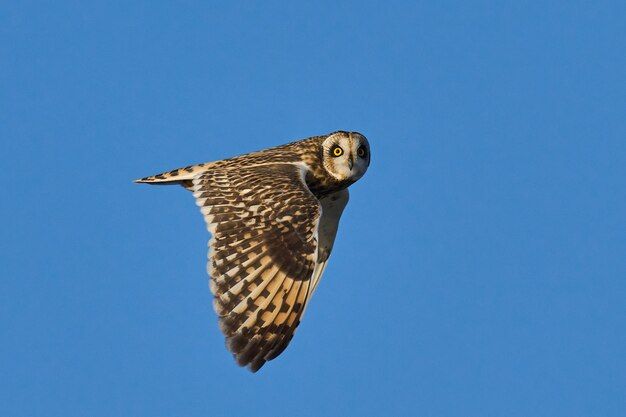
Have you ever paused to consider the silent guardians of the wetlands, those feathered sentinels who glide like whispers over the reeds at dusk? The Short-eared Owl, with its piercing yellow eyes and moth-like flight, is more than just a nocturnal marvel—it is a linchpin of wetland ecosystems, a predator whose presence shapes the very landscape it inhabits. But what happens when these guardians falter? What silent crises unfold when their habitats shrink, when their prey dwindles, or when human encroachment disrupts their delicate balance? Let’s embark on a journey through the marshes, fens, and bogs to uncover the indispensable role of these owls—and the challenges they face in a world that often overlooks their importance.
The Wetland Stage: A Symphony of Life and Decay
Wetlands are not mere swamps or bogs; they are the kidneys of the Earth, filtering pollutants, storing carbon, and regulating water flow. They are also the stage upon which the Short-eared Owl performs its nightly ballet. These owls thrive in open, grassy wetlands—marshes, prairie potholes, and coastal dunes—where the interplay of water and land creates a buffet of biodiversity. Here, voles, mice, and lemmings scurry through the undergrowth, unaware of the silent shadow that watches from above. The owl, with its asymmetrical ears and keen low-light vision, is the ultimate ambush predator, its flight a masterclass in aerodynamic efficiency. But this ecosystem is not static; it is a dynamic, ever-shifting tapestry where water levels rise and fall, where vegetation blooms and withers, and where the owl must adapt or perish.
The owl’s role is not merely that of a predator—it is an architect of balance. By preying on small mammals, it prevents overgrazing of wetland vegetation, ensuring that the reeds and sedges remain healthy and that the soil retains its structure. Without the owl, the wetlands could become overrun with rodents, leading to the collapse of plant communities and the subsequent erosion of the very land that sustains them. In this way, the Short-eared Owl is a keystone species, one whose presence or absence reverberates through the entire ecosystem.
The Nocturnal Maestro: How the Owl Conducts the Wetland Orchestra
Imagine the wetland at twilight, the air thick with the scent of damp earth and decaying vegetation. The Short-eared Owl takes to the skies, its wings beating in a rhythm that seems almost musical. Unlike its nocturnal counterparts, this owl is crepuscular—most active at dawn and dusk—when the light is dim but not absent. Its flight is a spectacle: buoyant, almost weightless, as it quarters the ground in search of prey. But this performance is not just for show; it is a critical act of predation that maintains the health of the wetland’s rodent population.
The owl’s hunting strategy is a marvel of evolutionary ingenuity. Its facial disc, a ring of feathers that funnels sound to its asymmetrical ears, allows it to pinpoint the rustling of a vole in the undergrowth with astonishing precision. Once located, the owl descends in a silent stoop, its talons outstretched like a surgeon’s scalpel. The kill is swift, almost clinical, but its impact is profound. By targeting the weakest or most abundant prey, the owl ensures that the rodent population remains in check, preventing overgrazing and the subsequent degradation of wetland habitats.
Yet, this delicate balance is under threat. Climate change is altering water levels, droughts are shrinking wetlands, and invasive plant species are choking out native vegetation. The owl’s ability to adapt is being tested as never before. Will it find new hunting grounds? Or will it become a relic of a vanishing world?
The Silent Crisis: Threats to the Short-Eared Owl’s Domain
Consider the plight of the Short-eared Owl, a species that has already vanished from vast swaths of its historic range. In Europe, it is a bird of conservation concern, its numbers dwindling as wetlands are drained for agriculture or development. In North America, its strongholds in the prairie potholes and coastal marshes are under siege from urban sprawl and industrial agriculture. The owl’s decline is not just a tragedy for biodiversity—it is a warning sign, a canary in the coal mine for the health of our wetlands.
One of the most insidious threats is habitat fragmentation. As wetlands are carved up by roads, farmland, and human settlements, the owl’s hunting grounds become isolated islands. Prey populations shrink, and the owl is forced to travel greater distances for food, expending energy it cannot afford to lose. The result? Starvation, reduced breeding success, and ultimately, local extinctions.
Another challenge is the proliferation of invasive plant species, such as Phragmites, which choke out native vegetation and alter the wetland’s hydrology. These dense stands of reeds provide poor hunting grounds for the owl, as they obscure its prey and make flight more difficult. The owl’s decline is not just a loss for the species itself—it is a loss for the entire ecosystem, which depends on its predatory prowess to maintain balance.
But perhaps the most pressing threat is climate change. Rising temperatures and shifting precipitation patterns are drying up wetlands, reducing the availability of prey and forcing the owl to compete with other predators for dwindling resources. In some regions, the owl is being pushed into suboptimal habitats, where it struggles to survive. The question is no longer whether the Short-eared Owl can adapt—it is whether we, as stewards of the Earth, will act in time to save it.
The Ripple Effect: How the Owl’s Decline Resonates Through the Ecosystem
To understand the full impact of the Short-eared Owl’s decline, we must zoom out and see the bigger picture. Wetlands are not isolated systems; they are interconnected with rivers, lakes, and coastal waters. The owl’s presence in a marsh is not just a local phenomenon—it is a sign of a healthy, functioning ecosystem. When the owl disappears, the ripple effects are felt far and wide.
Consider the voles and mice that the owl preys upon. Without predation pressure, their populations explode. They overgraze the wetland vegetation, leading to soil erosion and the loss of habitat for other species, such as amphibians and waterfowl. The decline of these small mammals also affects larger predators, such as foxes and birds of prey, which may turn to alternative prey, further disrupting the food web. The owl’s absence creates a domino effect, a cascade of ecological consequences that reverberate through the entire ecosystem.
Moreover, wetlands play a crucial role in carbon sequestration. Healthy wetlands store vast amounts of carbon in their peat soils, helping to mitigate climate change. But when wetlands degrade due to the loss of predators like the Short-eared Owl, this carbon is released into the atmosphere, exacerbating global warming. The owl’s decline is not just an ecological tragedy—it is a climate crisis in the making.
A Call to Action: Protecting the Wetland Guardians
So, what can be done to save the Short-eared Owl and the wetlands it depends on? The answer lies in a combination of habitat protection, restoration, and policy change. Wetlands must be preserved in their entirety, not just as fragmented patches but as contiguous, functioning ecosystems. This means protecting existing wetlands from development, restoring degraded ones, and creating corridors that allow the owl and other species to move freely between habitats.
Restoration efforts must focus on removing invasive plant species and reintroducing native vegetation that supports the owl’s prey. Controlled burns and grazing can also help maintain the open, grassy habitats that the owl prefers. But restoration is not enough—we must also address the root causes of wetland loss, such as climate change and unsustainable agriculture. This requires global cooperation, policy changes, and a commitment to sustainable land use.
Finally, we must raise awareness about the importance of the Short-eared Owl and the wetlands it inhabits. Too often, these ecosystems are seen as wastelands, fit only for drainage and development. But wetlands are vital to our survival, providing clean water, flood control, and carbon storage. The owl is a symbol of this hidden world, a reminder of the interconnectedness of all life. By protecting the owl, we protect the wetlands—and by protecting the wetlands, we protect ourselves.
The Short-eared Owl is not just a bird; it is a guardian, a conductor, a keystone of the wetland ecosystem. Its decline is a warning, a call to action. The question is not whether we can afford to save it—it is whether we can afford not to.