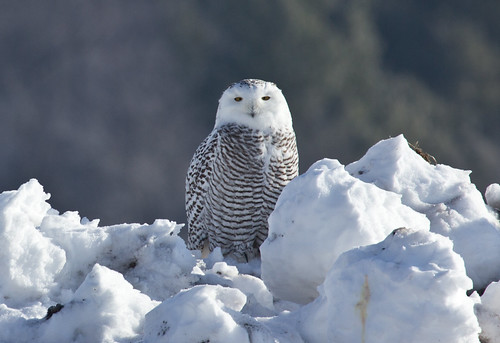
The snow-laden wings of winter’s most regal raptor—Bubo scandiacus, the snowy owl—once glided unchallenged across the Arctic tundra. But today, these celestial sentinels find themselves entangled in an unlikely battleground: the sprawling concrete arteries of modern airports. What began as a rare sighting has become a recurring spectacle of nature colliding with human progress, a clash that leaves both species vulnerable. The stakes are high. For the owl, survival hinges on avoiding the whirring blades of aircraft; for airports, safety and operational continuity depend on keeping these silent hunters at bay. This is not merely a matter of logistics—it is a collision of worlds, where instinct meets infrastructure, and the cost of misunderstanding is measured in lives and livelihoods.
The Invisible Fence: Why Airports Are Becoming Owl Hunting Grounds
Airports are, in essence, artificial ecosystems—landscapes of short grass, open space, and abundant prey. To a snowy owl, a runway is not a strip of asphalt; it is a vast, windswept plain, teeming with rodents and rabbits. The absence of natural predators and the presence of easy meals make these zones irresistibly alluring. But what appears as a paradise is, in reality, a deathtrap. The very features that attract owls—open visibility, flat terrain, and thermal updrafts—also make them sitting ducks for aircraft. Runways become stages for a macabre ballet: the owl, perched in regal stillness, unaware of the approaching turbine roar; the pilot, focused on takeoff, oblivious to the silent shadow in the distance. The result? A collision that is as sudden as it is catastrophic.
The Silent Sentinels: How Snowy Owls Thrive in a Human-Dominated World
Snowy owls are survivors, adapted to the harshest environments on Earth. Their dense plumage, a masterpiece of evolutionary engineering, shields them from Arctic blizzards, while their keen eyesight pierces the gloom of polar nights. Yet, their resilience is tested when they venture beyond their traditional habitats. Airports, with their manicured landscapes and rodent infestations, offer a buffet of opportunity. The owls, drawn by the promise of easy hunting, often linger near runways, oblivious to the danger. Their behavior—ground-nesting, territorial, and crepuscular—makes them particularly susceptible. Unlike songbirds that flee at the first sign of human activity, snowy owls are curious, even bold. They may perch just meters from taxiing aircraft, their golden eyes reflecting the glare of landing lights, unaware of the impending doom.
The High-Stakes Dance: When Aviation Meets Avian
The consequences of these encounters are not merely tragic—they are economically crippling. A bird strike can cause millions in damages, delay hundreds of flights, and, in the worst cases, lead to catastrophic engine failure. For snowy owls, the toll is even more severe. Unlike smaller birds that may survive a collision, an owl’s size and weight make it a high-impact projectile. The force of impact can shatter windshields, disable engines, or send debris into critical systems. Pilots report eerie moments of silence after a strike, followed by the realization that they have just become unwitting participants in a silent war. The Federal Aviation Administration (FAA) records thousands of wildlife strikes annually, but snowy owl incidents stand out for their unpredictability and the sheer drama of the encounter.
Breaking the Cycle: Innovative Strategies to Keep Owls at Bay
Preventing these collisions requires a blend of science, ingenuity, and empathy. Airports are turning to a suite of non-lethal deterrents, each designed to exploit the owl’s instincts without harming them. One approach is habitat modification—reducing rodent populations and altering grass heights to make runways less appealing. Another is the use of trained raptors, such as falcons or hawks, to patrol the skies and scare off intruders. These avian sentinels create an invisible barrier, their presence alone enough to send snowy owls fleeing. Some airports employ acoustic deterrents, broadcasting distress calls of owls or the sounds of approaching aircraft to trigger avoidance behavior. Even drones, mimicking the flight patterns of predators, have proven effective in disrupting owl activity.
The Human Factor: Why Empathy is the Ultimate Solution
Yet, the most promising strategies go beyond technology—they require a shift in perspective. Airports are not just industrial zones; they are ecosystems, albeit artificial ones. Recognizing this, many facilities now collaborate with wildlife biologists to monitor owl movements and adjust flight paths accordingly. During peak migration seasons, temporary flight restrictions are implemented, giving owls a safe passage. Public awareness campaigns also play a role, educating travelers about the plight of these magnificent birds and the importance of coexistence. The goal is not to eliminate owls from airports but to create a truce—a balance where human activity and wildlife can coexist without bloodshed.
The Future of Flight: A Vision of Harmonious Coexistence
As climate change reshapes the Arctic and pushes snowy owls farther south, the challenges will only intensify. Airports must evolve, adopting adaptive management strategies that prioritize both safety and conservation. This could mean investing in radar systems that detect bird movements in real time or designing runway lighting that disorients rather than attracts. It could also involve creating designated wildlife corridors, allowing owls to traverse airport boundaries without risk. The future of aviation and wildlife conservation is not a zero-sum game—it is a dialogue, one that demands creativity, patience, and a deep respect for the natural world. The snowy owl, with its piercing gaze and untamed spirit, serves as a reminder that even in the most unlikely of places, nature’s presence is both a challenge and an opportunity.
The runway is more than a path for planes—it is a metaphor for the choices we make. Will we continue to see the world in black and white, where progress and preservation are locked in eternal conflict? Or will we embrace the gray, where innovation and empathy converge to create a sky where both owls and aircraft can soar without fear? The answer lies not in the clouds above, but in the decisions we make on the ground.