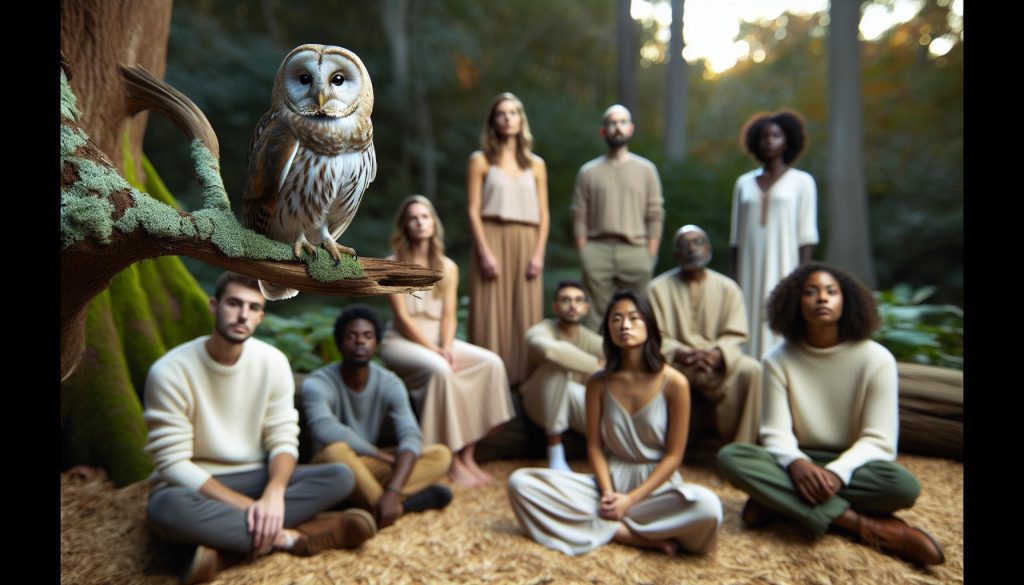
Owls have fascinated human beings for millennia, their silent flight and nocturnal habits shrouding them in mystery and awe. Across countless cultures, these enigmatic birds have been more than mere creatures of the night; they have woven themselves into the very fabric of human mythology, symbolism, and ritual. Exploring the complex relationship between owls and anthropology reveals a profound tapestry of belief systems, cultural expressions, and societal values. This exploration unveils how owls have been revered, feared, and immortalized, offering insights into the diverse ways human communities have encountered and interpreted the natural world.
Owls as Spiritual Emissaries: Symbolism Across Civilizations
From the ancient Greeks to indigenous tribes of the Americas, owls have served as spiritual emissaries, embodying wisdom, death, or the supernatural. The Athenian association of the owl with Athena, the goddess of wisdom, elevated the bird as the living symbol of intellect and guardianship. Conversely, in many Native American cultures, owls are seen as heralds of death or misfortune, their calls viewed as ominous portents. This dichotomy underscores how perceptions of owls are deeply embedded in metaphysical frameworks that shape human understanding of life and afterlife.
In Hinduism, the owl is the vahana (vehicle) of Lakshmi, the goddess of wealth, representing prosperity and good fortune. Meanwhile, Egyptian mythology linked owls to protection in the underworld, with depictions appearing in funerary texts. These varied interpretations highlight the owl’s versatility as a symbol, adapting to the cosmologies and religious narratives of disparate peoples.
Anthropological Significance of Owl Myths and Folklore
Myths surrounding owls reveal more than just superstition; they offer a window into the societal psyche and worldview. Anthropologists study these narratives to understand how communities construct meaning around the natural elements they coexist with. Owls, often part of nocturnal ecosystems, embody the unknown and unseen, becoming focal points in tales that explain the inexplicable.
The storytelling involving owls often underscores themes of transformation, liminality, and connection between worlds. For example, in some African traditions, owls are believed to be witches or shape-shifters in disguise, symbolizing fluid boundaries between human and animal realms. This attribution serves both as caution and cultural control, reinforcing societal norms through mythic cautionary figures.
Owls in Rituals and Shamanic Practices
The profound mystique surrounding owls makes them central figures in ritualistic and shamanic practices worldwide. In certain Siberian and Amazonian indigenous communities, shamans invoke owl spirits in their trance journeys, seeking guidance or protection from nocturnal threats. The owl’s eerie, haunting call and nocturnal vigilance establish it as a liminal creature linking the seen world with the unseen spiritual domains.
Ritual paraphernalia often incorporate owl feathers or imagery, believed to confer extraordinary powers or insight. These elements not only enhance the ritual’s potency but also symbolize a tangible connection with the owl’s otherworldliness. Such practices reinforce social structure, heal communal wounds, and affirm human coexistence with nature’s mysteries.
Owls in Art and Material Culture
Beyond oral traditions and spiritual contexts, owls have been embodied in diverse artistic expressions and objects. Material culture—ranging from ancient pottery to contemporary sculptures—reflects the owl’s enduring aesthetic and symbolic significance. For example, Mesoamerican artifacts frequently depict owls associated with death and prophecy, underlining their role as intermediaries between the living and the dead.
In Japan, owl figurines and talismans are cherished for their supposed luck-bringing qualities, blending folklore with everyday life. This artistic engagement not only preserves cultural heritage but also perpetuates the owl’s mystique through generations. The recurring owl iconography in jewelry, textiles, and architecture reveals an intimate, ongoing dialogue between humans and these birds.
Scientific Anthropology: Observing Human-Owl Interactions
Modern anthropological inquiry also encompasses ethno-ornithology, the scientific study of relationships between human societies and birds. By documenting how different cultures utilize owls—whether as food, medicine, or omens—researchers gain nuanced comprehension of ecological knowledge systems. In some African and Asian regions, owl parts are integrated into traditional healing remedies, believed to possess potent spiritual or curative powers.
These practices highlight the multifaceted human reliance on natural resources, entwining ecological stewardship with cultural cosmology. Studying such interactions foregrounds the intricate balance societies maintain with their environments, where owls are both subjects of reverence and practical resource.
Owls and Modern Cultural Adaptations
In contemporary popular culture, owls continue to captivate imaginations, transcending ancient symbolism to offer new meanings. Literature, cinema, and digital media portray these birds variously as wise mentors, mysterious guardians, or eerie creatures of the night. This modern reinterpretation often draws on traditional motifs but adapts them to present concerns about nature, knowledge, and the unknown.
Furthermore, conservation efforts spotlight owls as flagship species, fostering environmental awareness and biodiversity protection. Community-based projects emphasize preserving owl habitats while celebrating their cultural legacy, thereby bridging scientific and anthropological approaches. Through education and outreach, owls inspire a renewed reverence that echoes age-old human experiences while addressing urgent ecological imperatives.
Conclusion: The Enduring Bond Between Humans and Owls
Throughout history and across continents, owls have been more than avian inhabitants; they are entwined with human identity, belief, and creativity. Anthropology reveals the myriad ways these birds shape and are shaped by human culture—through myth, ritual, art, and ecological interaction. This enduring fascination underscores an essential truth: owls serve as mirrors reflecting humanity’s quest to comprehend the mysteries of existence, the boundaries of life and death, and the bridges between worlds. Their silent wings carry not only the night but the whispers of civilizations past and present, urging continuous exploration of the sacred dance between nature and culture.