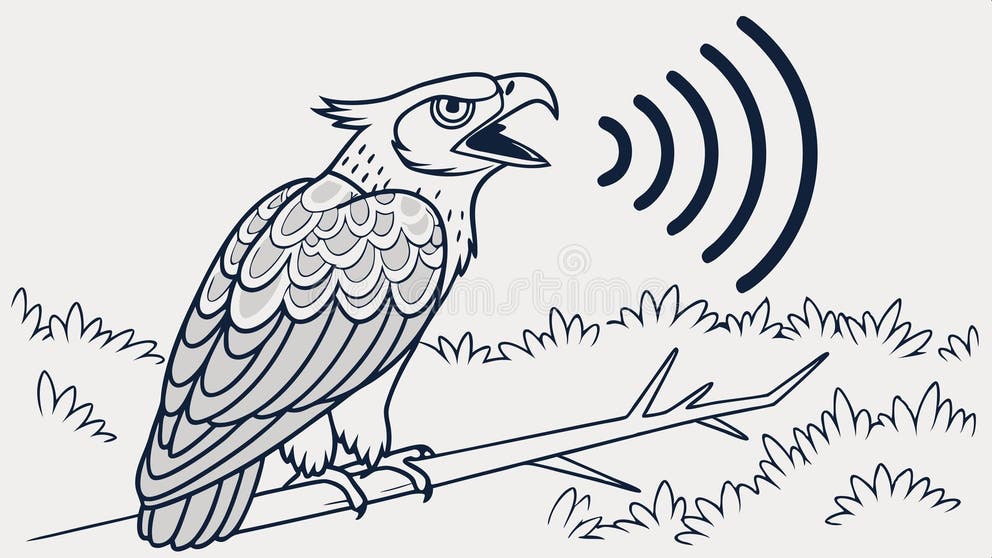
On quiet, moonlit nights, the haunting calls of owls pierce through the stillness, sparking a primal intrigue within us. These enigmatic sounds, both eerie and captivating, have long drawn human fascination, prompting questions about their purpose and complexity. What lies behind these vocalizations that seem to echo wisdom itself? Far beyond mere hoots, owl communication is a sophisticated symphony of auditory signals essential not only for survival but for maintaining intricate social dynamics. Delving into this world reveals the extraordinary science underlying how owls masterfully wield sound to navigate the challenges of their nocturnal lives.
The Acoustic Arsenal: Understanding Owl Vocalizations
Unlike many birds whose daytime songs are melodic and continuous, owls have evolved a diverse range of vocalizations primarily used under the cover of darkness. These sounds include hoots, screeches, whistles, barks, and trills, each with its own distinct function and contextual nuance. While a common perception reduces owl calls to simple “hoot-hoot” motifs, the reality is far more complex. Owls employ a lexicon of sound patterns that convey territory boundaries, attract mates, signal distress, or maintain contact with offspring.
These vocal signals are engineered through precise anatomical adaptations. The syrinx—the avian vocal organ—allows owls to manipulate pitch and tone with remarkable flexibility. Similarly, the resonance chambers within their skulls can modulate frequencies to ensure that their calls penetrate dense foliage or travel over long distances, a vital trait for nocturnal communication where visibility is limited.
Sonic Signaling and Territoriality
One of the most critical reasons owls use sound is to establish and defend territorial claims. Unlike diurnal birds that may use visual displays, owls rely on vocalizations to broadcast their presence and deter intruders. The low-frequency hoots resonate deeply, often carrying for miles in a silent forest, marking an auditory fence that warns rival owls to keep away. This acoustic territoriality not only minimizes physical confrontations but also helps in conserving energy—a precious commodity for these stealthy predators.
Territorial calls are often personalized, revealing the owl’s size, fitness, and species. This nuanced communication discourages unnecessary encounters and fosters a balance within the ecosystem, avoiding aggressive skirmishes that could lead to injury.
Mate Attraction and Courtship Rituals
Beyond territorial disputes, sound is the cornerstone of owl courtship. During breeding seasons, males intensify their vocal output to capture the attention of females. These vocal performances can be complex, involving sequences of hoots and trills interspersed with periods of silence, creating a rhythm that speaks to the owl’s vitality and genetic quality. Females respond selectively, their own vocalizations weaving into an intricate duet that strengthens pair bonds.
Such acoustic exchanges are not mere showmanship; they orchestrate reproductive success. Through these calls, owls assess compatibility, health, and parental potential, ensuring that their offspring inherit the finest traits through careful mate selection mediated by sound.
Parent-Offspring Communication: The Language of Survival
The survival of owl chicks hinges on an effective auditory dialogue between parents and offspring. From the moment of hatching, young owls emit faint begging calls, signaling hunger or distress. These calls prompt parental response—whether delivering food or providing protection. As the owlets mature, this communication evolves, becoming more sophisticated and tailored to varying needs.
Interestingly, parent owls use specific calls to teach fledglings essential survival skills, including hunting techniques and navigation of their environment. This vocal tutelage is not only immediate but imprinted within the very neural pathways of the young, illustrating a powerful blend of instinct and learned behavior transmitted through sound.
The Neurological and Evolutionary Foundations of Owl Vocalization
Owl communication is deeply rooted in evolutionary biology and neuroethology. The neurological circuits controlling vocal production and perception are finely tuned to detect minute variations in pitch, rhythm, and temporal patterns. Such acuity ensures that owls discern between friend and foe, mate and rival, danger and safety—an evolutionary advantage honed over millennia.
The sophistication of their sound system reflects selection pressures unique to nocturnal predation and survival in complex habitats. Owls with clearer, more effective calls not only secure territories and mates more efficiently but also increase their chances of avoiding predators and locating prey. Thus, vocal communication is intertwined with owls’ adaptive success, shaping their evolution as stealthy, nocturnal hunters.
The Mystique of Owl Sound Perception and Human Fascination
Why do owl calls captivate us so profoundly? Part of the answer lies in the intrinsic qualities of their sounds—deep, resonant, and evocative of mystery and ancient wisdom. Humans are hardwired to respond emotionally to auditory cues, and owl vocalizations trigger responses ranging from awe to unease, evoking myths and cultural symbolism worldwide.
Moreover, scientific interest in owl communication continues to reveal intricacies that challenge simplistic assumptions. The layering of calls, the modulation of sounds based on environmental conditions, and the social dynamics encoded in their vocal exchanges all invite us to rethink animal communication as a rich, complex system. This ongoing exploration fuels our fascination, as we seek to decode the language sung in the night.
Technological Advances in Owl Communication Research
Recent developments in bioacoustics and recording technologies have revolutionized the study of owl communication. High-fidelity audio capture, combined with AI-driven analysis, enables researchers to parse owl vocalizations in unprecedented detail. These tools reveal subtle variations and patterns that were previously undetected, providing deeper insights into the functions and meanings embedded within their calls.
Such advancements empower conservation efforts by identifying critical habitats and monitoring populations through their acoustic signatures. Understanding owl communication is therefore not only a scientific pursuit but a practical necessity for preserving these extraordinary birds amid environmental changes.
Conclusion: The Soundtrack of Survival
Owl communication through sound is an extraordinary testament to nature’s ingenuity. What may initially seem like simple, haunting calls are in fact intricate signals woven into the fabric of their survival strategy. From demarcating territories and wooing mates to nurturing offspring and avoiding danger, sound is the invisible lifeline connecting owls to their world.
In listening closely to their nocturnal chorus, we glimpse a profound narrative of adaptation, evolution, and connection—a narrative that continues to inspire wonder and deepen our understanding of the natural world. It is a reminder that even in silence, the language of survival reverberates powerfully through the night air.