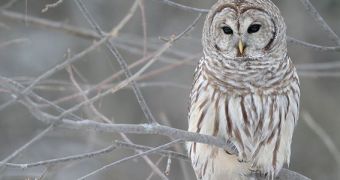
Have you ever wondered if the haunting calls echoing through the dense forests of the Pacific Northwest are at risk of becoming an ancient whisper lost to time? Spotted Owls, those enigmatic sentinels of the night, face an arduous battle for survival that calls for our unwavering attention and action. But what if the simple question of how to protect them unveils a labyrinth of ecological intricacies and conservation conundrums? This challenge beckons us to delve deep into the fragile interplay of habitat preservation, species competition, and human impact.
Understanding the Ecological Role of Spotted Owls
Before embarking on strategies to safeguard Spotted Owls, it’s vital to appreciate their ecological significance. These nocturnal raptors are more than just forest inhabitants; they serve as key indicators of old-growth forest health. Their preference for sprawling canopies and multilayered vegetation means that their wellbeing mirrors broader ecosystem integrity. Consequently, protecting Spotted Owls is akin to preserving an entire web of flora and fauna that depend on ancient woodlands.
Spotted Owls are at the apex of their ecological niche, preying on small mammals and arthropods, thereby maintaining balanced populations and preventing overgrazing of the forest understory. Their presence encapsulates a thriving forest biome, making them indispensable to biodiversity. To neglect their plight is to imperil countless other species intertwined within the same habitat.
The Looming Threat of Barred Owls
Imagine sharing your home with an intrusive neighbor who disrupts the delicate harmony of your life. Such is the predicament Spotted Owls face with the encroachment of Barred Owls. Originally native to eastern North America, Barred Owls have expanded their range westward, invading the Pacific Northwest and outcompeting Spotted Owls for territory and resources.
Barred Owls are larger, more aggressive, and possess a broader dietary palate, allowing them to dominate prime habitat areas and diminish Spotted Owl populations through competition and even direct predation. This biological invasion has become a vexing obstacle to conservationists, as mitigating their impact without causing further disruption proves exceedingly complex.
Preserving and Restoring Old-Growth Forests
The cornerstone of Spotted Owl conservation lies in safeguarding and rejuvenating old-growth forests. These ancient woodlands, characterized by towering trees, rich biodiversity, and complex canopy structures, provide essential nesting and hunting grounds. However, decades of logging, land development, and wildfires have drastically reduced these habitats, fragmenting the landscape into isolated pockets.
Combatting habitat destruction demands a multifaceted approach: enforcing stricter logging regulations, promoting sustainable forestry practices, and prioritizing reforestation initiatives. Restoring connectivity between fragmented habitats creates ecological corridors, enabling Spotted Owls to traverse and colonize larger territories with reduced risks. Land stewardship programs involving indigenous groups and local communities further invigorate conservation efforts by blending traditional ecological knowledge with modern science.
Implementing Targeted Management of Barred Owl Populations
Conservation strategies must confront the Barred Owl challenge head-on. Experimental removal programs have been initiated to control Barred Owl numbers in critical Spotted Owl habitats. Though ethically contentious, selective culling has demonstrated promising results in bolstering Spotted Owl survival rates. Alternatives such as habitat modification to favor Spotted Owls or reproductive interference techniques are under research but remain in early stages.
Effective management requires continuous monitoring and adaptive policies, ensuring interventions are both humane and efficacious. Engaging public discourse about these measures is equally important, as education fosters community support and dispels misconceptions surrounding predator control.
The Role of Policy and Legal Protection
Robust legal frameworks form the backbone of conservation success. The Endangered Species Act and regional protections have historically provided safeguards for Spotted Owls, restricting disruptive activities within critical habitats. However, evolving environmental pressures necessitate dynamic policy updates to address emerging threats, such as climate change and invasive species proliferation.
Increased funding for habitat acquisition, research, and enforcement amplifies conservation efficacy. Collaborative governance involving federal, state, and tribal entities can harmonize efforts across jurisdictional boundaries, promoting cohesive and comprehensive protection programs.
Engaging Communities and Fostering Environmental Stewardship
At the heart of enduring protection lies community engagement. When local inhabitants recognize the intrinsic and extrinsic value of Spotted Owls, their advocacy becomes a powerful conservation catalyst. Educational campaigns that illuminate the owl’s nocturnal mystique, ecological importance, and perilous status cultivate a sense of stewardship among diverse audiences.
Citizen science projects, such as monitoring owl populations or reporting sightings, democratize conservation by inviting public participation. Moreover, ecotourism centered around Spotted Owls can economically incentivize habitat preservation, intertwining ecological welfare with sustainable livelihoods. This grassroots momentum often propels policy changes and secures long-term habitat security.
Adapting to Climate Change and Future Challenges
As climate patterns shift unpredictably, so too will the habitats and survival prospects of Spotted Owls. Increased droughts, altered precipitation regimes, and heightened wildfire risks threaten to reshape forest dynamics irrevocably. Conservation strategies must therefore incorporate climate resilience, emphasizing habitat diversity, fire management, and ecosystem adaptability.
Predictive modeling assists in identifying potential refugia and prioritizing areas for protection that will remain suitable under future climate scenarios. Cross-disciplinary collaborations integrating climatology, ecology, and social science enhance our capacity to anticipate challenges and craft innovative solutions.
Conclusion: Every Voice and Action Counts
Protecting Spotted Owls in the Pacific Northwest is no mere conservation checkbox; it is a profound commitment to preserving a natural legacy imbued with ecological complexity and cultural significance. While Barred Owls and habitat degradation pose formidable threats, a tapestry of strategies—rooted in science, policy, and community engagement—unfolds pathways to resilience and recovery. The question remains: will we answer the call with the resolve and imagination required, or let these majestic creatures slip into silent twilight? The forest speaks, and it invites us to listen, act, and safeguard its most mysterious inhabitants.