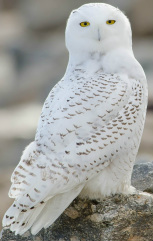
The Arctic tundra is a realm of stark beauty and relentless survival, where every creature plays a role in the delicate balance of life. Among these, the snowy owl stands as a silent sentinel, its piercing gaze surveying the frozen expanse with regal authority. Yet, this majestic predator does not exist in isolation. Its presence ripples through the ecosystem, shaping the lives of both Arctic foxes and wolves in ways both subtle and profound. To understand the true impact of snowy owls on these populations is to unravel a tapestry of predation, competition, and coexistence—each thread woven with the threads of survival itself.
The Predatory Dominance of Snowy Owls: A Force of Nature
The snowy owl, with its snowy plumage and piercing yellow eyes, is a master of the Arctic skies. Unlike many predators that rely on stealth or speed, the snowy owl hunts with a calculated precision, its keen vision piercing through the Arctic’s endless white. Its diet is diverse, but it shares a significant overlap with both Arctic foxes and wolves, particularly in the realm of lemmings—the primary prey for all three species. When lemming populations boom, snowy owls thrive, their numbers swelling in response. This abundance, however, does not come without consequence.
The owl’s hunting prowess means that when lemmings are plentiful, fewer are left for the Arctic fox and the wolf. The fox, a cunning opportunist, must adapt by shifting its diet to include birds, eggs, or even carrion. The wolf, though less directly affected, finds its own prey—such as ground-nesting birds—competing with the owl for resources. The owl’s dominance in these moments is undeniable, yet it is a dominance that ebbs and flows with the rhythms of the Arctic’s cyclical abundance.
Competition in the Frozen Wastes: The Battle for Survival
Competition in the Arctic is not a gentle affair. It is a brutal, unyielding struggle where only the most adaptable survive. The snowy owl, with its superior aerial hunting abilities, often claims the choicest lemming territories, leaving the Arctic fox to scavenge the scraps. This dynamic forces the fox into a precarious existence, where it must rely on its wits to outmaneuver both owl and wolf. The fox’s survival hinges on its ability to exploit alternative food sources, such as ptarmigans or even the eggs of ground-nesting birds—prey that the owl may overlook in its relentless pursuit of lemmings.
For the wolf, competition is less direct but no less impactful. Wolves, as apex predators, do not typically compete with owls for food. However, when owl populations surge, the resulting pressure on lemming populations can indirectly affect the wolf’s primary prey, such as Arctic hares or muskoxen. The owl’s presence, therefore, acts as a catalyst, altering the entire food web in ways that ripple outward, touching even the largest of Arctic predators.
The Ripple Effect: How Owls Shape the Arctic Ecosystem
The impact of snowy owls extends far beyond the immediate competition for food. Their presence influences the behavior and distribution of both Arctic foxes and wolves, creating a cascade of ecological effects. For instance, when snowy owls are abundant, Arctic foxes may alter their hunting grounds, avoiding areas where owl activity is high. This spatial avoidance can lead to overgrazing in certain regions, as foxes concentrate their efforts in less optimal territories. The result is a shift in plant communities, which in turn affects herbivores like lemmings and hares.
Wolves, too, are not immune to these shifts. While they do not directly compete with owls, the owl’s influence on lemming populations can lead to changes in the abundance of other prey species. For example, if lemmings become scarce due to owl predation, wolves may turn their attention to alternative prey, such as ground squirrels or even the young of larger herbivores. This adaptability is a testament to the interconnectedness of the Arctic ecosystem, where every predator and prey species is a thread in a larger, ever-shifting tapestry.
Survival Strategies: Adaptation in a Harsh World
In the face of such relentless competition, both Arctic foxes and wolves have developed remarkable survival strategies. The Arctic fox, with its keen senses and opportunistic nature, has evolved to exploit a wide range of food sources. It is a master of scavenging, often stealing kills from other predators or feeding on carrion left behind by wolves. Its ability to cache food for later use is another testament to its adaptability, ensuring survival even in the leanest of times.
The wolf, on the other hand, relies on its strength and social structure to overcome the challenges posed by owl-induced prey scarcity. Wolves are pack animals, and their cooperative hunting strategies allow them to take down larger prey, such as muskoxen or caribou, which are less affected by owl predation. Additionally, wolves are highly territorial, and their presence can deter other predators, including foxes, from encroaching on their hunting grounds. This territoriality ensures that wolves maintain a stable food supply, even in the face of fluctuating prey populations.
The Delicate Balance: Predators and Prey in the Arctic
The relationship between snowy owls, Arctic foxes, and wolves is a delicate dance, one that is finely tuned to the rhythms of the Arctic’s cyclical abundance. When lemming populations are high, owls thrive, and the pressure on foxes and wolves intensifies. Yet, when lemming numbers crash, owls face their own struggles, and the balance shifts once more. This cyclical nature is a reminder of the fragility of Arctic ecosystems, where the fate of one species is inextricably linked to the fate of another.
For the Arctic fox, these cycles are a constant reminder of the need for adaptability. Its survival depends on its ability to pivot quickly, shifting its diet and hunting strategies to match the ever-changing availability of prey. For the wolf, the cycles are less immediately impactful, but they still play a role in shaping the distribution and behavior of its prey. Together, these three species—each a master of its own domain—create a dynamic ecosystem that is as resilient as it is fragile.
Conclusion: The Unseen Threads of the Arctic Web
The impact of snowy owls on Arctic fox and wolf populations is a story of competition, adaptation, and coexistence. It is a story of how one predator’s dominance can ripple through an entire ecosystem, shaping the lives of others in ways both subtle and profound. Yet, it is also a story of resilience, of how even the most relentless pressures can be met with ingenuity and adaptability. In the frozen wastes of the Arctic, survival is not a given—it is a triumph, and every creature, from the snowy owl to the Arctic fox to the wolf, plays a vital role in the grand tapestry of life.