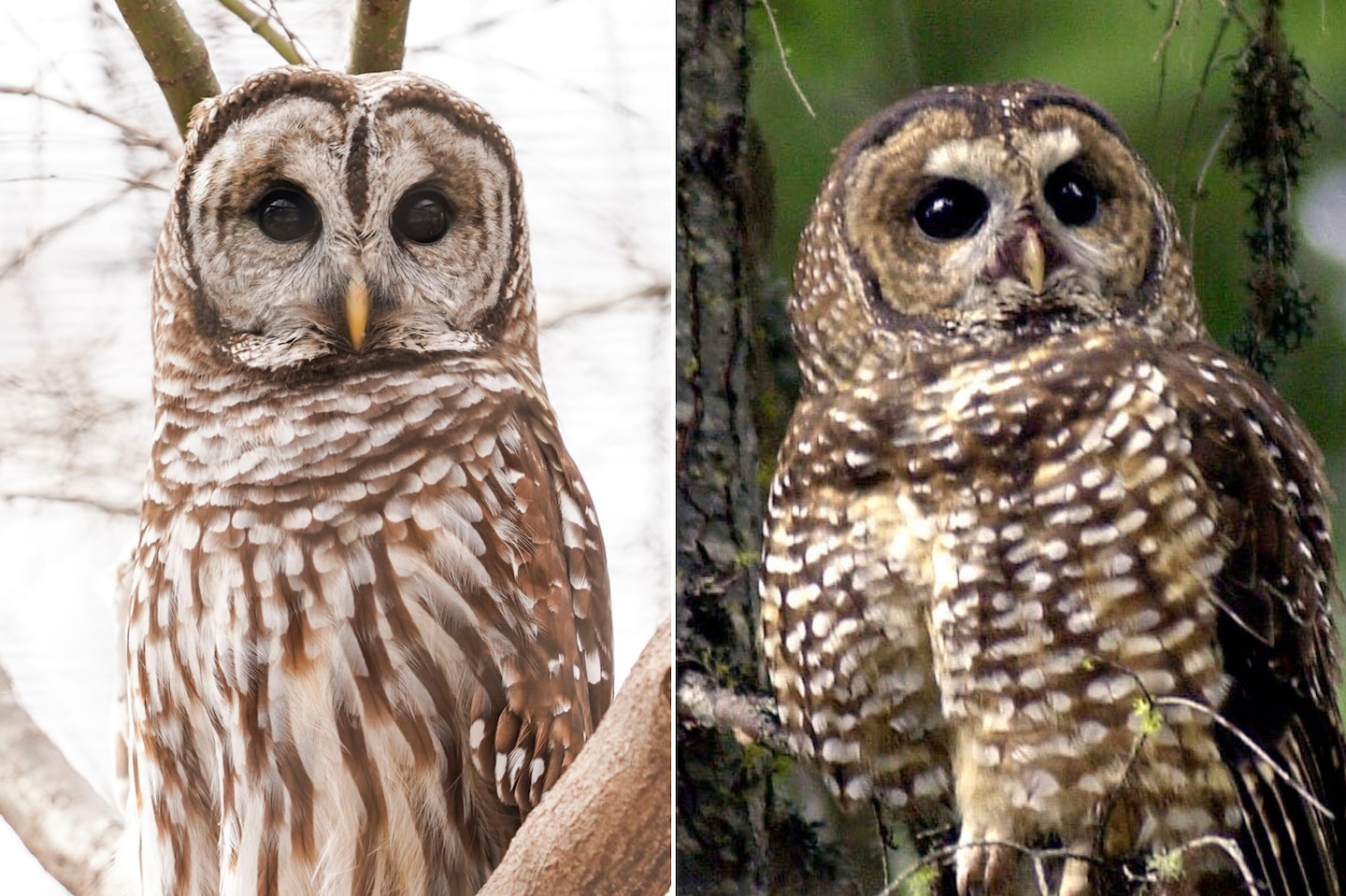
In the grand theater of old-growth forests, where shadows weave through towering conifers like whispered secrets, a quiet yet profound struggle unfolds. The barred owl, a spectral interloper with a booming voice and voracious appetite, has encroached upon the ancestral stomping grounds of the spotted owl, a creature as enigmatic as the twilight itself. This unspoken contest for dominion charts a new chapter in the narrative of territoriality, survival, and ecological upheaval. Delving into the impact of barred owls on the territorial behavior of spotted owls reveals a poignant saga of adaptation, competition, and the fragile balance that holds an ecosystem together.
The Territorial Web: Spotted Owls’ Ancestral Realm
Spotted owls have long been regarded as the enigmatic custodians of the Pacific Northwest’s ancient forests. Their territories are intricately mapped out like a mosaic of whispered boundaries — each calling site, nesting area, and hunting ground bearing significance far beyond mere geography. These territorial boundaries are more than lines on a map; they are the spirits of coexistence, honed over millennia. Owls establish their dominion with a delicate combination of vocalization, physical presence, and nocturnal patrols, all functioning as a harmonious symphony that maintains the forest’s equilibrium.
Within these wooded cathedrals, spotted owls are masters of stealth and precision, with their dark plumage and silent flight perfectly calibrated to the dusk’s hush. Their territorial behavior is a finely tuned ballet of interspersed calls and subtle displays, signaling occupancy without precipitating unnecessary conflict. This avoidance of direct confrontation underscores an evolved strategy to preserve energy and reduce injury, allowing the species to thrive in a tightly interlaced ecological network.
The Barred Owl: A New Protagonist in a Changing Forest
Enter the barred owl, a robust and vociferous character, whose range has dramatically expanded westward over the past century. With their bold markings and larger size, barred owls are ecological bulldozers—unabashedly occupying territories long claimed by spotted owls and reshaping the local avian theater. Unlike the furtive spotted owls, barred owls possess a commanding presence, their resonant hoots echoing through the canopy like thunderclaps announcing a new regime.
This species’ remarkable adaptability—to diverse forest types, fragmented habitats, and a broader prey base—renders them formidable competitors. Their aggressive territorial behavior contrasts sharply with the spotted owl’s subtlety. Barred owls frequently displace spotted owls by direct confrontation, vocal dominance, and even aggressive encounters that lead to the exclusion of the spotted owls from their historical ranges.
Displacement and Its Consequences on Territorial Dynamics
The incursion of barred owls precipitates a profound shift in the territorial dynamics of spotted owls, fracturing the ecological boundaries once so steadfast. With barred owls usurping prime habitat, spotted owls are forced into peripheral or degraded territories, resulting in a cascade of behavioral changes. The once steady rhythm of territorial calls becomes sporadic, attempts at territorial defense weaken, and the intricate dance of spatial use becomes increasingly disjointed.
Such spatial displacement is not merely a matter of changing locations; it disrupts critical life processes. Restricted to less suitable habitats, spotted owls face diminished food availability, increased predation risk, and fragmented nesting opportunities. The energetic costs of repeated territorial contests increase. Territorial fidelity erodes as individuals disperse more frequently, exacerbating population instability. The fabric of their territorial system, once resilient, begins to fray under this relentless pressure.
The Silent War: Behavioral Adaptations Amidst Competition
Spotted owls exhibit a quiet resilience in response to barred owl encroachment, embodying a saga of subtle, often overlooked adaptation. Behavioral shifts manifest in modified vocalizations, altered activity patterns, and nuanced changes in territorial boundaries. Some spotted owls attempt to coexist in immediate proximity to barred owls by adjusting their calling frequency and timing, aiming to avoid direct acoustic overlap—a strategic retreat into temporal niches.
This acoustic partitioning illustrates the complexity of interspecific interactions in a densely layered ecosystem. However, such adaptations often provide only temporary reprieve. Increased stress and energy expenditure in maintaining or re-establishing territories under threat mean reduced reproductive success and survival rates. The evolutionary tightrope walked by the spotted owl underscores the relentless challenges posed by a competitor that does not fret over diplomatic boundaries but rather bulldozes through them.
Ecological Ramifications: Beyond the Owls Themselves
The territorial upheaval between barred and spotted owls reverberates through the broader ecosystem. Spotted owls are apex nocturnal predators, and their territory delineation influences prey populations, forest health, and biodiversity. Their displacement alters predator-prey dynamics, potentially allowing barred owls’ different hunting patterns to cascade into shifts in species composition and forest structure.
Moreover, the increasing dominance of barred owls heralds a homogenization of avian predator communities—diminishing the ecological uniqueness that spotted owls represent. This biotic simplification reduces the adaptive resilience of forests, diminishing their ability to withstand environmental perturbations such as climate change and habitat fragmentation. The stakes extend far beyond territorial squabbles, affecting the very foundation of these temperate rainforest ecosystems.
Conservation Implications: Navigating Complexity to Preserve Balance
The complex interplay of territorial behavior between barred and spotted owls challenges conservationists to devise nuanced strategies that transcend simplistic solutions. Recognizing the integral role of territoriality in spotted owl ecology is paramount in making informed management decisions. Efforts to control barred owl populations aim to reclaim territories and restore the ecological balance but raise ethical and ecological quandaries, underscoring the urgency of adaptive, science-driven approaches.
Conservation thus becomes a chess game of calculated maneuvers—balancing habitat protection, species management, and ecosystem restoration. Safeguarding spotted owl territories means preserving the forest mosaics that shaped millennia of evolutionary heritage while navigating the inexorable shifts brought by species displacement. Restoration initiatives increasingly focus on fostering habitat connectivity and complexity, offering spotted owls spatial refuges where their territorial behaviors can revive and flourish.
A Metaphor for the Anthropocene: The Owls’ Territorial Dance
The territorial conflict between barred and spotted owls unfolds as a metaphor for the Anthropocene epoch—a world where boundaries are blurred, and ancient balances disrupted by change, both natural and human-induced. The barred owl’s rise tells of adaptability and opportunism; the spotted owl’s plight speaks to vulnerability and the precariousness of specialization. Their territorial dance becomes a poignant allegory for coexistence, competition, and the perennial negotiation between persistence and transformation.
In the hushed stillness of the forest night, their calls intertwine as a melancholic duet, echoing the complex symphony of life under threat and the indomitable will to endure. Each boundary challenged, each territory lost or reclaimed, encapsulates a narrative of not just two species—but of an entire ecosystem’s resilience striving against the headwinds of change.