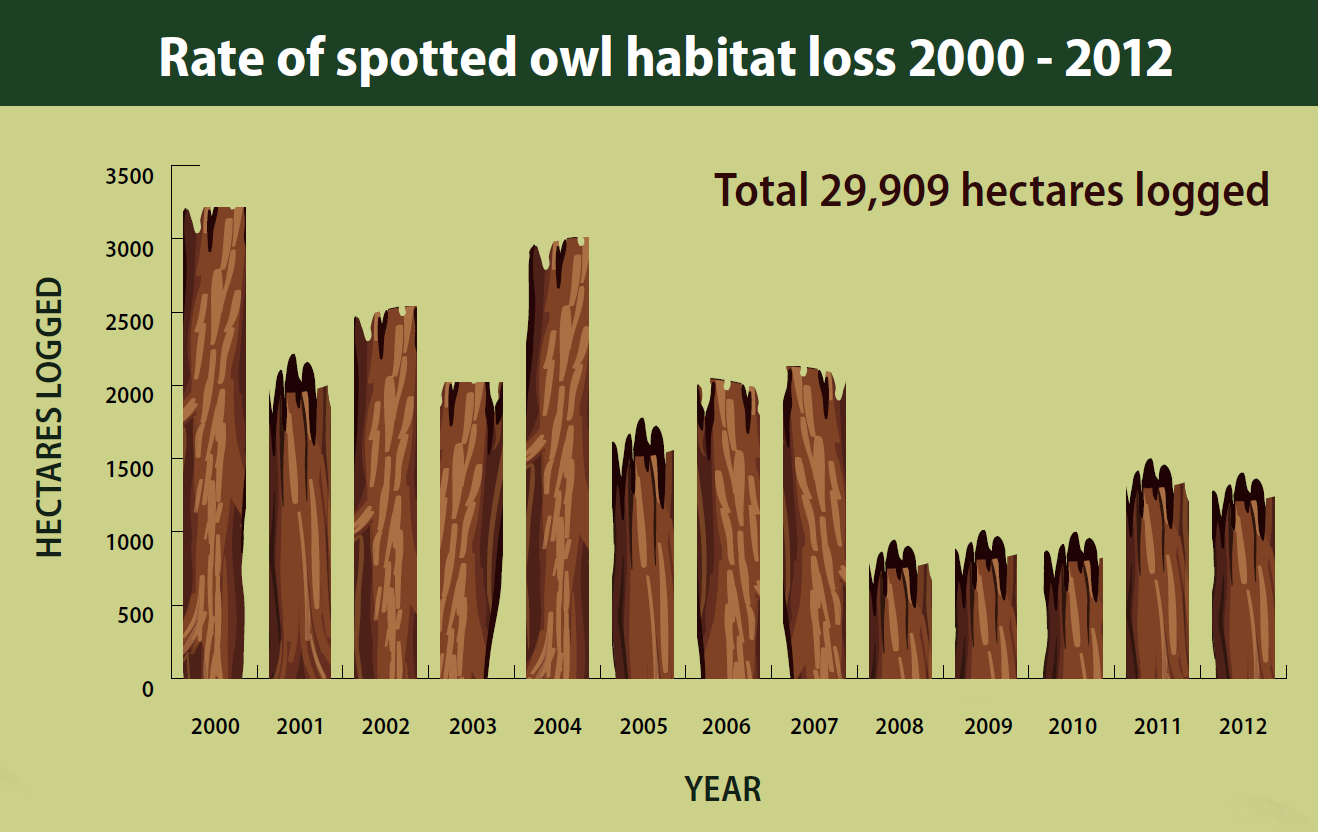
Few creatures capture the imagination quite like the spotted owl. Its haunting calls echo through ancient forests, stirring a potent blend of awe and concern in those who venture into its realm. Yet, beneath its enigmatic presence lies a tragic narrative — one of precipitous decline and fragile survival. The story of the spotted owl’s population loss is not simply a chronicle of ecological misfortune, but a profound reflection on humanity’s relationship with the wild. This intricate timeline unravels the forces that have shaped the fate of this iconic sentinel of the forest, inviting us to ponder the deeper reasons for our enduring fascination and urgent responsibility.
The Emergence of an Iconic Species
Long before conservationists and scientists turned their gaze towards the spotted owl, these elusive birds thrived in the shaded labyrinths of old-growth forests along the Pacific Northwest. Their mottled plumage and piercing amber eyes made them masters of camouflage, evoking a spectral presence amid towering firs and cedars. The spotted owl became synonymous with wilderness itself — a symbol of pristine ecosystems untouched by industrial hands. Their life history intertwined with the ecological complexities of their habitat, dependent on dense canopy cover and interconnected forest layers that fostered abundant prey populations.
Early Signs of Vulnerability
The latter half of the 20th century illuminated stark vulnerabilities in the spotted owl’s existence. As logging industries expanded aggressively, large swathes of old-growth forests were decimated, fracturing the continuous habitat vital for the owl’s hunting and nesting. Initial population surveys during the 1970s and 1980s revealed troubling declines, yet these signals were initially dismissed or downplayed amid competing economic priorities. The spotted owl was beginning to become more than a mere forest inhabitant; it was a living gauge of environmental health, sensitive to subtle yet pervasive changes in its surroundings.
The 1990s: A Decade of Dramatic Decline
By the 1990s, the plight of the spotted owl galvanized widespread attention. The bird’s numbers had plummeted, with some estimates showing up to a 60% decrease in certain regions. Protecting the species became a fulcrum of heated political and cultural debates. Landmark legal battles ensued, forcing logging operations to halt in critical habitats and sparking conservation initiatives often at odds with local economies reliant on timber. This decade marked the transition of the spotted owl from a disappearing wild presence to a symbol of environmental conflict — a prism through which broader questions about sustainability and stewardship were debated.
Invasive Competition: The Barred Owl Factor
The narrative of decline gained complexity with the unforeseen intrusion of the barred owl, a species native to Eastern North America but gradually expanding westward. The barred owl, more adaptable and aggressive, began competing directly with the spotted owl for territory and resources. This inter-species rivalry exacerbated the fragile condition of the spotted owl population, disrupting breeding patterns and compounding the pressures from habitat loss. Conservationists faced a daunting challenge: addressing not just habitat preservation, but also the dynamics of species invasion and the cascading effects upon native biodiversity.
Conservation Efforts and Their Struggles
Concerted conservation measures were implemented with a blend of legislative action and habitat restoration efforts. National forests designated key protected areas, while scientists pioneered research into spotted owl ecology and population dynamics. Nevertheless, these initiatives encountered numerous obstacles, from funding limitations to socio-political resistance. The owl’s population decline slowed but did not reverse decisively, underscoring the complex interplay of ecological, economic, and cultural factors. This period highlighted the sobering reality that conservation is seldom linear or straightforward — progress often unfolds amid setbacks and uncertainty.
The Early 21st Century: Emerging Hope and Persistent Challenges
In recent decades, refined research methodologies, such as genetic studies and telemetry tracking, have deepened understanding of the spotted owl’s life cycle and threats. Collaborative partnerships between governments, indigenous communities, and environmental organizations have produced innovative conservation models emphasizing ecosystem-level protection rather than single-species focus. However, the shadow of climate change looms large, altering forest structures and prey distribution, further complicating recovery efforts. The spotted owl’s tale continues to evolve — a poignant emblem of resilience and fragility coexisting in a rapidly transforming world.
Why the Spotted Owl Continues to Captivate
The fascination with the spotted owl extends beyond its ecological significance. This bird resonates as a cultural icon representing wilderness’s mysterious and vanishing aspects. Its nocturnal calls, often described as mournful or haunting, evoke an emotional chord connected to deeper existential anxieties about loss, impermanence, and human impact on the natural world. The spotted owl’s decline is not merely a statistic but a narrative laden with symbolism — a reminder of beauty shadowed by vulnerability, and of a planet where the actions of one species reverberate profoundly through many others.
Conclusion: The Spotted Owl as a Call to Action
The timeline of the spotted owl’s population decline serves as a compelling chronicle of ecological fragility and human influence. Its story beckons us to reflect on the intertwined fates of species and forests, of economic ambitions and ecological ethics. Beyond scientific metrics and policy debates, the spotted owl remains a powerful muse, inspiring advocacy, awareness, and a deeper respect for the ancient forests it calls home. Protecting this emblematic creature is more than conservation; it is an act of honoring the intrinsic value of wilderness and safeguarding the enigma of life that still thrives in the shadows.