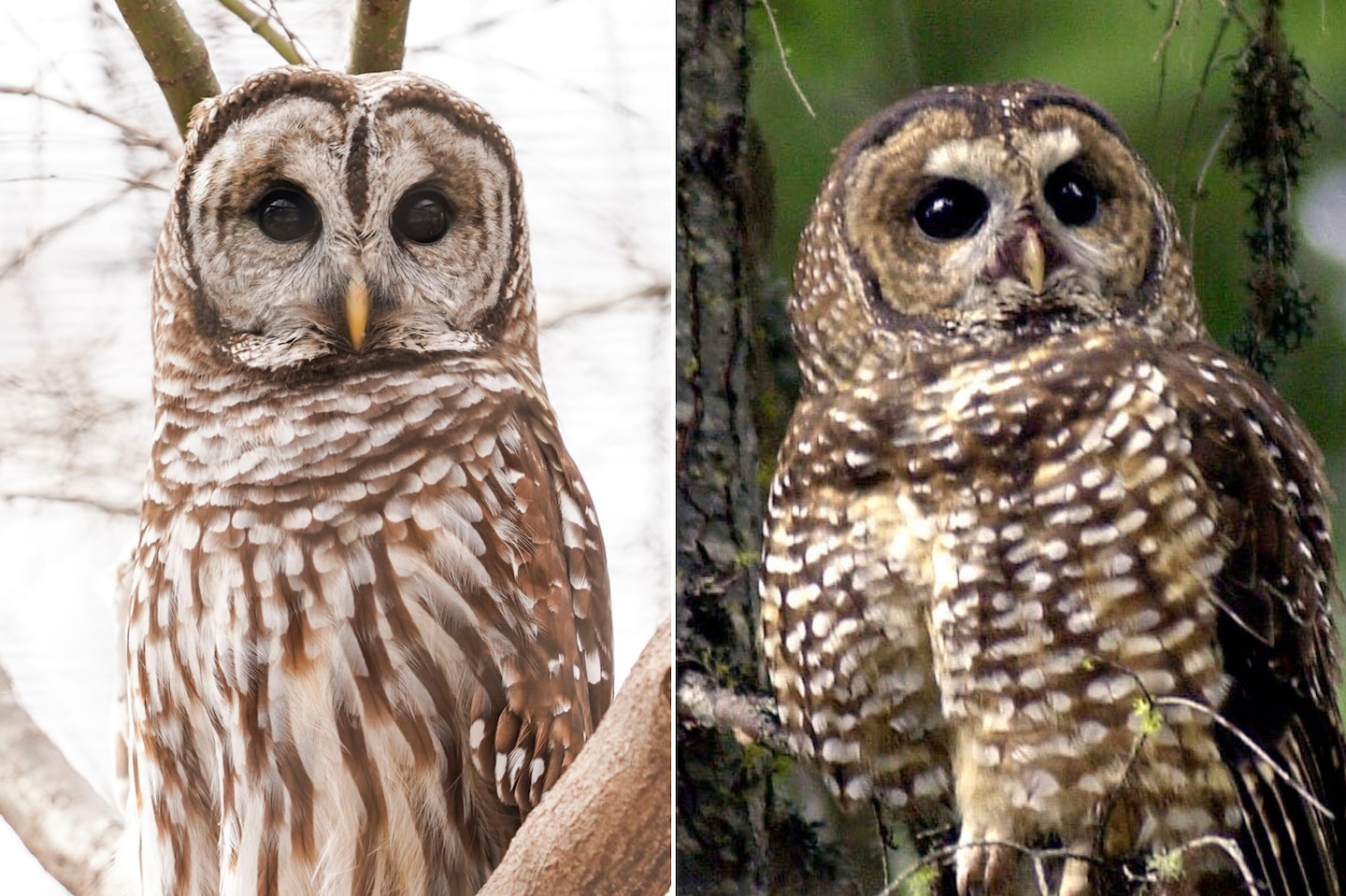
Have you ever wondered what happens when two fierce competitors share the same stage, and one silently but surely begins to dominate? The story of barred owls and spotted owls is not merely a tale of two avian species; it’s a dramatic saga of survival, dominance, and adaptation. At first glance, the barred owl might seem like just another forest dweller, but beneath its calm facade lies a relentless competitor that poses a significant challenge to the spotted owl’s existence. What exactly gives the barred owl this edge? Let’s delve into the intricacies of their rivalry, focusing on aggression, adaptability, and dietary strategies that tip the scales in favor of the barred owl.
The Subtle Dance of Aggression: How Barred Owls Assert Dominance
It may seem counterintuitive that aggression, often perceived as brute force, could manifest in such nuanced ways among owls. Barred owls exhibit a spectrum of assertive behaviors that enable them to commandeer prime habitats and resources. Far from mere physical confrontations, this aggression is often territorial and vocal, creating an acoustic dominance that can displace spotted owls. Their calls are robust and frequent, signaling occupancy and warding off intruders through intimidation rather than prolonged conflict.
Territorial aggression extends beyond vocalizations. Barred owls demonstrate a fearless disposition toward confrontations, sometimes engaging in direct encounters that result in the physical exclusion of spotted owls. This boldness stems from their confidence in numbers and resilience, emboldening them to occupy coveted nesting sites even in areas traditionally dominated by spotted owls. The willingness to challenge and physically displace the spotted owl is a crucial ingredient in barred owls’ ascendancy.
Adaptability Unleashed: Thriving Amidst Change
Adaptability is the hallmark of a species poised for survival in an ever-shifting landscape. Barred owls exemplify ecological versatility; they thrive in an array of habitats ranging from dense old-growth forests to fragmented woodlands and even suburban fringes. This plasticity starkly contrasts with the more specialized habitat requirements of the spotted owl, which prefers undisturbed old-growth forests with specific canopy structures and microclimates.
This adaptability translates not only into habitat choice but also into temporal flexibility. Barred owls can adjust their activity patterns and breeding timing to capitalize on resources and avoid direct competition when possible. Their ability to exploit secondary forests and tolerate human-altered landscapes widens their geographic footprint and buffers them against environmental fluctuations that would otherwise hobble more specialized species.
By embracing a generalist lifestyle, barred owls circumvent resource bottlenecks that constrain spotted owls, enabling them to colonize territories that were once less accessible. This broad niche repertoire effectively crowds out the spotted owl from prime habitats, creating a formidable barrier to its recovery.
Dietary Dominance: A Smorgasbord of Opportunity
When it comes to sustenance, the barred owl is akin to an opportunistic gourmand, indulging in a diverse menu that spans mammals, birds, amphibians, reptiles, and even invertebrates. This dietary breadth confers a significant advantage, enabling barred owls to exploit a wide range of prey depending on availability and season. Their keen hunting prowess and versatility mean they are seldom left without a meal, maintaining robust health and breeding success.
In contrast, the spotted owl exhibits a predilection for certain small mammals, such as northern flying squirrels and wood rats, which are intricately tied to old-growth forest ecosystems. This dietary specialization renders them vulnerable to prey scarcity and habitat degradation. As barred owls encroach upon their territories, they not only compete for these shared prey items but also monopolize alternative food sources that could have served as dietary buffers for spotted owls.
Moreover, the barred owl’s varied diet allows it to adjust its foraging tactics and timing, hunting both nocturnally and at twilight, and from diverse perches or even the ground. This adaptability in feeding behavior ensures a more consistent energy intake and reproductive output, perpetuating their numerical advantage over the spotted owl.
The Cumulative Weight of Competition: More Than Meets the Eye
The interplay of aggression, adaptability, and diet creates a multifaceted advantage for barred owls, weaving a complex web of competitive pressure that the spotted owl struggles to unravel. It’s not simply that barred owls are more aggressive, or more adaptable, or have a broader diet—it is the synergistic confluence of these traits that fuels their ascendancy.
The farther-reaching impact of barred owl dominance extends beyond mere numbers. It disrupts spotted owl reproductive success, alters behavioral patterns, and shifts ecosystem dynamics. The gradual but persistent usurpation of territory by barred owls represents a profound ecological challenge, necessitating difficult management decisions and conservation strategies.
As we witness barred owls expanding their footprint, a playful yet poignant question emerges: In the grand theatre of nature, can one species always outmaneuver another, or will the resilient spotted owl find an unexpected route to coexistence? The answer lies in the intricate balance of ecological interactions and our willingness to understand—and perhaps intervene—in these natural contests.