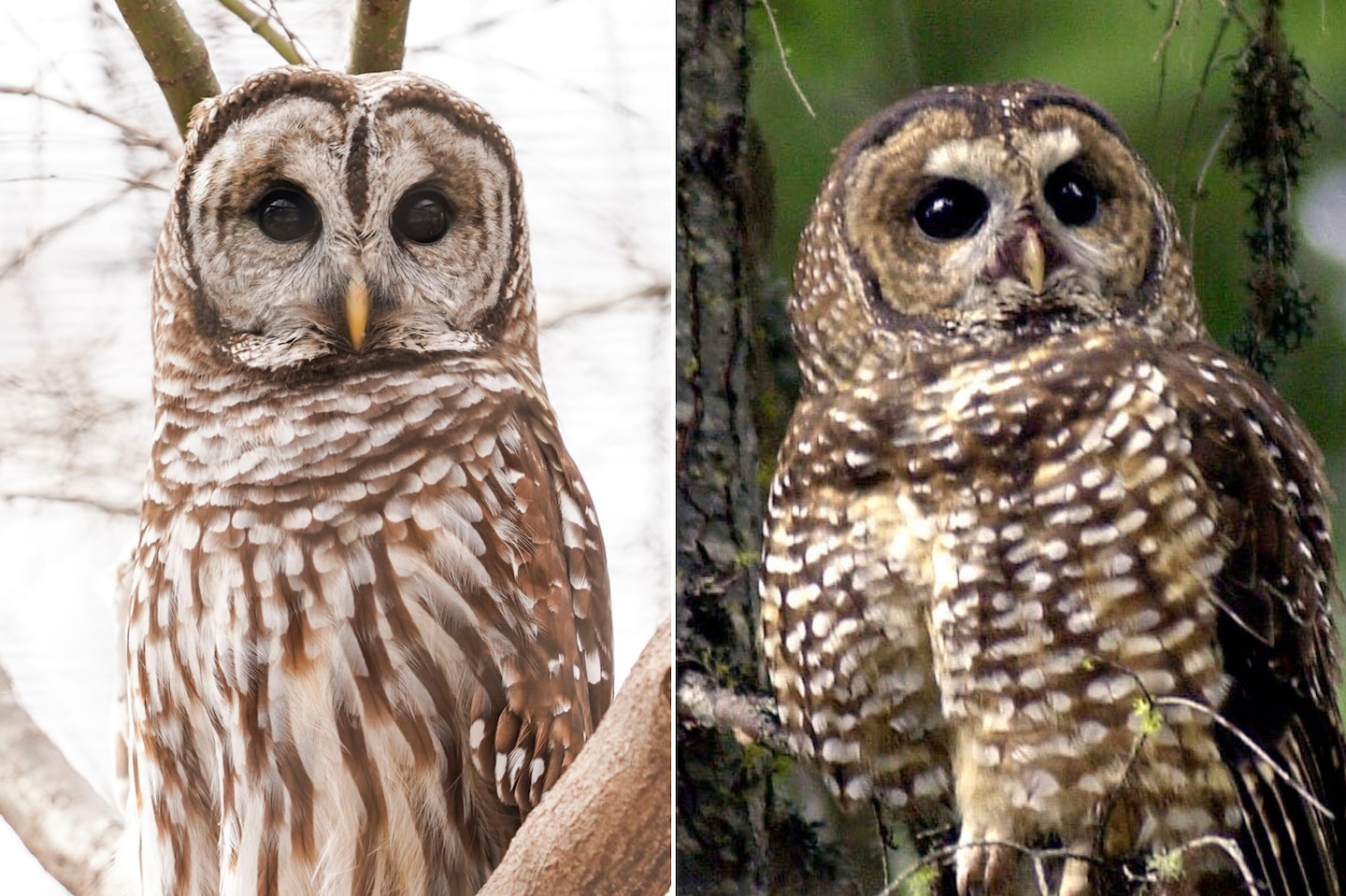
The barred owl, a charismatic and adaptable raptor with a haunting, rhythmic call, has become an unlikely villain in the quiet forests of the Pacific Northwest. Its expanding range, once confined to eastern North America, now encroaches upon the dwindling habitats of the spotted owl, a species so deeply intertwined with the region’s identity that its survival has sparked international debates on conservation ethics, ecological balance, and the very definition of wilderness. This isn’t just a story of two birds—it’s a collision of competing narratives about nature’s future, where the line between preservation and intervention blurs into a moral quandary. As wildlife officials prepare to cull half a million barred owls to “save” the spotted owl, the controversy forces us to confront uncomfortable questions: Can we truly play god with ecosystems? Who gets to decide which species deserves a future? And what does it mean when our efforts to heal the planet inadvertently deepen its wounds?
The Ecological Chessboard: How Two Owls Became Pawns in a Global Game
The barred owl’s migration westward is a tale of climate upheaval and human disruption. Once a denizen of dense eastern forests, it has surged into the Pacific Northwest, its adaptability outpacing that of its spotted cousin. The barred owl thrives in fragmented landscapes, nesting in clear-cuts and suburban edges, while the spotted owl clings to ancient, undisturbed old-growth forests—a habitat increasingly swallowed by logging and wildfire. This isn’t just a local skirmish; it’s a microcosm of a global crisis. As temperatures rise and ecosystems unravel, species are being shoved into new territories, creating a domino effect of competition and displacement. The barred vs. spotted owl debate is, at its core, a stress test for how we respond when nature’s rules are rewritten by our own hands. Do we intervene with surgical precision, or do we step back and let the stronger species claim the stage?
The ecological ripple effects extend far beyond these two birds. The barred owl’s dominance isn’t just a threat to the spotted owl—it’s a symptom of a larger imbalance. Invasive species, once a fringe concern, now dominate conservation agendas worldwide. From the lionfish choking Caribbean reefs to the Burmese python strangling Florida’s Everglades, the story repeats: a newcomer arrives, thrives, and topples the established order. The barred owl is merely the latest chapter in this global saga, forcing scientists to grapple with an uncomfortable truth: conservation isn’t always about saving what’s native—sometimes, it’s about deciding which species get to survive in a world we’ve already altered beyond recognition.
The Moral Labyrinth: When Conservation Becomes a Zero-Sum Game
At the heart of this controversy lies a brutal calculus: one species’ survival often means another’s demise. The U.S. Fish and Wildlife Service’s decision to cull barred owls isn’t just a pragmatic choice—it’s a philosophical one. It forces us to ask whether conservation is inherently hierarchical, where some lives are deemed more valuable than others. The barred owl, after all, is a survivor. It’s adaptable, resilient, even charismatic. The spotted owl, by contrast, is a relic of a vanishing world, its fate tied to the last remnants of old-growth forests. Which deserves our protection more? The answer isn’t just scientific—it’s deeply cultural. The spotted owl has become a symbol of the Pacific Northwest’s wild soul, its image emblazoned on everything from protest signs to coffee mugs. To let it go would feel like surrendering to the forces of homogenization that are flattening the planet’s biodiversity.
Yet the barred owl’s rise isn’t a failure of nature—it’s a testament to its adaptability. In a world where humans have reshaped 75% of the Earth’s land surface, can we really fault a species for taking advantage of the chaos we’ve created? The moral weight of this question is staggering. If we intervene to save the spotted owl, are we playing nature’s game, or are we imposing our own rules? And if we do nothing, are we complicit in the spotted owl’s extinction? This isn’t just a debate about owls; it’s a referendum on our relationship with the natural world. Do we see ourselves as stewards, or as architects of a new, managed wilderness where only the “deserving” survive?
The Policy Paradox: How a Local Conflict Became an International Flashpoint
The barred vs. spotted owl controversy has transcended regional boundaries, morphing into a global case study on wildlife policy. Countries from Australia to Canada are watching closely, their own conservation battles hanging in the balance. In New Zealand, where invasive predators like stoats and rats have devastated native bird populations, the debate rages over whether to cull introduced species to save the endemic kiwi. In Europe, the debate over rewilding—bringing back wolves, bears, and other predators—has sparked similar tensions between ecological restoration and human interests. The barred owl issue is a microcosm of these larger struggles, where the tools of conservation—culling, translocation, habitat restoration—are being tested in real time.
International wildlife policy is at a crossroads. The traditional approach, rooted in the idea of preserving “pristine” ecosystems, is increasingly untenable in a world where no place remains untouched by human influence. The barred owl’s expansion is a reminder that nature isn’t static—it’s dynamic, chaotic, and often brutal. Policymakers are now grappling with how to adapt. Should conservation efforts prioritize native species, even if it means eradicating invaders? Or should they embrace a more fluid approach, where the goal isn’t to freeze ecosystems in time but to manage them in a way that allows for change? The barred owl debate is forcing a reckoning with these questions, pushing us to redefine what conservation even means in the Anthropocene.
The Human Factor: Who Gets to Decide the Fate of the Wild?
Behind the scientific jargon and policy debates, this controversy is deeply human. It’s about the loggers who once relied on old-growth forests for their livelihoods. It’s about the Indigenous communities who see the spotted owl as a cultural touchstone. It’s about the birdwatchers and hikers who flock to the Pacific Northwest’s forests, hoping to catch a glimpse of these elusive raptors. And it’s about the scientists who must make life-and-death decisions with imperfect data. The barred owl cull isn’t just an ecological experiment—it’s a social one, testing the limits of our empathy and our willingness to accept hard choices.
The human dimension extends beyond the Pacific Northwest. In an era where climate change is reshaping habitats at an unprecedented pace, the barred owl issue forces us to confront our own role in the crisis. Are we willing to accept that some species will inevitably decline as others rise? Can we stomach the idea of actively managing ecosystems, even if it means playing executioner? The answers aren’t just technical—they’re moral. They force us to ask who we are as a species: Are we the architects of a new Eden, or are we just another force of nature, reshaping the world in our image?
The Future of the Wild: Can We Reimagine Conservation for the 21st Century?
The barred vs. spotted owl controversy isn’t just a conflict—it’s an opportunity. It’s a chance to rethink conservation for a world where the old rules no longer apply. What if, instead of clinging to the idea of “native” vs. “invasive,” we focused on resilience? What if we accepted that ecosystems are dynamic, and our goal wasn’t to freeze them in time but to ensure they remain vibrant and functional? What if we embraced a more humble approach to conservation, one that acknowledges our limitations and works with nature rather than against it?
The barred owl’s rise is a wake-up call. It’s a reminder that nature doesn’t care about our categories or our plans. It’s a challenge to our assumptions about what conservation should look like in a world we’ve already transformed. And it’s a test of our willingness to adapt—to let go of the idea that we can control every outcome and instead focus on what we can influence. The future of the wild isn’t about saving every species. It’s about ensuring that the planet remains a place where life can thrive, in all its messy, unpredictable glory. The barred owl may be the villain of this story, but it’s also a teacher. And its lesson is this: the wild doesn’t belong to us. It belongs to itself.