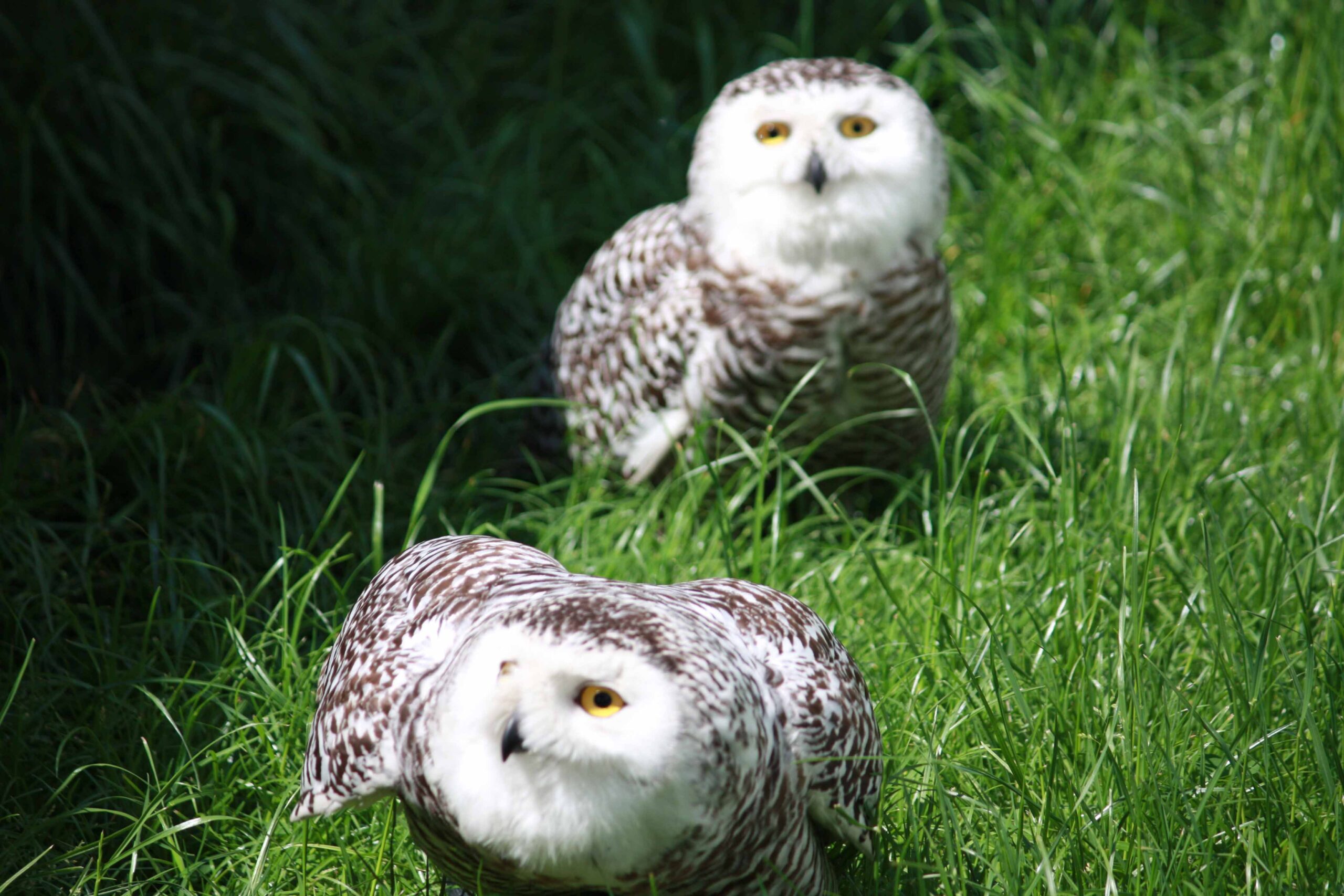
Have you ever wondered how a creature as elusive and enigmatic as the Snowy Owl manages to navigate its vast and often inhospitable Arctic domain? More provocatively, can the silent watch of satellites orbiting hundreds of miles above Earth truly unveil the secrets of such a mystical bird’s sprawling habitat? The challenge here is profound: deciphering the subtle, often imperceptible clues of Snowy Owl ecology from pixelated mosaics of satellite imagery. Yet, this convergence of technology and nature has spawned a revolution in how we understand and protect these regal denizens of the north.
Illuminating the Remote: Why Satellite Imagery Matters for Snowy Owl Mapping
Snowy Owls inhabit some of the most remote and frigid regions on the planet—the Arctic tundra and subarctic zones that elude conventional exploration. Traditional field studies, while invaluable, are often constrained by weather, logistics, and the sheer vastness of the terrain. Satellite imagery circumvents these barriers, offering a vantage point that no human observer can rival. From space, satellites capture extensive tracts of land, providing a synoptic perspective that lays bare the spatial architecture of potential habitats, their changing patterns over time, and even signs of environmental stressors invisible to ground surveys.
The advantage is not merely in breadth but in continuity. Satellites orbit Earth in predictable cycles, delivering recurrent snapshots that enable researchers to monitor habitat dynamics, phenological changes in vegetation, or encroachment from human activity. This relentless gaze permits the detection of subtle fluctuations in habitat suitability—crucial for species as specialized as the Snowy Owl.
Decoding Habitat: Spectral Signatures and Environmental Indicators
At the heart of satellite imagery’s utility lies its ability to capture electromagnetic spectra beyond the visible range. This spectral diversity empowers scientists to infer the presence of specific tundra vegetation types, snow cover extent, and even moisture conditions—parameters intimately tied to the Snowy Owl’s foraging and breeding success. The stark white plumage of the Snowy Owl blends seamlessly with snow and ice, but it is the underlying habitat composition that dictates prey availability, primarily lemmings and other small mammals.
By integrating multispectral and hyperspectral data, researchers can discern vegetative indexes such as NDVI (Normalized Difference Vegetation Index), which reveal the health and biomass of tundra flora. Tracking these environmental signatures allows a sophisticated inference: where vegetation flourishes, so too do the rodents that form the Snowy Owl’s prey base. The owls’ presence thus becomes an indirect reflection of these spectral echoes.
Challenges in Satellite-Aided Habitat Mapping: Resolution and Interpretation
Despite the promise of satellite technology, formidable challenges remain. The spatial resolution of satellite sensors, while ever-improving, still grapples with the fine-scale heterogeneity of tundra habitats. Snowy Owls often nest in localized patches of hummocky terrain or near specific geological features, details that may blur into general landscapes in coarse imagery.
Moreover, interpreting satellite data demands a nuanced approach. Snow cover, for instance, can mask key habitat features, making it difficult to accurately delineate boundaries during the critical breeding season. Temporal mismatches between satellite passes and biological events can further complicate the interpretation. Analytical models must therefore be calibrated with rigorous ground-truthing to avoid erroneous habitat classification.
These challenges underscore an essential truth: satellite imagery is not a panacea but a powerful adjunct—a tool that must be wielded with expertise and caution to unravel complex ecological tapestries.
Synergizing Technology and Fieldwork: A Holistic Approach
Recognizing satellite imagery’s limitations, the most effective habitat mapping strategies employ an integrative framework. Ground surveys provide indispensable contextual data—nest location, prey abundance, owl behavior—that satellites cannot directly capture. Meanwhile, satellite-derived maps guide researchers to promising sites for on-the-ground investigation, optimizing effort and maximizing insights.
This synergy has fostered innovative monitoring programs. For example, combining GPS tracking of individual Snowy Owls with satellite-based habitat models illuminates movement patterns relative to environmental variables. Data fusion techniques, leveraging LiDAR, thermal imaging, and satellite data, enhance habitat characterization, enabling predictions of owl occupancy probability with unprecedented precision.
Implications for Conservation: Informing Policy and Protection Efforts
Mapping Snowy Owl habitats from space transcends academic curiosity. It is a linchpin in conservation strategies aimed at mitigating the impacts of climate change and human disturbance. The Arctic is warming at an alarming rate, transforming tundra ecosystems and disrupting the delicate balance underpinning Snowy Owl survival. Satellite imagery offers real-time evidence of habitat shifts, enabling conservationists to anticipate and respond to threats proactively.
Spatially explicit habitat maps can influence land-use policies, guiding the placement of protected areas, regulating resource extraction, and managing tourism in sensitive zones. Predictive modeling, anchored by satellite data, may forewarn of rising vulnerability hotspots, prompting preemptive measures.
Moreover, public engagement benefits from the striking visualizations satellite imagery provides. Captivating images of snowy landscapes and their haunting owl inhabitants foster a deeper connection between people and the fragile Arctic wilderness.
The Future Horizon: Emerging Technologies and Enhanced Mapping Capabilities
The frontier of satellite technology is rapidly expanding. High-resolution CubeSats, enhanced spectral sensors, and constellations capable of near-real-time monitoring promise to elevate Snowy Owl habitat mapping to new heights. Artificial intelligence and machine learning algorithms are increasingly adept at parsing vast image datasets, discerning patterns and anomalies that might elude human analysts.
Integrating these advancements will refine habitat delineations, track population dynamics with more granularity, and enable adaptive management strategies that respond swiftly to environmental change. The coming years could witness an unprecedented clarity in our understanding of these enigmatic birds—a clarity delivered not just from the ground, but from the stars themselves.
In essence, the role of satellite imagery in mapping Snowy Owl habitats is a compelling testament to the power of human ingenuity meshing with natural complexity. From playful questions about whether a satellite can ‘see’ an owl, to grappling with the sophisticated interpretation of spectral data, this journey exemplifies how cutting-edge technology breathes new life into wildlife conservation. The Snowy Owl, silent sentinel of the Arctic night, may remain elusive to the naked eye—but through the eyes of orbiting satellites, its world is becoming vividly, indelibly known.
